

PARENTS & HOMEOWNERS: MY 7-STEP ESTATE PLANNING PROCESS WILL PROTECT YOUR HEIRS
From Creditors, Predators & Bad Choices, And Will Help You Become a (Bigger) Hero to Your Family!


The Essential Guide to Losing Capacity and Estate Planning
More than half of american adults have not updated their estate plans in the past five years, leaving families vulnerable when an unexpected crisis strikes. Planning for incapacity is not just a legal detail, but a safeguard for your health, finances, and loved ones. Understanding how incapacity is defined and addressed empowers you to make decisions that truly protect your future, offering clarity and peace of mind no matter what changes life brings.
Table of Contents
- Defining Incapacity In Estate Planning
- Legal Tools For Planning Ahead
- Understanding California’s Specific Requirements
- Protecting Minor Children And Family Wealth
- Risks Of No Or Outdated Planning Documents
- How To Ensure Control And Minimize Family Conflict
Key Takeaways
| Point | Details |
|---|---|
| Incapacity Evaluation | Understanding incapacity involves assessing cognitive ability across multiple dimensions, emphasizing the need for thorough evaluations. |
| Proactive Planning | Establish legal tools like durable power of attorney and living trusts to ensure decision-making during periods of reduced capacity. |
| California Specifics | California’s estate planning requires navigating unique legal standards for evaluating mental capacity, necessitating tailored strategies. |
| Open Communication | Engaging in transparent discussions with family about estate planning decisions can mitigate future conflicts and preserve relationships. |
Defining Incapacity in Estate Planning
Incapacity in estate planning represents a critical legal concept where an individual loses the mental ability to manage their personal, financial, and healthcare decisions. Understanding legal standards for incapacity requires examining multiple dimensions of an individual’s cognitive functioning and decision-making capacity.
Legal professionals typically assess incapacity through several key cognitive benchmarks. These include an individual’s ability to comprehend the nature of their actions, understand their property and personal relationships, and appreciate the potential consequences of their decisions. Critically, incapacity is not a binary state but exists on a nuanced spectrum where an individual might retain capacity in some areas while becoming impaired in others. This complexity underscores the importance of comprehensive medical and legal evaluations when determining an individual’s capacity to make estate planning decisions.
The implications of incapacity extend far beyond legal documentation. When someone loses the ability to make sound personal decisions, carefully crafted estate planning mechanisms like power of attorney designations become essential. These legal instruments allow trusted individuals to step in and make critical financial and healthcare choices on behalf of the incapacitated person, ensuring their interests remain protected. Without proper planning, families might face complex and emotionally challenging guardianship proceedings that can drain financial resources and create significant personal stress.
Ultimately, proactive estate planning requires individuals to anticipate potential cognitive decline and establish clear guidelines for decision-making during periods of reduced capacity. This means not just creating legal documents, but engaging in thoughtful conversations with family members, healthcare providers, and legal professionals who can help construct a comprehensive strategy that respects personal autonomy while providing robust protections.
Legal Tools for Planning Ahead
Effective estate planning requires a strategic approach to anticipating potential future challenges, particularly when it comes to managing personal affairs during periods of reduced capacity. Long-term care planning represents a crucial component of comprehensive legal protection, enabling individuals to maintain control and dignity even as their personal circumstances change.
Several key legal tools can help individuals plan proactively for potential incapacity. Durable power of attorney documents allow trusted representatives to make financial decisions on one’s behalf, while healthcare power of attorney enables designated individuals to make critical medical choices. Living trusts provide another powerful mechanism for asset management, allowing seamless transfer of control without court intervention. These instruments work together to create a robust framework that protects an individual’s interests and ensures their wishes are respected.
The complexity of estate planning demands a nuanced understanding of available legal strategies. Comprehensive planning goes beyond simple document preparation and requires carefully considering potential scenarios, family dynamics, and personal values. Estate planning strategies must be tailored to individual circumstances, taking into account factors like potential healthcare needs, asset protection, and family structure. This personalized approach helps prevent potential conflicts and provides clear guidance for family members during challenging times.
Ultimately, successful legal planning involves more than just drafting documents. It requires ongoing communication with family members, regular review of existing plans, and a willingness to adapt as personal circumstances evolve. Consulting with experienced legal professionals who understand the intricacies of estate planning can help individuals create comprehensive strategies that provide peace of mind and ensure their long-term interests remain protected.
Understanding California’s Specific Requirements
California estate planning involves unique legal considerations that require a nuanced approach to protecting individual assets and personal autonomy. California estate planning laws create a complex framework that demands careful navigation, particularly when addressing potential incapacity and decision-making authority.
The state maintains specific legal standards for determining an individual’s capacity to execute estate planning documents. Mental capacity in California is evaluated through a comprehensive assessment that examines an individual’s ability to understand the nature and consequences of their decisions. This includes comprehending the extent of their property, recognizing their familial relationships, and appreciating the potential implications of their estate planning choices. California courts look beyond simple cognitive function, considering the nuanced ways individuals process information and make critical financial and healthcare decisions.
Probate code in California provides robust protections for individuals facing potential incapacity. The legal system recognizes that capacity is not a binary state but exists on a continuum, allowing for more flexible approaches to estate planning. Estate planning checklists become crucial tools for residents navigating these complex requirements, helping them document their wishes and establish clear mechanisms for decision-making during periods of reduced mental capacity.
Ultimately, successful estate planning in California requires a proactive and comprehensive approach. Residents must work closely with legal professionals who understand the state’s unique requirements, creating flexible documents that can adapt to changing personal circumstances while providing clear guidance for family members and potential guardians. This approach ensures that individuals maintain maximum control over their personal and financial decisions, even in challenging circumstances.
Protecting Minor Children and Family Wealth
Protecting minor children and preserving family wealth requires a strategic and comprehensive approach to estate planning that goes far beyond simple asset distribution. Estate planning for parents demands careful consideration of both financial security and long-term guardianship provisions that safeguard children’s emotional and financial well-being.

The cornerstone of effective protection involves establishing testamentary trusts and guardianship designations that provide clear guidance for children’s care and financial management. These legal instruments allow parents to specify not just who will raise their children, but also how inherited assets should be managed, distributed, and protected. Careful trust structuring can prevent premature inheritance, ensuring funds are distributed at appropriate ages and milestones, which helps prevent potential financial mismanagement and supports children’s long-term development and educational goals.
Financial protection extends beyond immediate asset allocation. Parents must consider comprehensive strategies that shield family wealth from potential future risks, including potential legal challenges, divorce proceedings, and unexpected financial disruptions. This means creating flexible estate planning documents that can adapt to changing family dynamics while maintaining robust protections for minor children. Strategic asset protection techniques, such as creating irrevocable trusts and implementing strategic gifting strategies, can help minimize tax liabilities and preserve generational wealth.
Ultimately, protecting minor children and family wealth requires a holistic approach that balances financial strategy with emotional considerations. Parents must engage in ongoing conversations with potential guardians, regularly review and update estate planning documents, and create clear guidelines that reflect their values and vision for their children’s future. By proactively addressing potential scenarios and creating comprehensive legal frameworks, families can ensure their children remain protected, supported, and financially secure, even in unexpected circumstances.
Risks of No or Outdated Planning Documents
Failing to maintain current and comprehensive estate planning documents exposes families to significant financial and legal vulnerabilities that can devastate their long-term financial security. Top estate planning mistakes often stem from neglecting to regularly review and update critical legal instruments that protect personal assets and family interests.
Outdated or nonexistent planning documents create multiple potential risks. Probate complications can emerge when estate plans do not reflect current family structures, asset distributions, or personal wishes. This can lead to prolonged legal battles, substantial court fees, and potential disinheritance of intended beneficiaries. Without clear, current documentation, family members may face unexpected tax burdens, potential guardianship disputes, and complex asset distribution challenges that can quickly deplete family wealth and create lasting emotional strain.
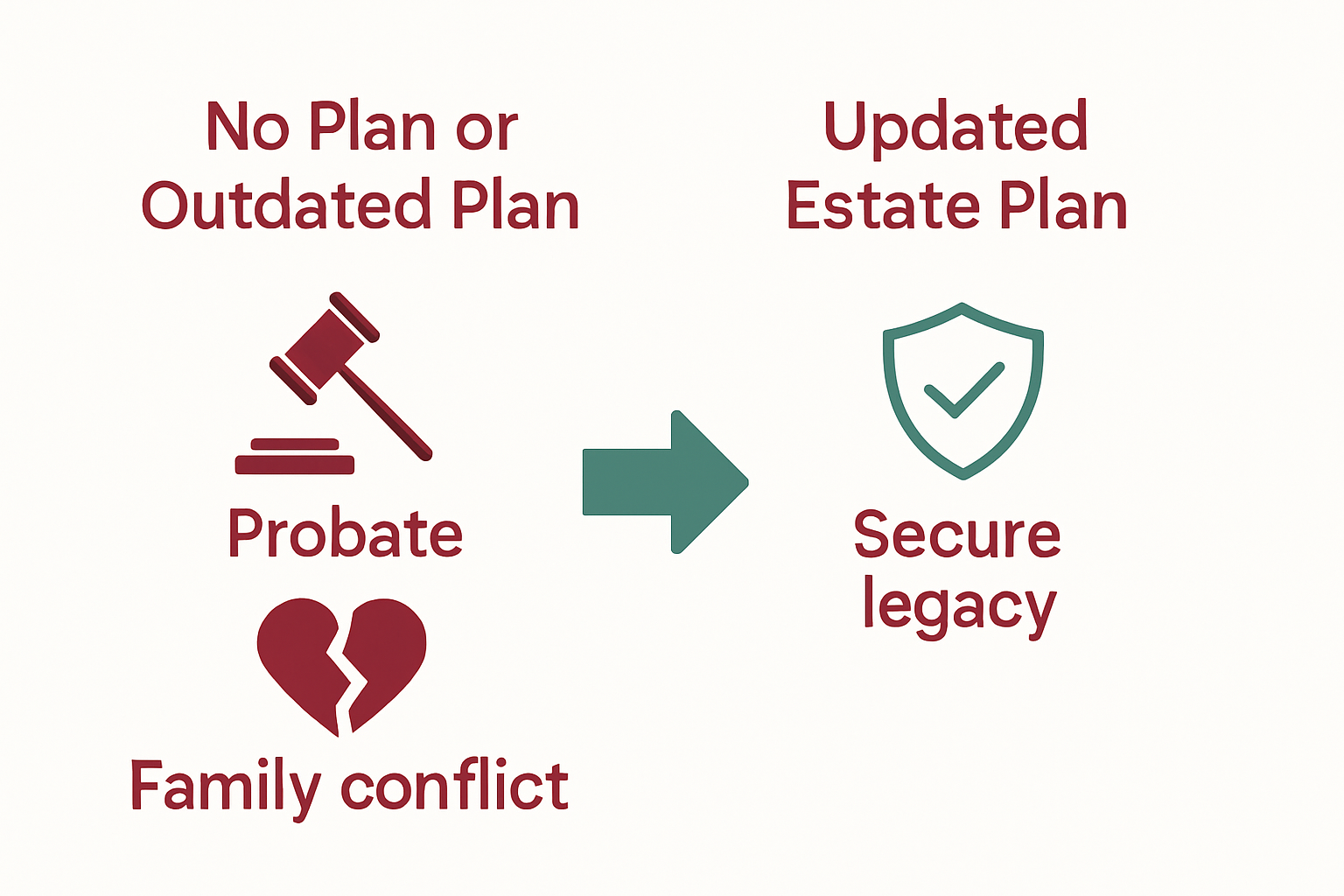
The financial implications of inadequate estate planning extend far beyond simple document preparation. Families risk unintended asset distributions, increased tax liabilities, and potential legal challenges that can consume significant resources. Strategic estate plan updates become critical after major life events such as marriages, divorces, births, deaths, significant financial changes, or shifts in family dynamics. Each of these circumstances can render existing estate planning documents ineffective or potentially harmful to the intended financial protection strategy.
Ultimately, protecting family wealth and personal legacy requires a proactive and dynamic approach to estate planning. Individuals must view their estate plan as a living document that requires regular review and modification. Consulting with experienced legal professionals who can help navigate complex legal landscapes becomes essential in maintaining comprehensive, up-to-date protections that adapt to changing personal and financial circumstances. By treating estate planning as an ongoing process rather than a one-time event, families can ensure their assets remain protected and their wishes are accurately represented.
How to Ensure Control and Minimize Family Conflict
Navigating family dynamics during estate planning requires strategic communication and carefully crafted legal mechanisms that preserve both family relationships and individual autonomy. Difficult conversations about estate planning become critical in establishing clear expectations and preventing potential future conflicts that can fracture family connections.
Effective control begins with transparent communication strategies and precise legal documentation. This means creating comprehensive estate planning instruments that leave no room for ambiguity or misinterpretation. Detailed provisions that explicitly outline asset distribution, guardianship responsibilities, and healthcare decision-making can significantly reduce potential areas of family disagreement. Establishing clear rationales for inheritance choices, including potential differences in asset allocation among family members, helps prevent feelings of resentment or perceived unfairness.
Legal tools play a crucial role in minimizing family conflict and maintaining individual control. Revocable living trusts, healthcare directives, and power of attorney documents provide flexible mechanisms that allow individuals to adapt their estate plans as family dynamics and personal circumstances evolve. These instruments not only protect personal wishes but also create structured frameworks that reduce the likelihood of legal challenges and emotional disputes among family members. By proactively addressing potential sources of tension and creating transparent decision-making processes, families can navigate complex estate planning challenges more effectively.
Ultimately, successful estate planning transcends mere legal documentation. It requires a holistic approach that balances legal precision with emotional intelligence. Families must engage in open, honest conversations that create mutual understanding and respect. Regular family meetings, clear communication about intentions, and a willingness to explain complex decisions can transform potential conflict into collaborative planning. By treating estate planning as a collective process that honors individual autonomy while maintaining family unity, individuals can create lasting legacies that strengthen rather than divide family bonds.
Take Control of Your Future with Expert Estate Planning Support
Facing the uncertainty of losing capacity can be overwhelming. This article highlights the importance of planning ahead with clear legal tools like durable powers of attorney and living trusts to protect your personal and financial decisions. Avoid family conflicts, probate delays, and costly legal challenges by acting early and creating comprehensive documents tailored to your needs.

Secure your peace of mind today by partnering with experienced professionals focused exclusively on estate planning and probate. Visit the Law Office of Eric Ridley | Estate Planning | Wills & Trusts page to explore powerful legal strategies crafted for situations involving incapacity. Learn how to protect your legacy and empower trusted individuals to act on your behalf when you need it most. Don’t wait until it is too late. Start your personalized estate plan now at https://ridleylawoffices.com and take the first step toward lasting security for you and your family.
Frequently Asked Questions
What is incapacity in estate planning?
Incapacity in estate planning refers to a legal state where an individual loses the mental ability to manage their personal, financial, and healthcare decisions, necessitating legal mechanisms to protect their interests.
How can I prepare for potential incapacity in my estate planning?
To prepare for potential incapacity, individuals should establish legal tools such as durable power of attorney and healthcare power of attorney, create living trusts, and engage in discussions with family and legal professionals to ensure their wishes are respected.
What are the risks of not having an estate plan or having outdated documents?
Not having an estate plan or maintaining outdated documents can lead to probate complications, unintended asset distributions, increased tax liabilities, and potential disputes among family members, which can be emotionally and financially detrimental.
How can I minimize family conflict during the estate planning process?
To minimize family conflict, engage in open communication with family members about your estate planning decisions, utilize clear legal documents, and establish transparent guidelines for asset distribution and guardianship responsibilities.
Recommended
- Estate Planning 101: What You Need to Know to Secure Your Future – Law Office of Eric Ridley
- Understanding the Basics of Estate Planning – Law Office of Eric Ridley
- How to Minimize Taxes Through Estate Planning – Law Office of Eric Ridley
- Common Mistakes to Avoid in Estate Planning – Law Office of Eric Ridley
