Over one third of American families encounter creditor disputes during probate, risking unnecessary delays and asset loss. For California parents with significant net worth, every overlooked debt can threaten your children’s future security and the legacy you worked so hard to build. By mastering how to collect creditor information and estate documents step by step, you can control the process, reduce financial exposure, and give your family a plan they can rely on.
Table of Contents
- Step 1: Gather Creditor Information And Estate Documents
- Step 2: Compile And Assess Outstanding Probate Debts
- Step 3: Notify Creditors And Validate All Claims
- Step 4: Prioritize And Settle Debts From Estate Assets
- Step 5: Confirm Payment And Secure Final Debt Clearance
Quick Summary
| Key Insight | Explanation |
|---|---|
| 1. Systematically Gather Creditor Details | Thoroughly collect and organize all creditor information and estate documents for effective management of probate. |
| 2. Assess and Prioritize Outstanding Debts | Compose a detailed spreadsheet and evaluate debts based on legality and priority to protect the estate’s assets. |
| 3. Properly Notify Creditors | Formally notify creditors with written communications and documentation to validate claims against the estate. |
| 4. Settle Debts Following Legal Hierarchy | Settle debts based on strict legal payment priorities to ensure fair distribution of available assets. |
| 5. Secure Confirmation of Debt Payments | Obtain written receipts and the final court approval to confirm satisfaction of all debts and successfully close the probate process. |
Step 1: Gather creditor information and estate documents
When managing probate, your first critical task is systematically collecting all creditor details and relevant estate documents. This process requires careful organization and attention to legal requirements. The goal is to create a comprehensive inventory that helps you navigate potential financial claims against the estate.
Start by thoroughly reviewing the deceased’s financial records, including bank statements, credit card bills, loan documents, and tax returns. You’ll want to contact potential creditors and request official proof of any outstanding debts. Pay special attention to mortgage statements, vehicle loans, medical bills, and any personal or business credit accounts. Create a detailed spreadsheet tracking each creditor’s name, contact information, total debt amount, and account number.
Reach out to financial institutions, credit card companies, and other potential creditors to inform them of the estate’s probate process. Many will require official documentation proving your legal authority as the estate representative. Keep copies of all correspondence and maintain meticulous records of every communication. Some creditors will have specific deadlines for filing claims, so understanding these timeframes is crucial for protecting the estate’s assets.
Pro tip: Request multiple certified copies of the death certificate upfront, as many institutions will require an official document to process debt claims and release financial information.
Step 2: Compile and assess outstanding probate debts
After gathering creditor information, your next crucial step is compiling and meticulously evaluating all outstanding debts against the estate. This process requires systematic review and strategic financial assessment to ensure accurate debt reconciliation and protect the estate’s remaining assets.

Begin by organizing all collected creditor claims into a comprehensive spreadsheet. Review each claim’s legal validity carefully, distinguishing between legitimate outstanding obligations and potentially questionable or expired debts. Prioritize claims based on legal precedence certain types of debts take precedence over others. For example, secured debts like mortgages and tax liabilities typically receive priority treatment compared to unsecured credit card balances.
Consult with a probate attorney to help navigate complex debt assessment scenarios, especially when estate assets might be insufficient to cover all outstanding claims. The goal is not just paying debts but doing so strategically to preserve maximum value for beneficiaries. Pay special attention to potential tax liabilities and ensure you understand the precise order of debt payment mandated by state probate regulations.
Pro tip: Create a detailed debt tracking system with separate columns for creditor name, total amount owed, claim verification status, and expected payment timeline to maintain clear financial oversight.
Step 3: Notify creditors and validate all claims
After compiling outstanding debts, your next critical responsibility is formally notifying creditors and systematically validating their claims against the estate. This step requires precision and careful documentation to protect the estate’s financial interests and ensure legitimate debt resolution.
Notifying creditors involves a structured legal process that typically includes publishing a formal notice in local newspapers and sending direct written communications to known creditors. You will need to provide detailed information about the probate proceeding, including specific deadlines for filing claims. Each creditor must submit comprehensive documentation proving the validity of their claimed debt, including original invoices, contract agreements, and precise outstanding balance information.
Validating claims requires meticulous review of each submitted document. Scrutinize every claim for accuracy, checking against the deceased’s financial records and verifying the debt’s legitimacy. Some claims may be partially or completely invalid due to outdated documentation, already satisfied payments, or statutory time limitations. Work closely with your probate attorney to challenge questionable claims and protect the estate’s assets from inappropriate or inflated debt demands.
Pro tip: Maintain a centralized digital file system with scanned copies of all creditor communications and claim documentation to ensure easy tracking and quick reference throughout the probate process.
Step 4: Prioritize and settle debts from estate assets
With validated claims in hand, you now face the critical task of systematically prioritizing and settling debts from the estate’s available assets. This process requires strategic financial management to ensure legal compliance and fair distribution of remaining resources.
Debt settlement follows a strict legal hierarchy that determines the order of payment. Typically, administrative expenses and probate costs take precedence, followed by funeral expenses, secured debts, taxes, and then unsecured creditor claims. This means you cannot simply pay creditors in the order they appear or based on personal preference. Some debts will receive full payment while others might receive partial compensation depending on the estate’s total asset value.
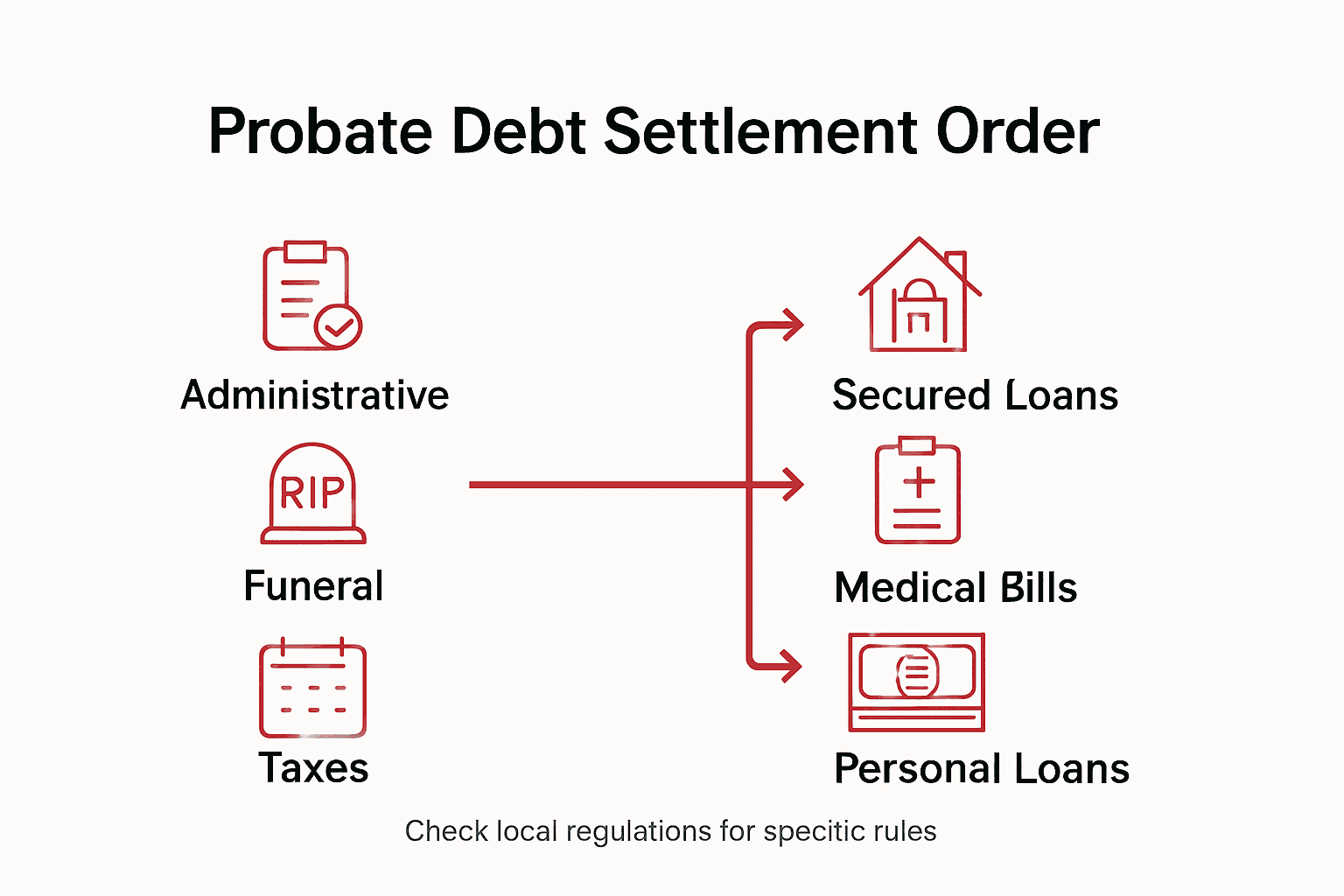
The following table summarizes common estate debts and their usual legal payment priority:
| Debt Type | Description | Typical Payment Priority | Example Source |
|---|---|---|---|
| Administrative | Court and attorney fees | Highest | Probate filings |
| Funeral Expenses | Burial and memorial costs | High | Funeral homes |
| Secured Debts | Loans with collateral | Next | Mortgages, car loans |
| Taxes | Federal or state tax liabilities | After secured debts | IRS, state tax agencies |
| Unsecured Debts | No collateral backing | Lowest | Credit cards, medical bills |
Carefully inventory all available estate assets including bank accounts, real estate, investments, and personal property. Calculate the total value and compare it against the validated debt claims. If assets are insufficient to cover all debts, you may need to make difficult decisions about which claims to prioritize. Consult with your probate attorney to ensure you are following legal guidelines and protecting the estate from potential legal challenges. Communication with creditors becomes crucial during this phase to negotiate potential reductions or payment plans.
Pro tip: Always maintain detailed documentation of every debt payment, including date of payment, amount, creditor information, and the specific asset used for settlement to create a comprehensive audit trail.
Step 5: Confirm payment and secure final debt clearance
With all creditor claims addressed, you now enter the critical final phase of debt resolution securing official confirmation and closing out the estate’s financial obligations. This step transforms your meticulous debt management into a legally recognized conclusion.
Estate administrators must thoroughly document all debt settlements to protect against future claims. Obtain written receipts and release documents from each creditor confirming full payment or satisfaction of their claim. These documents serve as crucial evidence that you have fulfilled all financial responsibilities associated with the estate. Prepare a comprehensive final accounting spreadsheet that itemizes every debt payment, including the date, amount, creditor name, and specific asset used for settlement.
Submit the final documentation to the probate court for review and official approval. The court will examine your accounting to ensure all debts were paid according to legal priorities and that the estate has met its financial obligations. Once the court reviews and approves your documentation, they will issue a final discharge document officially closing the probate process. This critical step legally protects the estate and its beneficiaries from future debt claims and sets the stage for distributing remaining assets to heirs.
Pro tip: Create digital and physical backup copies of all debt settlement documentation and court approvals stored in secure locations to provide long term protection and easy access for future reference.
Here’s a breakdown of documentation you should retain during estate debt settlement:
| Document Type | Purpose | When Needed |
|---|---|---|
| Official Death Certificate | Prove decedent’s passing | Opening accounts, notifications |
| Creditor Claim Forms | Substantiate debt requests | Validating and settling claims |
| Payment Receipts | Evidence of debt satisfaction | Finalizing probate, court review |
| Court Approval Orders | Legal confirmation of process | Closing the estate |
Protect Your Family’s Legacy with Expert Probate Debt Guidance
Handling probate debts can be overwhelming with complicated steps like validating creditor claims and prioritizing payments from estate assets. The challenge is clear you want to safeguard your family’s legacy and avoid costly probate delays or disputes that strain your loved ones. At Ridley Law, we emphasize clear guidance on probate administration and estate planning to help you navigate these complex legal requirements with confidence.
If you want to take control of protecting your family’s future today explore our Probate – Ridley Law category for trusted advice on managing estate debts efficiently. For broader support in estate protection and will drafting that can minimize probate issues, visit Estate Planning – Ridley Law. Don’t wait until debts jeopardize your family’s inheritance act now by contacting Ridley Law at https://ridleylawoffices.com to secure experienced legal assistance tailored to your needs.
Frequently Asked Questions
How do I gather all necessary information about creditors when managing probate debts?
Start by reviewing the deceased’s financial records, including bank statements and loan documents. Create a detailed spreadsheet to track each creditor’s name, contact information, total debt amount, and account number to maintain an organized inventory.
What steps should I take to assess outstanding debts against an estate?
Compile all creditor claims into a spreadsheet and carefully review each claim’s validity to distinguish legitimate debts from questionable ones. Prioritize claims based on their legal precedence, ensuring you consult with a probate attorney for complex debt situations.
How do I notify creditors about the probate process and validate their claims?
Formally notify creditors by publishing a notice in local newspapers and sending written communications to known creditors, including specific deadlines for claims submission. Review each submitted claim for accuracy and legitimacy, verifying against financial records and relevant documentation.
What is the order of priority for settling debts from an estate?
Debts are typically settled in a strict hierarchy, starting with administrative expenses and funeral costs, followed by secured debts and taxes, and finally, unsecured debts like credit card balances. Ensure you have a comprehensive inventory of estate assets to determine how to allocate funds effectively.
How can I confirm payment and secure clearance of debts from the estate?
Obtain written receipts and release documents from each creditor confirming the satisfaction of their claim. Prepare a final accounting spreadsheet for the probate court and ensure all documentation is in order for review, which will officially close the probate process once approved.
Recommended
- How Probate Works in California: What Families Need to Know in 2026 – Ridley Law
- The Complete Guide to Probate: Settling an Estate with Expert Tips – Ridley Law
- Probate Court Fees in California: What Successful Families Need to Know (2026) – Ridley Law
- Avoiding Probate Disputes in California: Protect Your Wealth in 2026 – Ridley Law
How long do creditors have to file a claim in California probate?
A creditor must file its claim by the later of (a) four months after the court issues Letters to the personal representative, or (b) 60 days after the representative mails that creditor direct notice. Whichever is later (Probate Code § 9100). Separately, a creditor generally cannot sue on a decedent’s debt more than one year after death (Code of Civil Procedure § 366.2), and that one-year outer limit is not extended by the 60-day notice period. Miss the window and the claim is barred.
Handling a trust or estate after a death?
A free 30-minute call with Eric Ridley. You’ll hear what has to happen, what it costs, and what you can safely do yourself. Ridley Law handles California trust administration and uncontested probate on clear, quoted fees.
Want a straight read on where you stand?
Talk to Eric. A free 30-minute call, no pitch. He’ll tell you where you’re exposed, what it would cost to fix, and what you can skip.
Talk to Eric