

PARENTS & HOMEOWNERS: MY 7-STEP ESTATE PLANNING PROCESS WILL PROTECT YOUR HEIRS
From Creditors, Predators & Bad Choices, And Will Help You Become a (Bigger) Hero to Your Family!


Avoiding Estate Litigation: Steps to Protect Your Legacy
More than 40 percent of American families experience disputes over estate settlements, risking years of costly litigation and uncertainty for children. For California parents with significant assets, protecting your legacy means more than just signing paperwork. This guide breaks down proactive steps to safeguard your children’s inheritance, helping you build a clear plan that minimizes family conflict and preserves financial security for the next generation.
Table of Contents
- Step 1: Assess Your Estate Assets Thoroughly
- Step 2: Draft and Update Customized Estate Documents
- Step 3: Establish and Fund Effective Trusts
- Step 4: Communicate Your Plan to Key Family Members
- Step 5: Review and Verify All Legal Documents
Quick Summary
| Important Point | Explanation |
|---|---|
| 1. Thoroughly assess your estate | Create a comprehensive inventory of all assets, documenting their current values and transfer instructions to protect your legacy. |
| 2. Draft customized estate documents | Consult an attorney to create wills, trusts, and directives that align with your personal wishes and family dynamics. |
| 3. Regularly update legal documents | Annual reviews of your estate plan are essential to reflect changes due to life events or shifts in financial circumstances. |
| 4. Establish effective trusts | Consult a professional to create and fund the appropriate type of trust for managing and protecting your assets. |
| 5. Communicate your plan clearly | Engage in open discussions with family members about your estate plan to minimize confusion or disputes after your passing. |
Step 1: Assess Your Estate Assets Thoroughly
Assessing your estate assets thoroughly is your foundational first step in preventing potential litigation and protecting your family’s financial legacy. This critical process involves creating a comprehensive inventory of everything you own that could be transferred to your heirs.
Start by gathering documentation for all your tangible and intangible assets. This includes real estate properties, bank accounts, investment portfolios, retirement accounts, life insurance policies, vehicles, business interests, and even personal valuables like jewelry or art collections. Effective estate planning requires understanding the legal status of all assets, so be meticulous in your documentation. Categorize your assets into two primary groups: probate and non probate assets. Probate assets are those that will require court supervision during transfer, such as individually owned real estate or personal bank accounts. Non probate assets like living trusts or payable on death accounts can transfer directly to beneficiaries, potentially avoiding complex legal processes.
Create a detailed spreadsheet that lists each asset’s current value, location of documentation, and any specific transfer instructions. Consider working with a professional estate planning attorney who can help you navigate potential tax implications and ensure your assets are structured for maximum protection. Your goal is creating a clear, organized record that minimizes potential confusion or disputes among your heirs.
Pro Tip: Update your asset inventory annually, especially after major life events like marriages, divorces, births, or significant financial changes to ensure ongoing accuracy and protection.
Here is a summary of common estate assets and their transfer processes:
| Asset Type | Probate Required | Example Items |
|---|---|---|
| Probate Asset | Yes | Individually owned real estate |
| Non-Probate Asset | No | Life insurance, living trusts |
| Tangible Personal | Sometimes | Jewelry, vehicles, art |
| Intangible Financial | Depends on titling | Bank and retirement accounts |
Step 2: Draft and Update Customized Estate Documents
Drafting and updating customized estate documents is a critical step in protecting your legacy and ensuring your final wishes are legally binding and clear. This process requires careful consideration and professional guidance to create comprehensive legal documents that accurately reflect your intentions.
Estate planning is a process involving professional counsel to draft and periodically update customized documents tailored to your unique family situation and financial landscape. Begin by consulting with an experienced estate planning attorney who can help you create essential documents such as wills, trusts, powers of attorney, and advance health care directives. These documents should comprehensively address asset distribution, guardianship for minor children, healthcare decision making, and financial management in case of incapacitation. Pay special attention to specific provisions that reflect your family dynamics, including potential provisions for blended families, children with special needs, or complex asset structures.

Regularly review and update your estate documents to ensure they remain current with your changing life circumstances. Major life events like marriages, divorces, births, deaths, significant financial changes, or shifts in tax laws can dramatically impact your estate plan. A document that worked five years ago might be outdated or potentially harmful today. Schedule annual reviews with your estate planning attorney to assess whether your current documents still align with your goals and legal requirements.
Pro Tip: Create a secure digital and physical folder containing copies of all estate documents, and inform a trusted family member or executor about their location to prevent potential confusion during difficult times.
Here’s how key estate planning documents differ in function and purpose:
| Document Type | Main Purpose | Typical Scope |
|---|---|---|
| Will | Asset distribution | Whole estate and guardianship |
| Trust | Asset management & control | Specific assets or goals |
| Power of Attorney | Financial decisions | During incapacity |
| Health Care Directive | Health care instructions | Medical situations |
Step 3: Establish and Fund Effective Trusts
Establishing and funding effective trusts is a powerful strategy for protecting your assets, minimizing tax implications, and ensuring your family’s financial security. This critical step requires careful planning and strategic implementation to create a robust estate protection mechanism.
Trusts are legal arrangements that manage assets on behalf of beneficiaries, enabling control over asset distribution, providing significant advantages over traditional estate planning methods. Start by consulting an experienced estate planning attorney to determine the most appropriate trust type for your specific situation. Common trust options include revocable living trusts, irrevocable trusts, and specialized trusts designed for specific purposes like protecting assets for children with special needs or managing business succession. Each trust type offers unique benefits, so selecting the right structure depends on your family dynamics, financial goals, and potential tax considerations.
Funding your trust is a critical step that transforms it from a legal document into an active asset protection tool. This process involves legally transferring ownership of specific assets into the trust, which may include real estate, bank accounts, investments, and valuable personal property. Work closely with your attorney to ensure proper retitling of assets and complete documentation. The key is to comprehensively fund the trust, leaving no significant assets outside its protective framework. Regular reviews and updates will help maintain the trust’s effectiveness as your financial situation and family circumstances evolve.
Pro Tip: Consider creating a comprehensive asset inventory spreadsheet that tracks every asset transferred into your trust, including account numbers, locations, and transfer dates, to ensure nothing is accidentally overlooked.
Step 4: Communicate Your Plan to Key Family Members
Communicating your estate plan to key family members is a crucial step in preventing potential future conflicts and ensuring your legacy is understood and respected. This conversation requires careful preparation, empathy, and strategic communication to help your loved ones comprehend your intentions.
Effectively communicating your estate plan to family is a critical step in protecting your legacy, allowing your loved ones to understand your decisions and avoid unexpected surprises. Begin by selecting the right time and setting for this important discussion. Choose a neutral, comfortable environment where everyone feels relaxed and can speak openly. Invite your key family members who will be directly impacted by your estate plan, such as your spouse, adult children, potential executors, and trustees. Be transparent about the purpose of the meeting explaining that you want to provide clarity and prevent potential misunderstandings.
Approach the conversation with sensitivity and openness, focusing on your goals of providing financial security and minimizing potential family conflicts. Explain the reasoning behind your decisions, especially if you have made choices that might seem unexpected or unequal. Consider using visual aids like a simple overview document or a professional presentation to help illustrate the key points of your estate plan. Encourage questions and be prepared to listen to your family members concerns. Remember that this conversation is not about winning an argument but about creating mutual understanding and preserving family relationships.
Pro Tip: Consider having your estate planning attorney present during the family meeting to provide professional insights and help mediate any potential misunderstandings.
Step 5: Review and Verify All Legal Documents
Reviewing and verifying all legal documents is a critical safeguard against potential estate litigation and ensures your final wishes are accurately represented. This comprehensive process requires meticulous attention to detail and a systematic approach to document management.
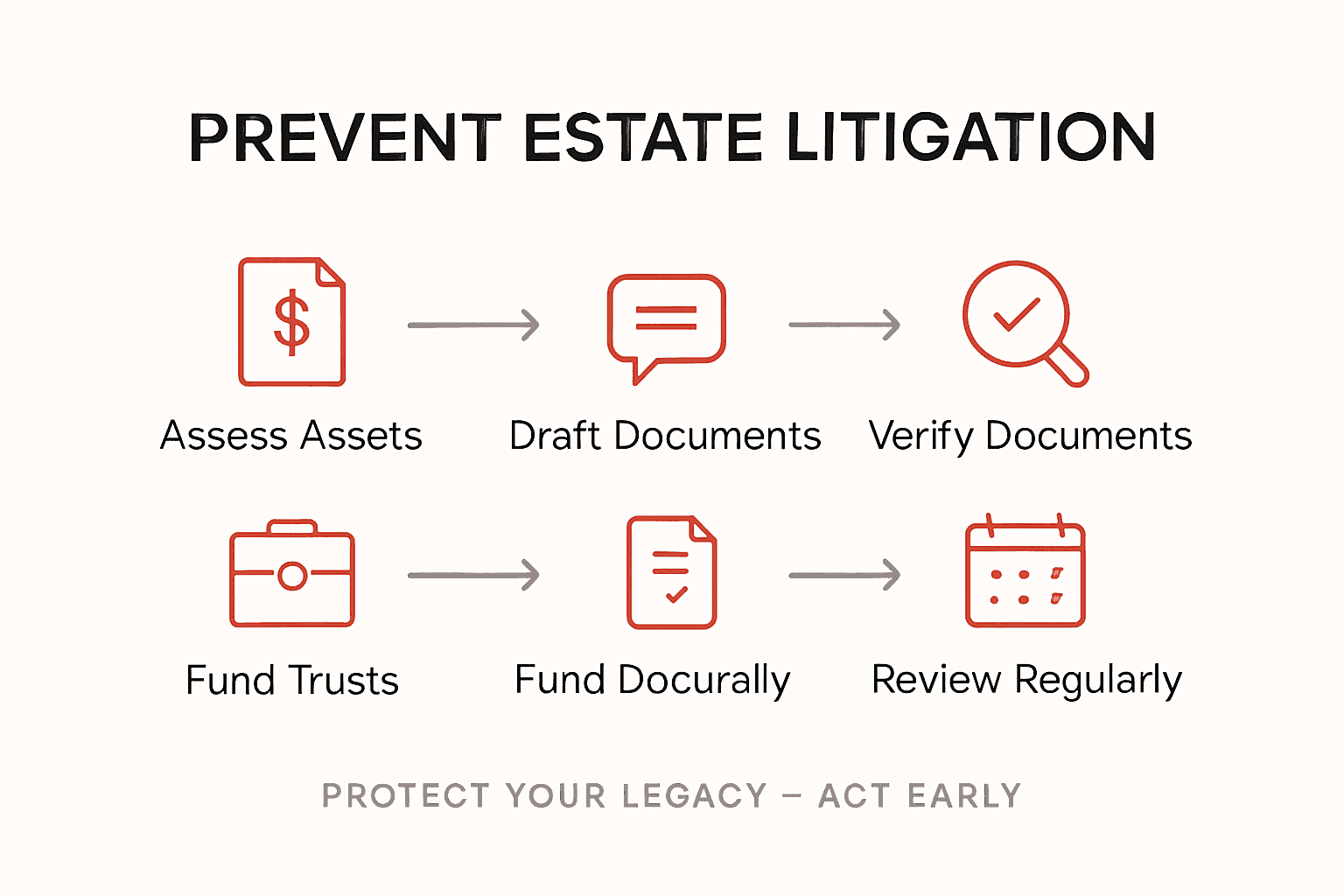
Regular review and verification of estate planning documents are essential to ensure they reflect current wishes, maintaining legal compliance and preventing potential disputes. Begin by gathering all your critical legal documents, including wills, trusts, powers of attorney, advance healthcare directives, beneficiary designations, and any other estate related paperwork. Carefully examine each document for accuracy, checking that names, addresses, asset details, and specific instructions are current and precisely worded. Pay special attention to changes in family circumstances such as marriages, divorces, births, deaths, or significant financial shifts that might necessitate document updates.
Work closely with an experienced estate planning attorney to perform a thorough document audit. They can help identify potential gaps, ensure legal validity, and recommend necessary modifications. Verify that your documents comply with current state and federal regulations, and that all required signatures and witnessing protocols have been properly executed. Create a secure digital and physical filing system that allows easy access for your executor or trusted family members, while maintaining the confidentiality of sensitive information. Organize documents chronologically and include a comprehensive index to help your representatives navigate your estate plan effectively.
Pro Tip: Create encrypted digital copies of your legal documents and store them in multiple secure locations, ensuring your trusted representatives know exactly how to access them in an emergency.
Secure Your Legacy with Expert Estate Planning Support
Avoiding estate litigation requires more than just understanding the necessary steps it means taking decisive action to protect your family and assets today. If you are concerned about probate delays, costly disputes, or unclear estate documents this article’s insights highlight the importance of drafting customized wills and trusts while regularly reviewing your legal paperwork. These are essential strategies to prevent conflicts and preserve your legacy.
Law Office of Eric Ridley | Estate Planning | Wills & Trusts offers specialized assistance tailored to your unique needs.

Take control now by partnering with experienced estate planning attorneys dedicated to guiding you through will drafting, trust creation, probate administration, and ongoing estate protection. Don’t leave your family vulnerable to uncertainty and legal battles. Contact us at https://ridleylawoffices.com to start securing your future with a plan that provides clarity, peace of mind, and legal strength for you and your loved ones.
Frequently Asked Questions
How can I assess my estate assets to avoid litigation?
To assess your estate assets effectively, create a comprehensive inventory of all tangible and intangible items you own. Gather documentation for each asset, categorize them into probate and non-probate assets, and maintain a detailed record including current values and transfer instructions.
What key estate documents do I need to draft to protect my legacy?
Essential estate documents include a will, living trusts, powers of attorney, and health care directives. Work with an estate planning attorney to ensure these documents clearly reflect your intentions and address critical issues such as asset distribution and guardianship.
How often should I update my estate planning documents?
You should review and update your estate planning documents at least annually or after significant life events, such as marriages, divorces, or the birth of a child. Schedule regular consultations with your estate planning attorney to ensure your documents remain relevant and accurate.
What types of trusts can I establish to minimize estate litigation?
Common trusts include revocable living trusts, irrevocable trusts, and special needs trusts. Consult with an estate planning attorney to choose the right type of trust that aligns with your family’s needs and financial goals, then properly fund the trust by transferring ownership of relevant assets.
How can I effectively communicate my estate plan to family members?
Select an appropriate setting to discuss your estate plan with key family members openly. Clearly explain your intentions and the reasons behind your decisions, inviting questions and encouraging a collaborative dialogue to ensure understanding and minimize future conflicts.
What steps should I take to review my legal documents for accuracy?
Begin by gathering all estate planning documents and verifying that names, assets, and specific instructions are correct. Work with an estate planning attorney to conduct a thorough audit, ensuring legal compliance and updating any details that may have changed since the last review.
Recommended
- How to Avoid Probate with Proper Estate Planning – Law Office of Eric Ridley
- Avoiding Probate Disputes in California: Protect Your Wealth in 2025 – Law Office of Eric Ridley
- How to Protect Your Estate from Creditors – Law Office of Eric Ridley
- Safeguarding Your Legacy: The Essential Guide to Estate Planning and Asset Protection – Law Office of Eric Ridley
