

PARENTS & HOMEOWNERS: MY 7-STEP ESTATE PLANNING PROCESS WILL PROTECT YOUR HEIRS
From Creditors, Predators & Bad Choices, And Will Help You Become a (Bigger) Hero to Your Family!


Charitable Giving in Estate Planning: Protecting Wealth and Values
Over $471 billion was donated by Americans to charitable causes in a single recent year, making philanthropy a significant part of estate planning across the country. For many American families, integrating charitable gifts is not just about generosity, but also about smart financial strategy and meaningful legacy building. Understanding how to weave charitable giving into your estate planning can create powerful tax advantages and help ensure your impact extends for generations.
Table of Contents
- Charitable Giving In Estate Planning Explained
- Types Of Charitable Gifts And Trusts
- Legal Rules For Charitable Giving In California
- Tax Benefits And Financial Impact
- Mistakes To Avoid In Charitable Planning
Key Takeaways
| Point | Details |
|---|---|
| Strategic Planning | Charitable giving in estate planning combines philanthropic goals with financial strategies to create lasting legacies and tax advantages. |
| Types of Contributions | Various charitable gifts and trusts, like bequests and charitable remainder trusts, facilitate impactful giving while optimizing tax efficiency. |
| Legal Considerations | Navigating state and federal regulations is crucial for effective charitable giving, ensuring compliance and maximizing potential benefits. |
| Avoiding Mistakes | Working with estate planning professionals is essential to avoid common pitfalls, ensuring alignment between charitable goals and financial circumstances. |
Charitable Giving in Estate Planning Explained
Charitable giving represents a strategic approach to estate planning that allows individuals to support meaningful causes while simultaneously achieving significant tax advantages. By integrating philanthropic goals with financial planning, families can create lasting legacies that extend beyond their immediate wealth transfer. The practice involves deliberately incorporating charitable contributions into comprehensive estate plans, which can provide substantial benefits for both donors and recipient organizations.
The tax implications of charitable giving are particularly compelling. According to research from the Brookings Institution, charitable contributions during one’s lifetime can generate dual tax benefits by reducing both income and estate taxes. This means that strategic philanthropic planning not only supports important causes but can also create meaningful financial advantages for high-net-worth families seeking to optimize their estate strategies.
Successful charitable giving in estate planning requires careful consideration of several key factors. Families must evaluate their philanthropic objectives, understand various giving mechanisms like donor-advised funds, charitable trusts, and direct bequests, and work closely with experienced estate planning professionals to structure contributions that align with their financial goals. By thoughtfully integrating charitable giving into their estate plans, individuals can create powerful mechanisms for supporting causes they care about while potentially reducing their overall tax burden and preserving more of their wealth for future generations.
Types of Charitable Gifts and Trusts
Charitable giving offers sophisticated estate planning strategies that extend far beyond simple monetary donations. Comprehensive planned giving methods provide families with flexible mechanisms to support meaningful causes while achieving significant financial and tax planning objectives. These strategies allow individuals to create lasting philanthropic impacts while simultaneously addressing their personal wealth management goals.
Several primary types of charitable gifts and trusts can be strategically integrated into estate plans. Bequests represent the most straightforward approach, where individuals designate specific assets or percentages of their estate to charitable organizations through their will or trust. Charitable gift annuities offer another compelling option, enabling donors to make substantial contributions while receiving guaranteed income streams for themselves or designated beneficiaries. These annuities provide immediate tax deductions and potential lifetime income, creating a win-win scenario for philanthropically minded individuals.
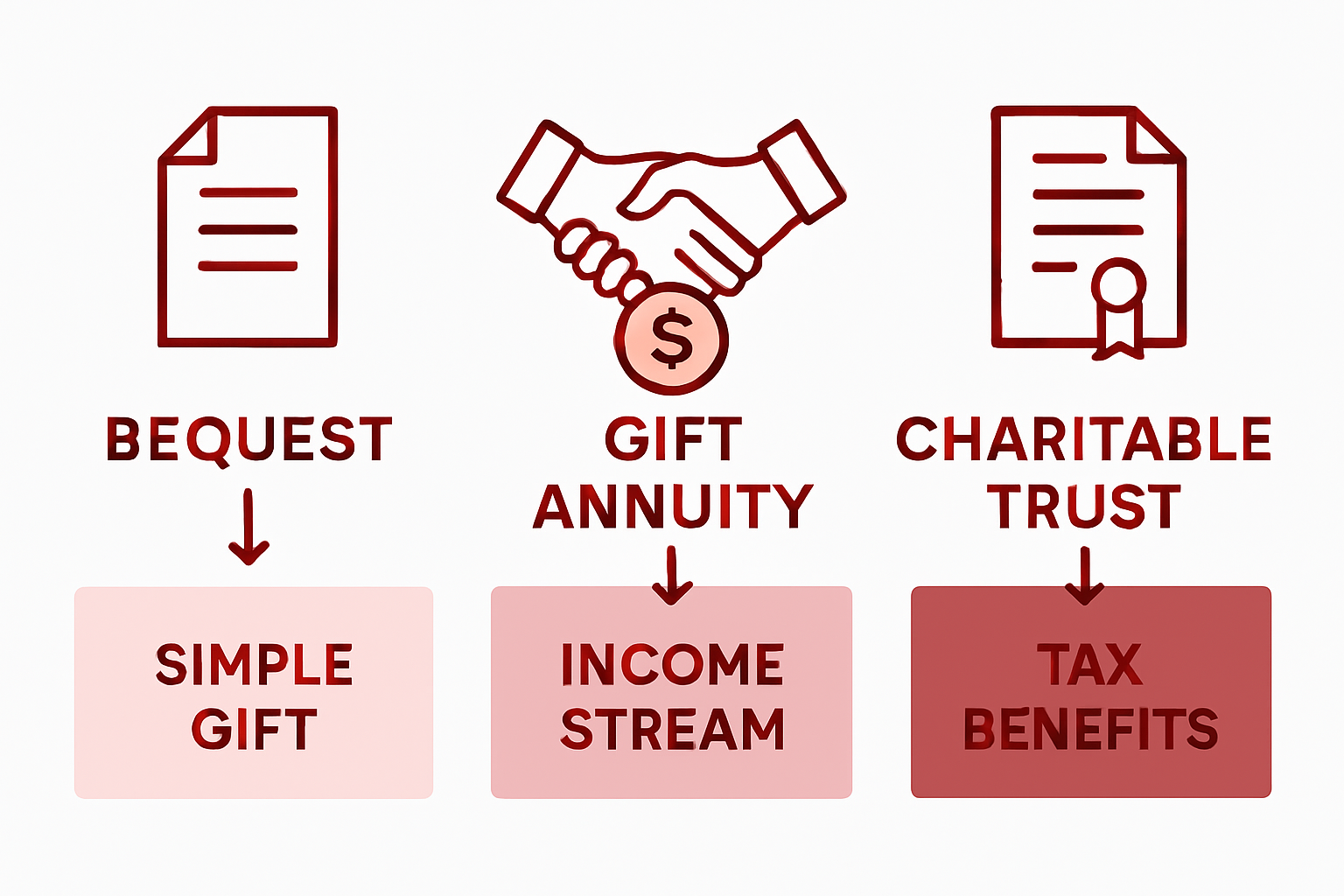
More complex charitable giving instruments include charitable remainder trusts and charitable lead trusts. Charitable remainder trusts allow donors to transfer appreciable assets into an irrevocable trust, receive potential income distributions, and ultimately direct remaining funds to chosen charitable organizations. Conversely, charitable lead trusts provide income streams to selected charities for a specified period, with remaining assets eventually returning to the donor’s family, potentially minimizing estate tax liabilities. By carefully selecting and structuring these sophisticated giving mechanisms, individuals can effectively balance their philanthropic aspirations with prudent financial planning strategies.
Legal Rules for Charitable Giving in California
Charitable giving in California involves navigating a complex landscape of state and federal regulations that require careful planning and strategic implementation. Estate planning professionals in California must understand the intricate legal framework governing philanthropic contributions, which involves unique state-specific rules that can significantly impact the effectiveness of charitable giving strategies.
California law recognizes several key legal considerations for charitable gifts. Donor intent is paramount, meaning charitable contributions must strictly follow the donor’s specified wishes and purposes. The state requires comprehensive documentation for charitable gifts, particularly those involving complex instruments like trusts or substantial asset transfers. Donors must ensure that their chosen charitable organizations qualify as legitimate 501©(3) nonprofits recognized by both state and federal tax authorities, which helps guarantee tax deductibility and legal compliance.
Tax implications represent another critical aspect of charitable giving regulations in California. State laws intersect with federal tax codes to create a nuanced environment for philanthropic contributions. Donors must carefully structure their gifts to maximize potential tax benefits while maintaining legal integrity. This includes understanding specific rules around charitable deductions, potential limitations on contribution amounts, and the precise documentation required to substantiate charitable gifts. By working with experienced estate planning attorneys who understand California’s unique legal landscape, individuals can develop charitable giving strategies that align with their philanthropic goals while remaining fully compliant with state and federal regulations.
Tax Benefits and Financial Impact
Charitable giving strategies offer sophisticated tax planning opportunities that can significantly reduce tax liabilities while supporting meaningful philanthropic goals. By strategically structuring charitable contributions, high-net-worth individuals can create powerful financial mechanisms that simultaneously minimize tax burdens and generate meaningful social impact. These strategies allow donors to transform traditional tax expenditures into purposeful investments that benefit both charitable organizations and the donor’s overall financial landscape.

Charitable contributions provide multiple layers of tax advantages that extend beyond simple deductions. Donors can receive immediate income tax deductions for their charitable gifts, potentially reducing their current year’s tax liability. More complex giving strategies like charitable remainder trusts can generate income streams while providing substantial tax benefits. These instruments allow individuals to donate appreciated assets, eliminate capital gains tax exposure, and create potential lifetime income sources, effectively transforming tax challenges into strategic financial planning opportunities.
The financial impact of charitable giving extends far beyond immediate tax considerations. Sophisticated estate planning techniques can help families reduce potential estate tax liabilities, preserve wealth for future generations, and create lasting philanthropic legacies. By carefully structuring charitable gifts, individuals can potentially reduce their taxable estate, minimize tax burdens on their heirs, and support causes that reflect their most deeply held values. This approach transforms traditional wealth transfer strategies into meaningful opportunities for creating generational impact while maintaining sound financial principles.
Mistakes to Avoid in Charitable Planning
Charitable planning requires meticulous attention to detail to avoid costly errors that can undermine the entire estate planning strategy. Many individuals inadvertently compromise their philanthropic intentions by failing to understand the complex legal and financial landscape surrounding charitable giving. These mistakes can result in significant tax penalties, reduced donation effectiveness, and potential conflicts with intended charitable objectives.
Common pitfalls in charitable planning often stem from inadequate preparation and limited understanding of tax regulations. Donors frequently make critical errors such as neglecting to verify a charitable organization’s tax-exempt status, missing important contribution deadlines, or failing to maintain proper documentation of their gifts. Some individuals create charitable provisions without considering the long-term implications, such as how specific donation structures might impact their overall estate tax liability or potential income streams. These oversights can transform well-intentioned philanthropic efforts into financial complications that diminish both the donor’s wealth and the intended charitable impact.
The most strategic approach to avoiding charitable planning mistakes involves comprehensive professional guidance and thorough preparation. Donors should work closely with estate planning attorneys and tax professionals who can help them navigate complex regulations, structure donations for maximum tax efficiency, and ensure alignment between their philanthropic goals and financial circumstances. This includes carefully evaluating different giving mechanisms, understanding the tax implications of various donation strategies, and creating flexible plans that can adapt to changing personal and financial circumstances. By proactively addressing potential challenges and seeking expert counsel, individuals can develop charitable giving strategies that truly reflect their values while protecting their financial interests.
Protect Your Legacy Through Thoughtful Charitable Giving and Estate Planning
Integrating charitable giving into your estate plan is a powerful way to protect your wealth while supporting the causes you care about. This complex process requires navigating important elements like tax benefits, legal requirements in California, and choosing the right charitable trusts. If you want to avoid common pitfalls and structure your gifts effectively, expert guidance can make all the difference.
Take advantage of the expertise available at the Law Office of Eric Ridley | Estate Planning | Wills & Trusts to ensure your charitable intentions are honored and your estate is protected.

Don’t wait to secure your family’s future and create a lasting philanthropic legacy. Visit https://ridleylawoffices.com now to get started with trusted advisors who specialize in California estate planning. For comprehensive support with elder law issues connected to your estate, explore our Elder Law Services. Protect your assets and values with confidence today.
Frequently Asked Questions
What are the benefits of charitable giving in estate planning?
Charitable giving in estate planning allows individuals to support meaningful causes while achieving significant tax advantages, such as reducing income and estate taxes.
What types of charitable gifts can be included in an estate plan?
Common types of charitable gifts include bequests, charitable gift annuities, charitable remainder trusts, and charitable lead trusts, each providing unique financial and tax benefits.
How does California law affect charitable giving in estate planning?
California law emphasizes donor intent and requires proper documentation and adherence to regulations governing charitable contributions to ensure tax deductibility and compliance.
What mistakes should I avoid when planning charitable donations?
Common mistakes include not verifying a charity’s tax-exempt status, missing deadlines, and failing to maintain proper documentation. Working with estate planning professionals can help prevent these errors.
Recommended
- How to Plan Your Estate for Charitable Giving – Law Office of Eric Ridley
- How to Include Charitable Giving in Your Estate Plan – Law Office of Eric Ridley
- How to Ensure Your Estate Plan Reflects Your Values – Law Office of Eric Ridley
- How to Plan for Charitable Giving in Your Estate Plan – Law Office of Eric Ridley
