

PARENTS & HOMEOWNERS: MY 7-STEP ESTATE PLANNING PROCESS WILL PROTECT YOUR HEIRS
From Creditors, Predators & Bad Choices, And Will Help You Become a (Bigger) Hero to Your Family!


Choosing an Executor California – Protecting Wealth & Family
Over 60 percent of American families face confusion about who should manage their estate if the unexpected happens. For affluent parents in California, choosing the right executor means more than just following legal rules. The person you appoint will shape the future of your wealth and your child’s guardianship. Discover how smart decisions in executor selection protect assets, minimize costs, and avoid family conflict.
Table of Contents
- What an Executor Does in California Estate Planning
- Legal Qualifications and Key Duties Explained
- Selecting the Right Person for Your Estate
- Risks, Conflicts, and Common Pitfalls to Avoid
- How an Executor Affects Probate and Costs
Key Takeaways
| Point | Details |
|---|---|
| Executor’s Role | The executor is responsible for managing the estate and ensuring adherence to the deceased’s wishes in accordance with California law. |
| Legal Qualifications | Executors must meet age, mental capacity, and legal background requirements to effectively manage the estate. |
| Choosing the Right Executor | Selecting a qualified executor involves assessing financial expertise, organizational skills, and emotional stability to mitigate potential conflicts. |
| Impact on Probate Costs | An efficient executor can reduce probate expenses and enhance estate value by managing processes promptly and effectively. |
What an Executor Does in California Estate Planning
An executor plays a critical role in managing a deceased person’s estate and ensuring their final wishes are carried out precisely and legally. In California, this individual becomes the central figure responsible for navigating complex probate processes, managing financial assets, and protecting the deceased’s legacy. Understanding executor roles requires comprehensive knowledge of legal responsibilities and potential challenges.
The executor’s primary duties include several key responsibilities that demand meticulous attention and administrative skill. These responsibilities encompass locating and securing all estate assets, obtaining official death certificates, filing the will with the local probate court, notifying beneficiaries and creditors, paying outstanding debts and taxes, and ultimately distributing remaining assets according to the deceased’s instructions. Each step requires precision and adherence to California’s specific legal requirements, making the role both complex and significant.
Specifically, an executor must compile a comprehensive inventory of all estate assets, which can include real estate, bank accounts, investments, personal property, and business interests. They must professionally appraise these assets, file necessary tax returns, and manage potential disputes among beneficiaries. The executor also serves as a legal representative, communicating with financial institutions, government agencies, and potential creditors to settle the estate’s financial obligations.
Pro Tip: Consider selecting an executor who demonstrates strong organizational skills, financial literacy, and emotional stability to handle potential family conflicts during the estate settlement process.
Legal Qualifications and Key Duties Explained
In California, becoming an executor requires meeting specific legal qualifications that ensure the responsible management of an estate. Legal requirements for executor selection are stringent and designed to protect the deceased’s interests. According to California Probate Code, potential executors must be at least 18 years old, of sound mental capacity, and possess a clean legal background. Individuals with felony convictions or those deemed legally incapacitated are typically disqualified from serving in this critical role.
The legal duties of an executor are comprehensive and demand meticulous attention to detail. Executors are legally obligated to file a Petition for Probate, publish required legal notices, manage estate assets, pay outstanding debts and taxes, and communicate transparently with heirs and beneficiaries. They must also maintain detailed financial records and seek court approval for significant estate administration actions. Non-resident executors may face additional requirements, such as posting a bond or appointing a local legal representative to ensure proper estate management.
Courts maintain strict oversight of executor performance, with the power to remove individuals who demonstrate potential conflicts of interest or prove incapable of fulfilling their fiduciary responsibilities. This includes carefully evaluating the executor’s ability to make impartial decisions, manage complex financial transactions, and navigate potential family dynamics. Professional executors, such as attorneys or financial professionals, are often preferred due to their experience in handling intricate estate administration processes and understanding of California’s specific legal requirements.
Pro Tip: Consider selecting an executor with financial expertise, legal knowledge, and a demonstrated ability to remain emotionally neutral during potentially challenging estate settlement scenarios.
Selecting the Right Person for Your Estate
Choosing the right executor requires careful consideration of multiple critical factors that extend far beyond simple family connections or personal relationships. The importance of naming a trustworthy executor cannot be overstated, as this individual will be responsible for managing complex financial and legal responsibilities during an emotionally challenging time. The ideal executor should possess a unique combination of personal integrity, financial acumen, organizational skills, and emotional resilience.
Key characteristics to prioritize include financial literacy, attention to detail, and the ability to navigate potential family conflicts with neutrality and professionalism. Executors must be comfortable managing sophisticated financial transactions, understanding complex legal documentation, and communicating effectively with beneficiaries, attorneys, and financial institutions. While family members are often chosen, they are not always the most qualified candidates. Professional executors like attorneys or financial planners might provide more objective and experienced estate management, especially for complex estates with significant assets or potential family dynamics.

When evaluating potential executors, consider their personal characteristics, professional background, and willingness to take on this significant responsibility. Look for individuals who demonstrate strong organizational skills, financial understanding, and emotional stability. Some families choose to name alternate executors or co-executors to provide additional support and ensure smooth estate administration. Geographic proximity can also be an important consideration, as the executor will need to handle various local administrative tasks and court appearances.
Here is a comparison of common executor candidates and their typical strengths and weaknesses in California estate planning:
| Candidate Type | Strengths | Weaknesses |
|---|---|---|
| Family Member | Personal knowledge of beneficiaries | May lack legal/financial expertise |
| Friend | Trusted relationship | Potential emotional distractions |
| Attorney/Financial Pro | Strong legal and financial skills | Higher compensation costs |
| Business Associate | Familiarity with business assets | Possible conflicts of interest |
Pro Tip: Always have an open conversation with your potential executor about their willingness and capacity to serve, and consider providing them with detailed documentation about your estate and final wishes.
Risks, Conflicts, and Common Pitfalls to Avoid
Navigating executor selection involves understanding potential risks that can derail estate administration and create lasting family conflicts. Common mistakes in estate planning often emerge from poor executor selection, which can lead to significant legal and emotional challenges. The most prevalent risks include choosing an executor who lacks financial expertise, has potential conflicts of interest, or lacks the emotional maturity to manage complex family dynamics during an already stressful period.
Potential conflicts can arise from various scenarios that compromise the executor’s ability to act impartially. Family members with existing financial tensions, those who might benefit disproportionately from the estate, or individuals with poor financial management histories can create substantial problems. Some common pitfalls include executors who struggle with transparent communication, fail to maintain proper financial records, delay estate settlement processes, or make unilateral decisions without consulting beneficiaries. These issues can quickly escalate into costly legal disputes that diminish the estate’s value and create long-lasting family rifts.
To mitigate these risks, families must conduct thorough due diligence when selecting an executor. This involves comprehensive background checks, detailed discussions about potential conflicts, and a clear understanding of the individual’s financial literacy and emotional capacity. Some families opt for professional executors or choose multiple executors to provide checks and balances. It is crucial to have frank discussions about expectations, potential challenges, and the significant responsibilities involved in estate administration before making a final selection.
This table outlines the most frequent risks and strategies to avoid executor pitfalls in California:
| Risk | Common Pitfall Example | Mitigation Strategy |
|---|---|---|
| Conflict of Interest | Executor stands to benefit unfairly | Choose neutral or co-executors |
| Poor Financial Management | Delayed filings or lost records | Verify financial literacy |
| Inadequate Communication | Beneficiaries left in the dark | Require transparent updates |
| Emotional Bias | Unilateral decisions favoring family | Select impartial candidate |
Pro Tip: Consider conducting a confidential family meeting to discuss potential executor candidates, allowing open dialogue about strengths, weaknesses, and potential conflicts before making a final selection.
How an Executor Affects Probate and Costs
The executor’s role directly impacts the financial landscape of estate administration, with significant implications for probate expenses and overall estate value. Understanding California probate costs reveals how an executor’s efficiency can dramatically influence the time and money spent navigating the legal process. An ineffective executor can inadvertently escalate probate expenses through delayed filings, poor record management, or unnecessary legal complications.
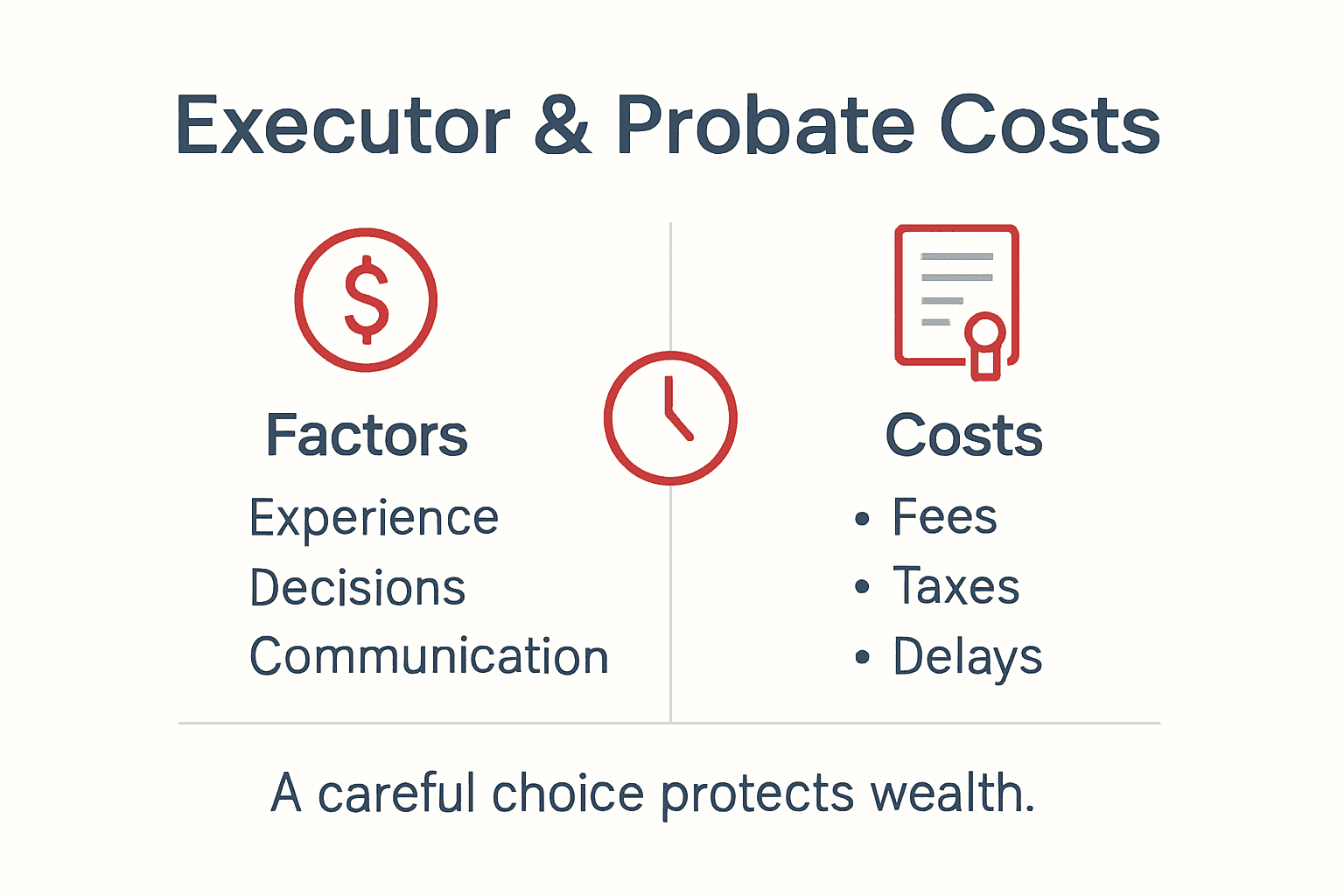
California’s Probate Code establishes a structured compensation framework for executors, typically calculated as a percentage of the estate’s gross value. Professional executors and attorneys may charge additional fees for extraordinary services, which must be approved by the court. The executor’s ability to streamline asset identification, resolve potential disputes quickly, and maintain meticulous financial documentation can significantly reduce overall probate costs. Conversely, executors who struggle with complex financial tasks or fail to respond promptly to legal requirements can extend the probate process, increasing associated legal and administrative expenses.
The financial impact extends beyond direct probate costs. An executor’s decisions can affect tax liabilities, potential estate litigation, and the overall preservation of family wealth. Poorly managed estates may face unnecessary tax penalties, creditor claims, or prolonged legal disputes that erode the estate’s value. Effective executors work strategically to minimize tax implications, negotiate efficiently with creditors, and ensure a smooth transfer of assets that preserves the maximum possible value for beneficiaries.
Pro Tip: Request a detailed written estimate of potential executor fees and administrative costs upfront, and discuss how the executor plans to minimize expenses and streamline the probate process.
Protect Your Legacy by Choosing the Right Executor
Selecting the right executor is one of the most important decisions you can make to protect your family’s wealth and avoid costly probate delays. This article revealed how crucial it is to appoint someone with financial literacy, emotional stability, and integrity who can confidently handle complex estate matters and family dynamics. Whether you want to prevent conflicts or minimize probate costs, expert guidance ensures your estate plan works exactly as you intend.

Take control of your estate planning today by consulting with professionals dedicated to securing your legacy. The Estate Planning – Law Office of Eric Ridley team specializes in crafting wills, trusts, and appointing trustworthy executors who meet California legal standards. Don’t leave your family’s future to chance. Visit https://ridleylawoffices.com now to schedule your consultation and safeguard your wealth for generations to come.
Frequently Asked Questions
What are the primary responsibilities of an executor in California?
The primary responsibilities of an executor in California include locating and securing estate assets, filing the will with probate court, notifying beneficiaries and creditors, paying debts and taxes, and distributing remaining assets according to the deceased’s wishes.
What qualifications should I look for when selecting an executor?
When selecting an executor, you should consider qualities such as financial literacy, organizational skills, emotional stability, and the ability to handle potential family conflicts while managing the estate’s administrative tasks.
How can a poor choice of executor impact the probate process?
A poor choice of executor can lead to increased probate costs, delays in estate settlement, potential family conflicts, and mishandling of estate assets. This can ultimately diminish the estate’s value and create lasting rifts among family members.
What steps can I take to avoid conflicts when choosing an executor?
To avoid conflicts, have open conversations with potential executors about their readiness to accept the role, ensure they understand the expectations involved, and consider appointing co-executors or neutral professionals to provide checks and balances.
Recommended
- The Importance of Naming a Trustworthy Executor – Law Office of Eric Ridley
- Choosing an Executor in California: A Family’s Guide – Law Office of Eric Ridley
- Avoiding Probate Disputes in California: Protect Your Wealth in 2025 – Law Office of Eric Ridley
- Living Trust vs Will in California: 2025 Guide for Families – Law Office of Eric Ridley
- Complete Guide to Customs Power of Attorney Form PDF – Worldwide Express, Inc.
