

PARENTS & HOMEOWNERS: MY 7-STEP ESTATE PLANNING PROCESS WILL PROTECT YOUR HEIRS
From Creditors, Predators & Bad Choices, And Will Help You Become a (Bigger) Hero to Your Family!


How to Avoid Probate Delays for California Families
Most American families are surprised to learn that probate delays can tie up assets for months or even years. Planning ahead is crucial because these setbacks can disrupt your loved ones’ financial security during an already stressful time. By following practical steps to assess your estate, establish legal tools, and regularly review your plan, you can help your California family avoid common pitfalls and secure a smoother transition for your beneficiaries.
Table of Contents
- Step 1: Assess Your Estate And Beneficiary Needs
- Step 2: Establish A Revocable Living Trust
- Step 3: Update Asset Titles And Beneficiary Designations
- Step 4: Appoint Trustworthy Fiduciaries And Guardians
- Step 5: Review And Verify Your Estate Plan Regularly
Quick Summary
| Key Point | Explanation |
|---|---|
| 1. Assess Your Estate Thoroughly | Inventory all assets and understand their legal status to avoid probate complications for your family. |
| 2. Create a Revocable Living Trust | Establishing a trust can bypass probate, allowing quicker asset access for your family after your death. |
| 3. Update Asset Titles and Beneficiary Designations | Ensure all asset titles and beneficiary designations reflect your current wishes to prevent probate delays. |
| 4. Select Trustworthy Fiduciaries | Choose responsible fiduciaries and guardians who align with your values and can manage your estate effectively. |
| 5. Regularly Review Your Estate Plan | Periodically review your estate plan to keep it updated with life changes and legal requirements. |
Step 1: Assess your estate and beneficiary needs
Assessing your estate and beneficiary needs is the critical first step in creating a comprehensive strategy to avoid probate delays for your California family. This process involves taking a thorough inventory of your assets, understanding their legal status, and strategically planning how they will be transferred to your loved ones.
Start by creating a comprehensive list of all your assets, including real estate, bank accounts, retirement funds, life insurance policies, investments, and personal property. The California Department of Financial Protection and Innovation recommends evaluating which assets require formal estate planning tools to streamline asset distribution and minimize potential probate complications. Pay special attention to assets with named beneficiaries like retirement accounts and life insurance policies, which can typically bypass probate courts and transfer directly to your designated recipients.
Carefully consider who will inherit your assets and under what conditions. This means thinking beyond simple financial distribution and considering the long term implications for each beneficiary. Will a direct inheritance support or potentially harm their financial well being? Would establishing a trust provide more protection and guidance? These nuanced decisions require careful reflection and potentially professional legal guidance to ensure your estate plan truly serves your family’s best interests.
Pro tip: Create a digital and physical backup of your asset inventory, storing copies in a secure location that trusted family members can access if needed.
Step 2: Establish a revocable living trust
Establishing a revocable living trust is a powerful strategy for California families looking to streamline asset transfer and avoid probate complications. This legal document provides a flexible mechanism for managing and protecting your assets during your lifetime and ensuring smooth distribution after your death.
California Attorney General guidelines recommend creating a revocable living trust as an effective method for maintaining privacy and avoiding the public probate process. The trust allows you to transfer property ownership to the trust while retaining complete control over your assets. You can serve as the initial trustee, managing everything exactly as you do now, with the critical difference that your assets are now legally positioned to bypass probate court. This means your family can access and manage assets more quickly and with significantly less legal complexity compared to traditional will based estate transfer methods.
To establish your trust, you will need to draft a formal document that names you as the initial trustee, identifies your successor trustees, and clearly outlines how your assets should be managed and distributed. Work with an experienced estate planning attorney who understands California specific legal requirements to ensure your trust is comprehensive and legally sound. Be prepared to retitle your assets in the name of the trust, including real estate, bank accounts, and investment portfolios. This process of retitling is crucial and often requires careful attention to detail to ensure complete asset coverage.
Pro tip: Review and update your revocable living trust annually to reflect significant life changes such as marriages, divorces, births, deaths, or substantial changes in your financial situation.
Here’s how key estate planning tools differ in avoiding probate:
| Tool | Probate Avoidance | Asset Control During Life | Privacy Level |
|---|---|---|---|
| Revocable Living Trust | Bypasses probate | Full control retained | High privacy |
| Will Only | Requires probate | Full control retained | Public record |
| Beneficiary Designation | Usually avoids probate | Control limited by account | Private transaction |
| Joint Ownership | Can avoid probate | Shared control | Private |
Step 3: Update asset titles and beneficiary designations
Updating asset titles and beneficiary designations is a crucial step in maintaining an effective estate plan that accurately reflects your current wishes and protects your family’s financial future. This process ensures that your assets will be transferred smoothly and according to your most recent intentions.

The California Attorney General’s Office emphasizes the necessity of keeping asset titles and beneficiary designations current to prevent potential probate complications. Begin by systematically reviewing all your financial accounts retirement plans life insurance policies and investment accounts. Check each account’s beneficiary designation carefully and confirm that the named individuals or entities align with your current family situation and estate planning goals. This might mean removing an ex spouse updating for new children or adjusting distributions among family members.
For most assets like real estate bank accounts and investment portfolios youll need to work with individual financial institutions to retitle assets in the name of your revocable living trust or update beneficiary information. This often requires gathering specific documentation such as your trust agreement government identification and potentially a copy of your recent estate planning documents. Pay special attention to assets with transfer on death or payable on death designations as these can sometimes bypass your trust if not carefully coordinated with your overall estate plan.
Pro tip: Create a comprehensive spreadsheet tracking all your assets beneficiary designations and contact information for each financial institution to simplify future updates and provide clear guidance for your executor.
Step 4: Appoint trustworthy fiduciaries and guardians
Appointment of trustworthy fiduciaries and guardians is a critical step in protecting your family’s future and ensuring your estate plan functions smoothly. This process involves carefully selecting responsible individuals who will manage your financial affairs and care for your children if you become unable to do so.
The California Courts Self Help Guide provides comprehensive guidance on selecting estate representatives who can effectively manage complex legal and financial responsibilities. When choosing fiduciaries such as trustees executors and guardians consider individuals who demonstrate financial responsibility emotional stability and a genuine commitment to your family’s well being. Look for candidates who share your core values understand your family dynamics and have the practical skills to manage potentially challenging financial and personal situations. These roles require more than just good intentions they demand strategic thinking integrity and the ability to make difficult decisions under emotional stress.
Carefully document your selection process and have candid conversations with potential fiduciaries before officially naming them in your estate documents. Discuss the specific responsibilities expectations and potential challenges they might face. Consider naming backup representatives and create clear instructions that provide guidance on how you want your assets managed and your children raised. This level of detailed planning can prevent future family conflicts and ensure your wishes are understood and respected.
Pro tip: Create a comprehensive information packet for your chosen fiduciaries that includes contact information financial account details medical directives and a letter explaining your specific wishes and values.
Step 5: Review and verify your estate plan regularly
Regularly reviewing and verifying your estate plan is a critical strategy for ensuring your assets remain protected and your family’s future remains secure. Think of this process as routine maintenance for your financial legacy a way to keep your plan aligned with changing life circumstances and legal requirements.
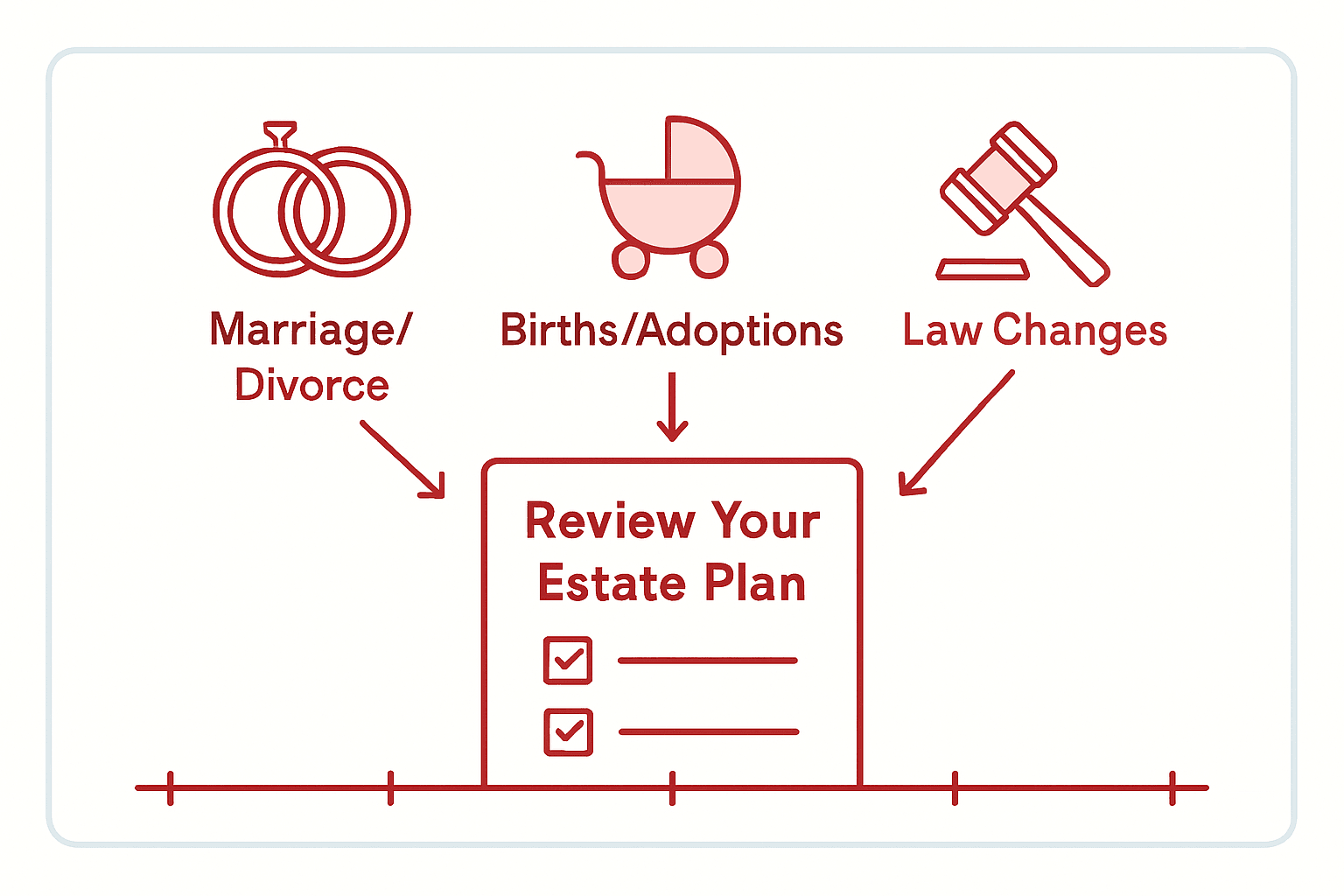
The California Attorney General’s Office recommends periodic reviews of your estate plan to prevent potential disputes and probate delays. Aim to conduct a comprehensive review at least once every three years or immediately following significant life events such as marriage divorce birth of a child death of a family member substantial change in financial status or major asset acquisition. During these reviews carefully examine your asset inventory beneficiary designations guardianship appointments and overall estate structure to ensure everything remains current and accurately reflects your wishes.
During your review process pay close attention to changes in tax laws inheritance regulations and estate planning strategies that might impact your existing plan. Verify that your chosen fiduciaries executors and guardians are still willing and able to serve in their designated roles. Check that asset valuations remain accurate and that any recently acquired or disposed assets are properly documented. Consider consulting with an estate planning attorney who can provide professional insights into potential updates or improvements to your existing plan.
Consider these suggested review triggers and their impact on estate planning:
| Review Trigger | Reason to Update | Impact on Plan |
|---|---|---|
| Marriage/Divorce | Change in family structure | Update beneficiaries |
| Birth/Adoption | New heirs | Add guardians or heirs |
| Major Asset Change | Increased/decreased assets | Adjust asset distribution |
| Law or Tax Change | Legal or financial updates | Maintain compliance |
Pro tip: Set a recurring calendar reminder for your estate plan review and create a dedicated digital folder where you store all relevant documents for easy annual access and updating.
Protect Your Family From Probate Delays With Expert Estate Planning
Probate delays can cause emotional stress and financial strain for California families trying to secure their legacy. This article highlights important steps like establishing a revocable living trust, updating beneficiary designations, and appointing trustworthy fiduciaries to avoid costly probate complications. If you want to take control and ensure your assets transfer smoothly with privacy and minimal court involvement, professional guidance is essential.
Explore how the Law Office of Eric Ridley | Estate Planning | Wills & Trusts team specializes in estate planning strategies designed to prevent probate delays.

Don’t wait until it’s too late to protect your family’s future. Visit https://ridleylawoffices.com now to schedule a consultation. Our focused approach to trust creation, will drafting, and probate administration empowers California families to avoid delays, reduce costs, and maintain control over their legacy. Secure peace of mind today by partnering with trusted legal advisors dedicated to your estate planning needs.
Frequently Asked Questions
How can I avoid probate delays for my family in California?
To avoid probate delays, create a revocable living trust that allows assets to bypass probate court. Start by updating your asset titles and beneficiary designations to ensure that your estate is accurately aligned with your wishes.
What is a revocable living trust and how does it help with estate planning?
A revocable living trust is a legal document that allows you to control your assets during your lifetime and provides a plan for transferring them after your death without going through probate. Establish your trust to streamline asset distribution and maintain privacy for your family members.
How often should I review my estate plan to prevent probate complications?
You should review your estate plan at least once every three years or after significant life events, such as marriage or the birth of a child. Set reminders to conduct these regular assessments to keep your plan up-to-date and effective.
What specific steps should I take to update my asset titles and beneficiary designations?
Begin by systematically reviewing all financial accounts, retirement plans, and life insurance policies to ensure beneficiary designations are current. Work with your financial institutions to retitle assets in the name of your trust or update the beneficiary information as needed.
How do I choose the right fiduciaries and guardians for my estate plan?
Select trustworthy individuals who demonstrate financial responsibility and commitment to your family’s well-being as fiduciaries and guardians. Have open discussions with them about their roles before formally appointing them to ensure they understand your expectations and responsibilities.
What should I include in my estate plan review process?
During your estate plan review, check asset inventories, beneficiary designations, and guardian appointments for accuracy. Pay attention to changes in laws and verify that your fiduciaries are still willing to serve, adapting your plan as necessary to reflect any significant changes in your life.
Recommended
- Avoiding Probate in California: Strategies for Families in 2025 – Law Office of Eric Ridley
- How Probate Works in California: What Families Need to Know in 2025 – Law Office of Eric Ridley
- California Probate Process Explained: 2025 Guide for Families and Homeowners – Law Office of Eric Ridley
- Understanding Probate Process in California: 2025 Guide for Families and Homeowners – Law Office of Eric Ridley
