

PARENTS & HOMEOWNERS: MY 7-STEP ESTATE PLANNING PROCESS WILL PROTECT YOUR HEIRS
From Creditors, Predators & Bad Choices, And Will Help You Become a (Bigger) Hero to Your Family!


Minor Children and Trusts—Securing Their Future in California
Nearly half of American families with children worry about how inherited assets will be managed if tragedy strikes early. Planning ahead is not just for the ultra-wealthy, especially in California, where the rules for minors’ finances carry unique challenges. Understanding how trusts work for minor children could be the difference between protecting a child’s future and facing unnecessary financial risk. You will discover practical insights to help American parents make confident choices about inheritance safeguards.
Table of Contents
- Defining Trusts For Minor Children In California
- Types Of Trusts For Child Inheritance Protection
- How Trusts Work For Minors’ Assets
- Legal Requirements And Trustee Responsibilities
- Risks, Tax Effects, And Common Mistakes
Key Takeaways
| Point | Details |
|---|---|
| Trusts offer financial protection for minors | Trusts allow assets to be managed until children reach adulthood, providing structured support and preventing mismanagement. |
| Different types of trusts serve specific needs | Common options like Section 2503© and 2503(b) trusts cater to varying inheritance strategies, from flexibility to controlled distributions. |
| Trustee responsibilities are legally binding | Trustees must adhere to fiduciary duties, ensuring proper asset management and transparency to avoid legal repercussions. |
| Annual reviews can mitigate risks | Regular consultations with legal and tax professionals help optimize trust structures and compliance with evolving financial goals. |
Defining Trusts for Minor Children in California
A trust for minor children represents a powerful legal mechanism designed to protect and manage financial assets until a child reaches legal adulthood. These specialized legal arrangements allow parents, grandparents, or other guardians to establish a structured financial plan that safeguards a child’s inheritance and provides strategic financial management. Specialized trusts for minors enable a designated trustee to manage assets with specific guidelines, ensuring the child’s financial interests remain protected.
In California, trusts for minor children offer remarkable flexibility in determining how and when children can access their inherited assets. Unlike direct inheritance, which typically becomes fully accessible at age 18, these trusts allow parents to set specific conditions and milestones for fund distribution. For instance, a trust might stipulate that funds can be used for educational expenses, with full financial control granted at more mature ages like 25 or 30. This approach prevents potential financial mismanagement while providing structured support during critical developmental years.
The primary components of a minor’s trust typically include a named trustee, precise asset allocation instructions, and specific conditions for fund disbursement. Trustees can be trusted family members, professional financial advisors, or legal institutions committed to executing the trust’s provisions responsibly. Critical considerations include defining precise age-based distributions, establishing guidelines for fund usage, and potentially creating incentive-based structures that encourage responsible financial behavior.
Pro Tip – Trust Strategy: Work closely with an estate planning attorney to customize trust provisions that align with your family’s unique financial goals and your child’s potential future needs. Regularly review and update trust documents to ensure they remain relevant as your children grow and family circumstances evolve.
Types of Trusts for Child Inheritance Protection
Child inheritance trusts in California offer families multiple strategic options for protecting and managing assets. Specialized trust structures provide unique mechanisms for safeguarding children’s financial futures, with each type designed to address specific family needs and goals. Among the most common are Section 2503© Minor’s Trusts and Section 2503(b) Trusts, each offering distinct advantages for asset management and distribution.
Section 2503© Minor’s Trusts provide exceptional flexibility, allowing trustees to spend both income and principal for the child’s benefit. These trusts require complete asset distribution by the time the child reaches age 21, creating a structured approach to inheritance management. In contrast, Section 2503(b) Trusts offer more conservative management, permitting trustees to distribute income directly to the child or spend funds on their behalf, providing a more controlled financial environment.
Beyond these specific trust types, California families can also explore additional inheritance protection strategies. Irrevocable Life Insurance Trusts can shield life insurance proceeds from estate taxes, while Spendthrift Trusts protect inherited assets from potential creditors or the child’s own financial mismanagement. Education Trusts specifically earmark funds for academic expenses, ensuring that educational opportunities remain preserved regardless of future family circumstances.
The following table summarizes key differences among common trust types for minor children:
| Trust Type | Asset Access Age | Income Distribution Flexibility | Primary Use Case |
|---|---|---|---|
| Section 2503© Trust | Age 21 | Income and principal can be used | Broad inheritance with flexibility |
| Section 2503(b) Trust | Specified by grantor | Income must be distributed annually | Controlled, gradual distribution |
| Irrevocable Life Insurance Trust | Upon insured’s death | No income distributions before event | Tax-efficient life insurance payout |
| Spendthrift Trust | Set by trust terms | Limits on beneficiary withdrawals | Protection from creditors and overspending |
| Education Trust | Per education schedule | Distributions limited to education | Dedicated tuition and academic costs |
Pro Tip – Trust Selection Strategy: Consult with an experienced estate planning attorney to match the most appropriate trust type to your family’s specific financial situation, taking into account your children’s ages, potential future needs, and your long-term wealth preservation goals.
How Trusts Work for Minors’ Assets
Trusts for minors represent a sophisticated legal mechanism that provides comprehensive financial protection and management for children’s inherited assets. Specialized asset management strategies enable families to create structured financial environments that safeguard children’s future interests while maintaining precise control over asset distribution and usage.
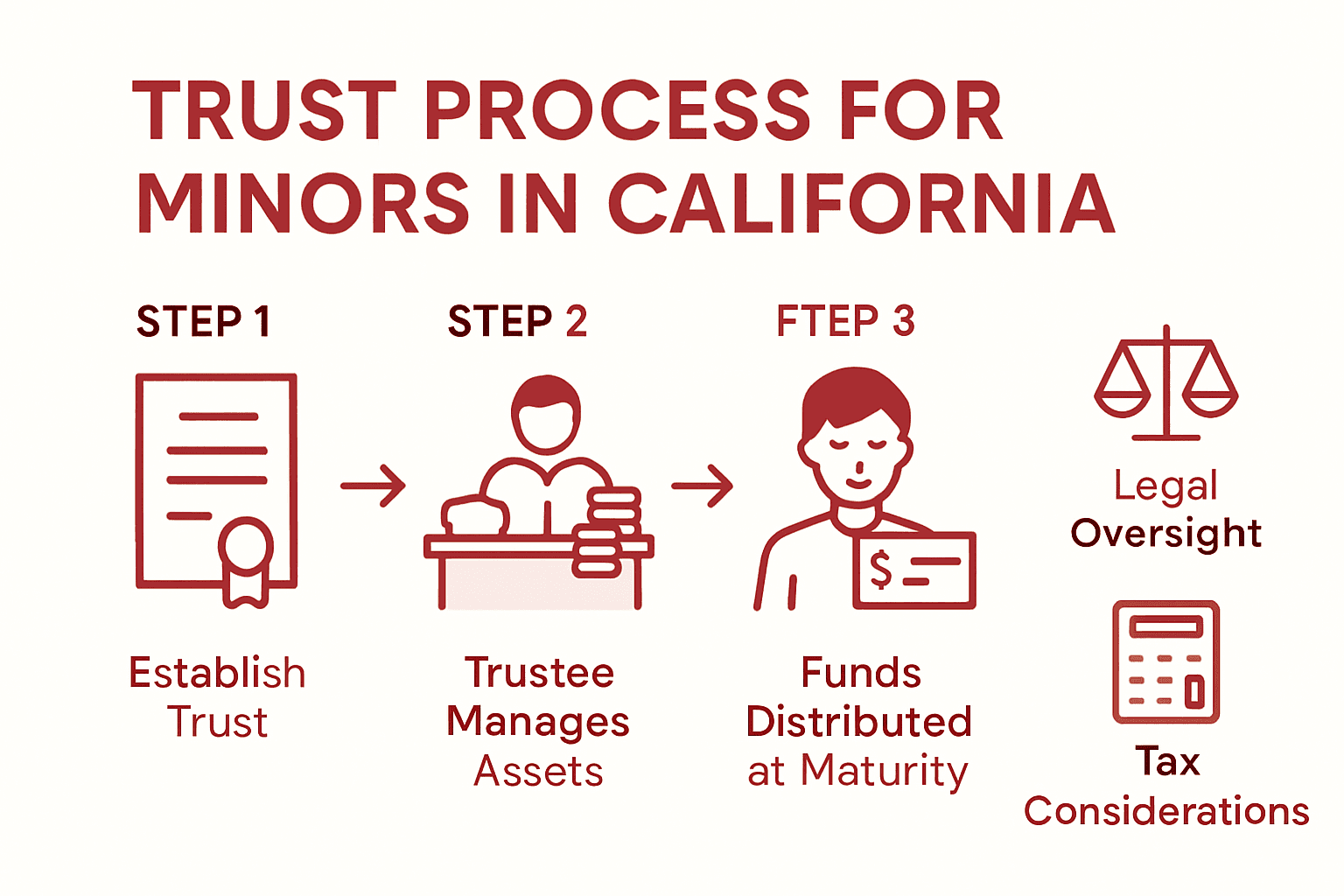
At the core of a minor’s trust is the trustee, a designated individual or institution responsible for managing and protecting the inherited assets. This trusted manager has a fiduciary duty to make investment decisions, distribute funds according to predefined guidelines, and ensure the child’s financial well-being. Unlike direct inheritance, which typically provides unrestricted access at age 18, trusts can establish nuanced distribution schedules that align with the child’s developmental stages and specific family objectives.

The operational mechanics of a minor’s trust involve several critical components. Trustees can be empowered to use trust funds for specific purposes such as education, healthcare, or basic living expenses, with carefully constructed provisions that prevent misuse. Some trusts incorporate incentive-based distributions, where funds are released upon achieving specific milestones like graduating college, starting a business, or demonstrating financial responsibility. These strategic frameworks help prevent potential asset squandering while providing meaningful support during crucial life transitions.
Pro Tip – Trust Management Insight: Regularly review and update your trust’s provisions to ensure they remain aligned with your family’s evolving financial landscape and your children’s changing needs, creating a dynamic and responsive financial protection strategy.
Legal Requirements and Trustee Responsibilities
The legal landscape surrounding trusts for minors in California is complex and demanding, requiring trustees to navigate a sophisticated set of obligations and responsibilities. Fiduciary duties for trust management represent a critical legal framework that mandates trustees act with the highest standard of care, integrity, and financial prudence when managing assets for minor beneficiaries.
Trustees shoulder multiple legally mandated responsibilities that extend far beyond simple asset preservation. They must make judicious investment decisions, maintain detailed financial records, file accurate tax returns, and provide comprehensive accountings to both the court and the beneficiary’s legal guardians. Prudent investor rules require trustees to diversify investments, minimize unnecessary risks, and make decisions that a reasonably intelligent investor would consider sound and responsible. This means carefully balancing potential investment returns with the need to protect the principal assets intended for the child’s future.
Legal compliance involves multiple layers of oversight and accountability. Trustees must remain vigilant about potential conflicts of interest, ensure transparent financial management, and make distributions that align precisely with the trust’s original intent. Some key legal requirements include providing periodic accountings, maintaining separation between personal and trust assets, and making age-appropriate financial decisions that genuinely benefit the minor beneficiary. Failure to meet these stringent standards can result in legal consequences, potential removal as trustee, and personal financial liability for mismanagement.
Here’s a reference table outlining major trustee responsibilities under California law:
| Duty | Description | Legal Importance |
|---|---|---|
| Fiduciary Duty | Managing assets with utmost care and loyalty | Prevents financial mismanagement |
| Accounting | Maintaining and reporting accurate records | Ensures transparency and oversight |
| Prudent Investing | Diversifying and minimizing risks in investments | Protects trust assets for future use |
| Legal Compliance | Filing taxes and following court orders | Avoids legal penalties and challenges |
Pro Tip – Trustee Preparation: Consult with an experienced estate planning attorney before accepting a trustee role, thoroughly understanding your legal obligations and the specific provisions of the trust document to ensure full compliance and effective asset management.
Risks, Tax Effects, and Common Mistakes
Trusts for minor children present a complex landscape of potential financial and legal risks that demand careful navigation. Trust tax implications can create significant challenges, particularly with irrevocable trusts subject to compressed tax brackets that can dramatically impact overall financial planning. Families must understand these nuanced tax structures to prevent unexpected financial burdens and maximize the trust’s effectiveness.
One of the most critical risks involves improper trust administration, which can lead to substantial tax penalties and potential legal complications. Compressed tax brackets mean that trusts can reach the highest tax rate at much lower income levels compared to individual tax structures, creating a potential financial trap for uninformed trustees. Common mistakes include failing to distribute income strategically, neglecting annual tax reporting requirements, and not maintaining clear boundaries between trust assets and personal finances.
Beyond tax considerations, trusts face numerous potential pitfalls that can undermine their intended purpose. Poorly drafted trust documents might create ambiguity about distribution rules, trustee powers, or beneficiary rights. Some families inadvertently create trusts that are too restrictive, preventing necessary financial flexibility, while others draft documents so loosely that they provide little meaningful protection. Additionally, trustees who lack professional financial knowledge may make investment decisions that fail to balance growth potential with necessary asset preservation.
Pro Tip – Tax and Risk Management: Consult with a specialized estate planning attorney and tax professional annually to review your trust’s structure, ensuring it remains optimized for tax efficiency and aligned with your family’s evolving financial goals.
Secure Your Child’s Future with Expert Trust and Estate Planning in California
Protecting minor children through specialized trusts is essential for families seeking to prevent costly mistakes, tax pitfalls, and mismanagement of assets. This article highlights the importance of carefully crafted trust arrangements such as Section 2503© and Spendthrift Trusts that ensure asset protection and wise distributions over time. If you want peace of mind knowing your child’s inheritance is guarded by a legally sound and custom strategy, expert guidance is critical.

Start securing your family’s legacy today by working with the Wills & Trusts – Law Office of Eric Ridley team. We specialize in creating tailored trusts that align with your financial goals and protect minor beneficiaries from common risks. Avoid probate delays and costly errors by contacting us now at https://ridleylawoffices.com for dedicated Estate Planning services designed for your peace of mind.
Frequently Asked Questions
What is a trust for minor children?
A trust for minor children is a legal arrangement that protects and manages financial assets on behalf of children until they reach adulthood, ensuring their inheritance is handled responsibly.
How do trusts benefit minor children compared to direct inheritance?
Trusts provide structured management of assets, allowing parents to set specific conditions for fund distribution, such as using the funds for education or deferring access until a specified age, unlike direct inheritance which is fully accessible at 18.
What are the responsibilities of a trustee in managing a minor’s trust?
Trustees are responsible for managing the trust assets, making investment decisions, maintaining financial records, ensuring compliance with tax laws, and making distributions according to the trust’s provisions while prioritizing the minor beneficiary’s best interests.
What types of trusts are available for protecting a child’s inheritance?
Common types of trusts for protecting a child’s inheritance include Section 2503© Minor’s Trusts, Section 2503(b) Trusts, Irrevocable Life Insurance Trusts, Spendthrift Trusts, and Education Trusts, each designed to meet specific family needs and financial goals.
Recommended
- Estate Planning for Parents in California: Protecting Wealth in 2025 – Law Office of Eric Ridley
- Steps for Trust Creation in California: Secure Your Family in 2025 – Law Office of Eric Ridley
- Special Needs Trusts California 2025: Protecting Family Wealth and Children’s Futures – Law Office of Eric Ridley
- Special Needs Trusts Explained: California Families’ Guide 2025 – Law Office of Eric Ridley
- Capire il trust: significato e importanza nella società • Gio Talente
