Pet trusts in California offer an answer to a concern every animal lover faces. More than 500,000 pets in the US enter shelters each year after their owners pass away or become incapacitated. Most people assume their pets will be cared for by family or friends, yet statistics reveal a much bleaker reality. The real shock is that a pet trust can legally secure your pet’s future and prevent heartbreak most owners never see coming.
Table of Contents
- What Is A Pet Trust And Why Is It Important?
- The Legal Framework Of Pet Trusts In California
- How Pet Trusts Function In Estate Planning
- Key Considerations When Setting Up A Pet Trust
- Real-Life Scenarios: Benefits Of Pet Trusts
Quick Summary
| Takeaway | Explanation |
|---|---|
| Establish a pet trust for care security | Pet trusts ensure your animal receives consistent care and support after your passing or incapacitation. |
| Choose reliable participants for your trust | Select a trustworthy trustee, caregiver, and enforcer to manage the pet trust effectively. |
| Specify detailed care instructions | Provide explicit instructions on diet, medical care, and living arrangements to ensure proper treatment for your pet. |
| Financial planning is critical | Clearly allocate necessary funds for your pet’s lifetime care, ensuring they receive essential resources and services. |
| Legal protection prevents abandonment | Pet trusts mitigate the risk of abandonment or neglect by outlining care responsibilities if the owner can no longer provide support. |
What is a Pet Trust and Why is it Important?
In California, a pet trust represents a powerful legal mechanism designed to ensure the continued care and protection of beloved animal companions after their owner’s incapacitation or death. Pet trusts in California provide a structured, legally binding approach to guaranteeing that pets receive consistent care, financial support, and attention when their primary caregiver can no longer provide for them.
Understanding the Basics of Pet Trusts
A pet trust functions similarly to a traditional trust, but with a specific focus on animal welfare. When establishing a pet trust, the pet owner (known as the grantor) designates specific funds, appoints a trustee, and provides detailed instructions for their pet’s ongoing care. These instructions can cover critical aspects such as:
- Specific dietary requirements
- Medical treatment preferences
- Exercise and socialization needs
- Preferred veterinary care providers
- Detailed living arrangements
By creating a legally enforceable document, pet owners can ensure their animal companions are protected even when they are no longer able to provide direct care themselves.
The Importance of Legal Protection for Pets
Without a formal pet trust, animals often face uncertain futures. Research from the ASPCA indicates that many pets end up in shelters or face potential neglect when their owners can no longer care for them. A well-structured pet trust eliminates these risks by providing clear, legally binding instructions and financial resources for the animal’s continued care.
California law recognizes the emotional and practical significance of pet trusts, allowing pet owners to create comprehensive plans that address their animals’ unique needs. For those interested in exploring additional estate planning strategies, understanding how pet trusts integrate with broader estate planning keeps your pets from being overlooked and gives you comprehensive protection for both human and animal family members.
The Legal Framework of Pet Trusts in California
California has established a robust legal framework that recognizes pets as more than mere property, providing comprehensive protections through specialized trust mechanisms. According to California law, pet trusts can be established to ensure animals receive continuous care, financial support, and attention when their owners can no longer provide direct supervision.
California Statutory Provisions for Pet Trusts
The California Probate Code includes specific statutes governing pet trusts, offering clear guidelines for their creation and enforcement. These legal provisions enable pet owners to create enforceable arrangements that address their animal companions’ long-term welfare. Key statutory characteristics include:
- Legally recognizing pets as beneficiaries with specific care requirements
- Allowing trusts to exist for the animal’s lifetime or up to 21 years
- Providing judicial oversight to ensure trust provisions are followed
- Enabling detailed instructions for veterinary care, living arrangements, and financial support
These provisions distinguish California as a progressive state in recognizing the importance of comprehensive animal welfare planning.
Financial and Care Specifications in Pet Trusts
Under California’s legal framework, pet trusts must include precise financial allocations and detailed care instructions. Our guide on estate planning strategies highlights the importance of specifying exact monetary amounts needed for the pet’s maintenance, potential medical treatments, and daily care requirements.
The court can intervene if the designated funds appear excessive, ensuring that the trust remains reasonable and aligned with the pet’s actual needs. This judicial oversight prevents potential misuse of resources while guaranteeing that the animal receives appropriate care throughout its lifetime.
How Pet Trusts Function in Estate Planning
Pet trusts represent a sophisticated estate planning tool that integrates seamlessly with comprehensive financial strategies, ensuring animals receive consistent care and financial support. According to California legal provisions, these specialized trusts function as a dedicated mechanism for protecting animal companions when owners can no longer provide direct care.
Key Roles and Responsibilities
Within the estate planning framework, a pet trust involves several critical participants who ensure the animal’s ongoing welfare. These key roles include:
- The grantor who establishes the trust and provides initial funding
- A trustee responsible for managing financial resources
- A caregiver who provides direct daily care for the pet
- A potential enforcer who ensures the trust’s provisions are followed
Each participant plays a unique role in maintaining the trust’s integrity and protecting the pet’s long-term interests. The careful selection of these individuals becomes paramount in creating an effective pet trust.
Below is a table summarizing the key roles and responsibilities involved in setting up a pet trust in California.
| Role | Description |
|---|---|
| Grantor | The person who establishes the trust and provides initial funding. |
| Trustee | Manages the trust’s finances, ensuring funds are used according to the pet owner’s instructions. |
| Caregiver | Provides daily care, including feeding, grooming, medical care, and companionship for the pet. |
| Enforcer | (Optional) Legally ensures that the trust provisions are followed and the pet’s needs are being met. |
| Backup Caregiver | Steps in if the primary caregiver becomes unavailable, ensuring continuity of care for the pet. |
Financial Management and Allocation
Financial planning within pet trusts requires precise calculation and strategic allocation of resources. Learn more about our estate planning strategies to understand how monetary provisions are structured. Trustees must carefully manage funds to cover veterinary expenses, nutrition, housing, and potential emergency medical treatments.
Courts provide oversight to prevent excessive funding while ensuring sufficient resources are available for the pet’s comprehensive care. This balanced approach guarantees that the trust remains financially responsible and aligned with the animal’s actual needs throughout its lifetime.
Key Considerations When Setting Up a Pet Trust
Creating a comprehensive pet trust requires careful planning and strategic decision-making to ensure your animal companion receives optimal care after your inability to provide direct support. According to legal experts, several crucial considerations can significantly impact the effectiveness of your pet trust.
Selecting the Right Participants
The success of a pet trust heavily depends on choosing appropriate individuals for key roles. Thoughtful selection ensures your pet’s long-term welfare and the smooth administration of the trust. Critical participants include:
- A trustee with strong financial management skills
- A caregiver who understands the pet’s specific needs
- A potential backup caregiver in case the primary caregiver becomes unavailable
- An enforcer who can legally ensure the trust’s provisions are followed
Compatibility and commitment are essential when selecting these individuals, as they will be responsible for implementing your detailed care instructions.
Financial and Care Specification Details
Precise documentation becomes paramount in establishing an effective pet trust. Our guide on selecting the right trustee emphasizes the importance of comprehensive planning. Pet owners must provide explicit instructions covering:
- Exact monetary allocation for the pet’s lifetime care
- Specific dietary and medical requirements
- Preferred veterinary care and treatment protocols
- Living environment and daily routine specifications
- Contingency plans for unexpected medical emergencies
California courts require detailed documentation to validate and enforce pet trust provisions, making thorough preparation crucial for protecting your animal companion’s future welfare.
Real-Life Scenarios: Benefits of Pet Trusts
Pet trusts represent more than legal documents; they are lifelines ensuring animal companions receive compassionate, consistent care when their owners can no longer provide direct support. Research from animal welfare organizations demonstrates the critical role these legal instruments play in protecting vulnerable pets.
Preventing Potential Abandonment
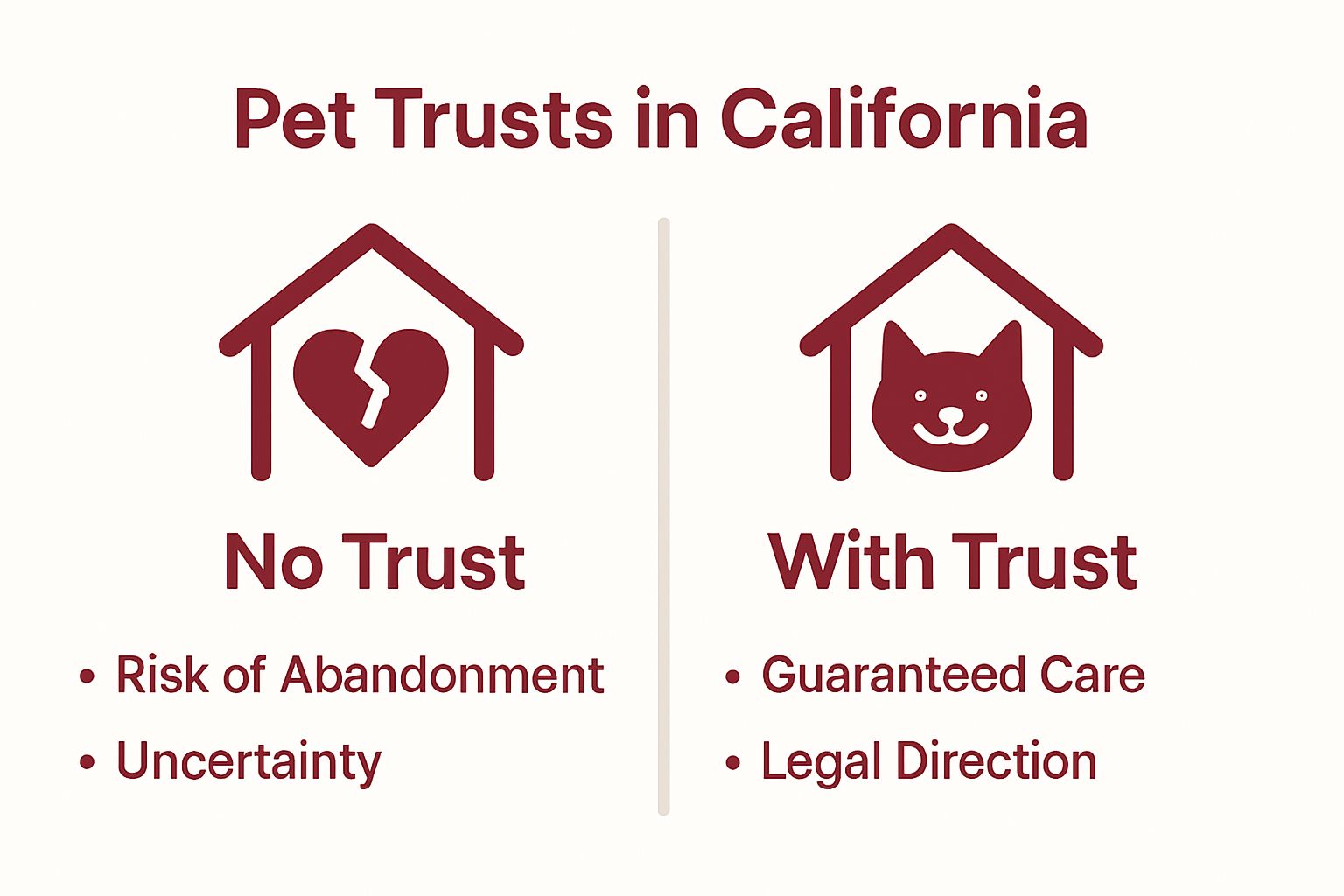
Real-life scenarios highlight the transformative power of pet trusts in preventing potential animal abandonment or unexpected euthanasia. Consider scenarios where pets might otherwise be left vulnerable:
- An elderly owner passing away without clear care instructions
- Sudden medical incapacitation of a pet’s primary caregiver
- Family members unwilling or unable to assume pet care responsibilities
- Complex family dynamics that might compromise an animal’s welfare
These situations underscore the importance of proactive planning through legally structured pet trusts, which provide clear guidelines and financial resources for continued care.
Comprehensive Protection Beyond Basic Arrangements
Learn more about maximizing asset protection through strategic trust planning. Pet trusts go beyond traditional will provisions by offering detailed, enforceable instructions that address an animal’s unique medical, dietary, and emotional needs.
By establishing a comprehensive pet trust, owners can specify everything from preferred veterinary providers to specific dietary requirements, exercise routines, and even emotional comfort considerations. This level of detailed planning ensures that beloved animal companions receive consistent, high-quality care that mirrors the attention they experienced during their owner’s lifetime.
The following table highlights key differences between pet trusts and traditional wills when securing an animal’s future care.
| Feature | Pet Trust | Traditional Will |
|---|---|---|
| Legal Enforceability | Legally binding with direct judicial oversight | May not be specifically enforceable for pet care |
| Detail of Instructions | Allows explicit, detailed care and financial instructions | Limited detail; often general provisions |
| Duration of Care | Lasts for pet’s lifetime or up to 21 years | Distributes assets once; no ongoing care guaranteed |
| Oversight | Court can enforce terms and ensure appropriate use of funds | No active enforcement; relies on beneficiary’s willingness |
| Contingencies | Can include backup caregivers and thorough emergency plans | Often lacks contingency planning for pet care |
Protect Your Pet’s Future with a Thoughtfully Crafted Pet Trust
Are you worried about what might happen to your beloved pet if you are no longer able to care for them? Uncertainty, family disagreements, and financial confusion are common challenges pet owners face when there is no clear legal plan in place. A detailed pet trust offers your companion both security and loving care when you cannot be there. Discover how our Wills & Trusts solutions address the legal and emotional complexities discussed in this article, from trust creation to ongoing management.
You are not alone in wanting the best for your pet. Ridley Law focuses entirely on estate planning and probate concerns in California. Let us help you draft a customized pet trust and create a comprehensive estate plan that avoids probate delays and protects everyone you love. Do not wait for uncertainty to become a crisis. Visit https://ridleylawoffices.com today and take the first step in securing clarity for both you and your pet.
Frequently Asked Questions
What is a pet trust?
A pet trust is a legal arrangement that allows pet owners to ensure their animals receive care and protection when the owner can no longer provide for them due to incapacity or death.
Why is a pet trust important for pet owners?
A pet trust is important because it provides a legally binding framework that guarantees pets will continue to receive proper care, financial support, and attention after their owner’s inability to provide for them, preventing neglect or abandonment.
How do I create a pet trust in California?
To create a pet trust in California, you need to designate funds, appoint a trustee, and provide detailed instructions for your pet’s care, including dietary needs, medical preferences, and living arrangements, in a legally enforceable document.
What are the key roles involved in a pet trust?
The key roles in a pet trust include the grantor (who establishes the trust), the trustee (who manages the trust’s finances), a caregiver (who provides daily care for the pet), and potentially an enforcer (who ensures that the trust’s provisions are followed).
Recommended
- Understanding Pet Trusts in California for Your Family’s Peace – Ridley Law
- Steps for Trust Creation in California: Secure Your Family in 2026 – Ridley Law
- The Rising Importance of Pet Trusts in Estate Planning – Ridley Law
- California Trust Certification: Secure Your Family’s Future in 2026 – Ridley Law
Want a straight read on where you stand?
Talk to Eric. A free 30-minute call, no pitch. He’ll tell you where you’re exposed, what it would cost to fix, and what you can skip.
Talk to Eric