

PARENTS & HOMEOWNERS: MY 7-STEP ESTATE PLANNING PROCESS WILL PROTECT YOUR HEIRS
From Creditors, Predators & Bad Choices, And Will Help You Become a (Bigger) Hero to Your Family!


Privacy Concerns in Probate: Protecting Family Wealth
More than 90 percent of American estates valued over $50,000 must go through probate, making personal and financial details public in the process. For many families, this required transparency exposes private wealth and inheritance plans to anyone who cares to look. If protecting your family’s privacy matters, learning how probate works and how it can impact heirs is essential for avoiding unwanted scrutiny and ensuring smoother, more confidential transfers.
Table of Contents
- What Is Probate And Why Privacy Matters
- How Probate Publicly Reveals Estate Information
- Legal Standards For Privacy In California Probate
- Risks To Heirs And Family From Probate Exposure
- Alternatives To Probate For Greater Privacy
Key Takeaways
| Point | Details |
|---|---|
| Understanding Probate | Probate is the legal process required to settle a deceased person’s estate, involving asset distribution and debt settlement. |
| Privacy Risks | Probate exposes sensitive family financial information to public access, potentially attracting unwanted attention and risks. |
| Alternative Strategies | Families should consider using living trusts and other estate planning mechanisms to protect privacy and manage asset distribution effectively. |
| Legal Protections | California probate law offers privacy standards that families can leverage to reduce unnecessary exposure of personal information during the probate process. |
What Is Probate And Why Privacy Matters
Probate represents the legal process through which a deceased person’s estate gets formally settled and distributed. When someone passes away, their assets don’t automatically transfer to heirs. Instead, understanding the probate process becomes crucial for protecting family wealth and ensuring smooth asset transfer.
At its core, probate involves several critical steps: authenticating the deceased’s will, appraising estate assets, paying outstanding debts and taxes, and ultimately distributing remaining property to rightful beneficiaries. However, what many families fail to recognize is the significant privacy risks embedded within this seemingly straightforward legal procedure. Court records become public documents, meaning intimate financial details about your family’s wealth, asset values, and inheritance distributions are potentially accessible to anyone who wants to investigate.
Privacy concerns during probate are substantial and often overlooked. Personal financial information, family dynamics, asset valuations, and beneficiary details become part of the public record. This transparency can expose families to potential risks including predatory financial schemes, unwanted solicitations, and even potential legal challenges from distant relatives or creditors. High net worth families, in particular, must be strategic about protecting their financial legacy and preventing unnecessary public scrutiny of their personal wealth transfer strategies.
To mitigate these privacy risks, families should consider alternative estate planning mechanisms like living trusts, which can help bypass the public probate process entirely. By working with experienced estate planning professionals, you can develop comprehensive strategies that not only distribute assets effectively but also maintain the confidentiality and discretion your family deserves.
How Probate Publicly Reveals Estate Information
The probate process is inherently transparent, creating significant privacy vulnerabilities for families managing estate distributions. Understanding the legal mechanisms of estate disclosure reveals how personal financial details become matters of public record during probate proceedings. Every document filed with the probate court becomes accessible, which means sensitive information about asset values, beneficiary details, and family financial structures can be discovered by virtually anyone.
Public court records expose intricate details that most families would prefer to keep private. These documents typically include comprehensive inventories of estate assets, exact property valuations, lists of creditors, specific inheritance amounts for each beneficiary, and personal contact information. High net worth families are particularly vulnerable, as these disclosures can attract unwanted attention from potential creditors, distant relatives seeking inheritance claims, or even individuals with predatory financial intentions.
The transparency of probate proceedings creates multiple privacy risks that extend beyond immediate financial exposure. Family dynamics, potential conflicts between heirs, and personal financial challenges become part of the public narrative. Creditors can easily identify assets, tax authorities can scrutinize inheritance transfers, and competitors or business rivals might gain insights into family wealth structures. This unprecedented level of disclosure can compromise personal and professional reputations, potentially leading to unexpected legal challenges or social complications.
To protect against these privacy invasions, families must proactively explore alternative estate planning strategies. Living trusts, strategic asset titling, and careful estate structuring can help bypass the public probate process. By working with experienced estate planning professionals, families can develop comprehensive plans that maintain financial privacy, protect asset values, and ensure smooth wealth transfer without subjecting their personal information to public scrutiny.
Legal Standards For Privacy In California Probate
California probate law provides a complex framework of legal standards designed to balance public transparency with personal privacy protections. Navigating the intricate privacy provisions in California probate proceedings requires understanding the delicate balance between court oversight and individual confidentiality. While probate courts mandate public disclosure of certain estate documents, California law also includes specific mechanisms to limit unnecessary exposure of sensitive personal and financial information.
The state’s legal standards recognize that complete privacy is impossible during probate, but they offer strategic protections for families. Certain documents can be sealed or partially redacted, preventing widespread access to the most sensitive details. Executors and estate administrators have legal obligations to protect personal information, with courts providing guidance on what information must be publicly disclosed versus what can remain confidential. High net worth families and those with complex estate structures can leverage specific legal provisions to minimize public exposure of their financial arrangements.
Privacy protections in California probate law extend beyond mere document management. The legal system provides additional safeguards such as limiting public access to specific case files, restricting information distribution, and allowing petitions to protect particularly sensitive information. Families can work with experienced estate planning attorneys to develop strategies that utilize these legal standards, potentially using trusts and other legal instruments that bypass traditional probate proceedings and offer enhanced privacy protections.
Understanding these legal nuances requires professional guidance. Families must proactively engage with estate planning professionals who deeply understand California’s probate privacy laws. By strategically applying these legal standards, individuals can significantly reduce the risk of unwarranted public disclosure, protecting their family’s financial legacy and personal information from unnecessary scrutiny.
Risks To Heirs And Family From Probate Exposure
Probate exposure creates significant vulnerabilities for heirs and families, potentially compromising their financial security and personal privacy. Understanding the intricate risks of public estate proceedings reveals multiple potential threats that extend far beyond simple financial disclosure. When estate details become public record, families face unprecedented risks of personal and financial exploitation, ranging from predatory financial schemes to unexpected legal challenges.

The public nature of probate proceedings exposes heirs to multiple dangerous scenarios. Creditors can easily identify and pursue inherited assets, distant relatives might contest wills, and potential scammers can target vulnerable beneficiaries with sophisticated fraud schemes. Minor children or young adult beneficiaries are particularly at risk, as their inheritance details and personal information become accessible to anyone with minimal investigative effort. High net worth families face even greater risks, with detailed asset inventories potentially attracting unwanted attention from competitors, journalists, or individuals seeking financial advantage.
Financial predators represent one of the most immediate dangers of probate exposure. Detailed estate documents can reveal exact inheritance amounts, family contact information, and asset structures, creating a roadmap for sophisticated scam artists. Vulnerable heirs might be targeted with investment schemes, fraudulent inheritance recovery services, or complex financial manipulation tactics. Young beneficiaries without financial experience are especially susceptible to these risks, potentially losing significant portions of their inheritance to unscrupulous actors who have gained intimate knowledge of their financial situation through public probate records.
Protecting heirs requires proactive estate planning strategies that minimize public exposure. Families must consider alternative estate transfer mechanisms like living trusts, which can bypass traditional probate processes and maintain confidentiality. Working with experienced estate planning professionals who understand these risks can help families develop comprehensive protection strategies that safeguard both their financial assets and their loved ones’ personal information from unnecessary public scrutiny.
Alternatives To Probate For Greater Privacy
Families seeking to protect their financial legacy have multiple strategic alternatives that bypass traditional probate processes and maintain strict confidentiality. Exploring sophisticated estate transfer mechanisms reveals powerful options that can shield family wealth from public scrutiny. Living trusts, transfer-on-death designations, joint ownership arrangements, and other advanced estate planning tools offer meaningful pathways to preserve both asset privacy and efficient inheritance transfer.
Living trusts represent the most comprehensive privacy protection strategy available to California families. By transferring asset ownership to a trust before death, individuals can completely circumvent the public probate process. These legal instruments allow direct asset transfer to beneficiaries without court intervention, keeping detailed financial information confidential. Complex trusts can be structured with multiple layers of protection, enabling precise control over asset distribution while maintaining an impenetrable privacy shield that prevents unauthorized access to sensitive financial details.
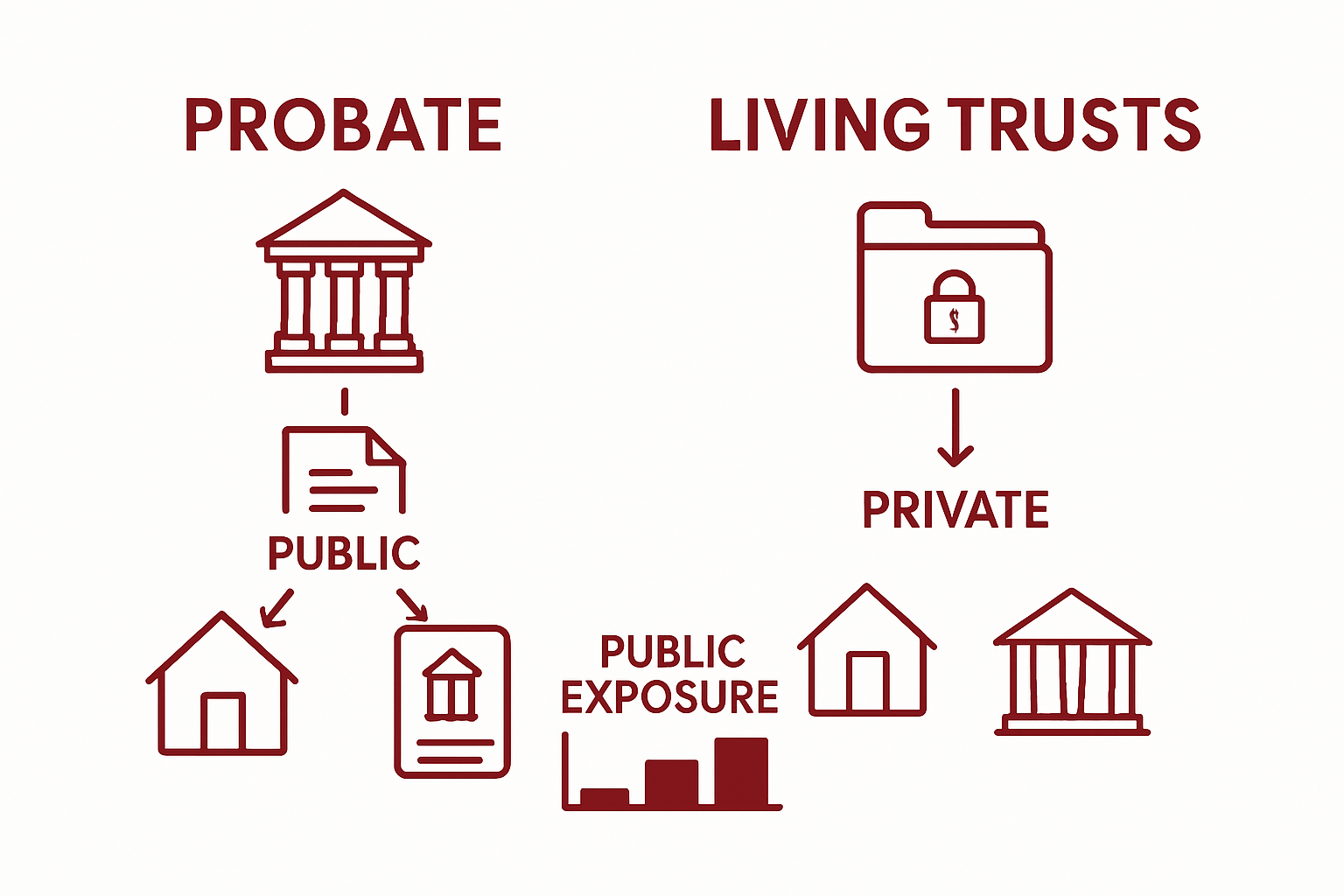
Other privacy-preserving alternatives include transfer-on-death registrations for specific assets like securities and real estate, which enable direct property transfer without probate court involvement. Joint ownership with rights of survivorship allows immediate asset transfer upon death, bypassing public proceedings entirely. Specific financial instruments like payable-on-death bank accounts and retirement account beneficiary designations similarly provide streamlined, private inheritance mechanisms that maintain family financial confidentiality.
Navigating these complex privacy strategies requires professional expertise. Families must work closely with experienced estate planning attorneys who understand the nuanced legal landscape of asset transfer. By implementing carefully designed estate planning approaches, individuals can protect their wealth, preserve their privacy, and ensure smooth, confidential asset transition to the next generation without exposing intimate financial details to unnecessary public examination.
Protect Your Family Wealth and Privacy with Expert Estate Planning
Probate can reveal sensitive family financial details and expose heirs to risks you want to avoid. If you are concerned about privacy during probate and want to protect your wealth from public scrutiny and potential challenges, taking control now is essential. Strategic estate planning using tools like living trusts and wills offers a powerful solution to keep your family’s affairs confidential and secure.

Discover how the Estate Planning and Wills & Trusts services at The Law Office of Eric Ridley can help you build a comprehensive plan that prevents probate delays and protects your family’s legacy. Don’t leave your private financial matters exposed. Visit https://ridleylawoffices.com today to take the first step toward safeguarding your inheritance and ensuring peace of mind.
Frequently Asked Questions
What is probate, and why is it important for protecting family wealth?
Probate is the legal process for settling and distributing a deceased person’s estate. It’s important because it ensures that assets are transferred to rightful beneficiaries, but it also exposes sensitive financial details to public scrutiny.
How does probate expose personal financial information?
During probate, court documents become public records, revealing intimate details about asset values, debts, beneficiaries, and family dynamics. This transparency can pose privacy risks, attracting unwanted attention from creditors and others.
What are the privacy risks associated with probate?
Privacy risks include exposure to predatory financial schemes, unwanted solicitations, and potential legal challenges from distant relatives or creditors. Families may face reputational damage due to the public nature of probate proceedings.
What alternatives to probate can help maintain privacy?
Alternatives like living trusts, transfer-on-death designations, and joint ownership arrangements can help bypass probate and protect family wealth from public exposure, ensuring a smoother and more confidential asset transfer.
Recommended
- Avoiding Probate Disputes in California: Protect Your Wealth in 2025 – Law Office of Eric Ridley
- Real Estate Probate Sales in California: How Families Secure Their Wealth (2025 Guide) – Law Office of Eric Ridley
- Court Supervised Probate in California: What Families Need to Know for 2025 – Law Office of Eric Ridley
- Real Estate in Probate: California Planning Guide for Wealthy Families 2025 – Law Office of Eric Ridley
- Understanding the Importance of Privacy in Family Chat Apps – Wisdom
- Is It Possible To Inherit Medical Debt? –
