

PARENTS & HOMEOWNERS: MY 7-STEP ESTATE PLANNING PROCESS WILL PROTECT YOUR HEIRS
From Creditors, Predators & Bad Choices, And Will Help You Become a (Bigger) Hero to Your Family!


Trustee Responsibilities: Protecting Your California Estate
Over 60 percent of American parents with significant assets have not named a trusted person to oversee their estate plan. For California families with young children, selecting the right trustee is not just a legal formality. The future guardianship of your kids and protection of your wealth depend on someone who can handle complex rules while honoring your wishes. Discover why understanding the trustee’s role is crucial for wealthy families aiming for lasting security.
Table of Contents
- What Is a Trustee in California Estate Planning
- Types of Trusts and Key Trustee Roles
- Legal Framework: California Probate Code Requirements
- Core Fiduciary Duties of Trustees
- Managing Assets, Reporting, and Beneficiary Communication
- Risks, Mistakes, and Legal Liability for Trustees
Key Takeaways
| Point | Details |
|---|---|
| Role of Trustee | A trustee is a key figure in California estate planning, managing and distributing trust assets according to legal guidelines. |
| Fiduciary Duties | Trustees must adhere to high ethical standards, including duties of care, loyalty, and impartiality to protect beneficiaries’ interests. |
| Legal Obligations | California Probate Code stipulates specific responsibilities for trustees, including transparency and compliance to avoid legal liabilities. |
| Communication and Reporting | Effective communication with beneficiaries is essential, requiring regular updates and detailed financial reporting to maintain trust. |
What Is a Trustee in California Estate Planning
A trustee represents a critical role in California estate planning, serving as the legal guardian of assets within a trust. Specifically, a trustee is an individual or institution appointed to manage and distribute assets according to the precise instructions outlined in a trust document. Unlike an executor who manages assets through a will, a trustee operates within a more complex legal framework that provides enhanced asset protection and privacy.
In California, trustees carry significant fiduciary responsibilities that extend far beyond simple asset management. They must act with unwavering loyalty, prudence, and impartiality while navigating complex legal requirements. This means making strategic financial decisions, protecting beneficiary interests, and ensuring all trust activities comply with state statutory regulations. Trustees can be family members, trusted friends, professional advisors, or financial institutions with expertise in estate management.
The scope of a trustee’s duties is comprehensive. They must maintain accurate financial records, make appropriate investment choices, distribute assets according to trust guidelines, communicate transparently with beneficiaries, and potentially manage assets across multiple generations. California law requires trustees to avoid conflicts of interest, maintain confidentiality, and always prioritize the beneficiaries’ best interests. Trustees who fail to meet these standards can be held legally accountable for mismanagement.
Pro tip: Before accepting a trustee role, carefully review the trust document and consider consulting an estate planning attorney to fully understand your legal obligations and potential risks.
Types of Trusts and Key Trustee Roles
California estate planning encompasses several distinct trust types, each with unique characteristics and specific trustee responsibilities. Living trusts represent one of the most prevalent estate planning instruments, allowing individuals to manage assets during their lifetime while providing flexibility for future asset distribution. These trusts can be revocable or irrevocable, with trustees holding critical powers to protect and manage family wealth.
The primary trust categories include inter vivos (living) trusts, testamentary trusts, and specialized trusts designed for specific purposes. Living trusts activate during the settlor’s lifetime, enabling immediate asset management and potential tax benefits. Testamentary trusts, created through a will, become effective after the individual’s death. Specialty trusts such as discretionary, support, charitable, and special needs trusts offer targeted solutions for complex family financial planning scenarios.
Trustees play multifaceted roles across these trust structures. Their fundamental responsibilities include asset preservation, prudent investment management, accurate tax planning, and executing distributions according to trust guidelines. In living trusts, trustees might initially be the same person who created the trust, with successor trustees prepared to take over management during incapacity or after death. Professional trustees from financial institutions can also serve, bringing specialized expertise in complex estate management.
Pro tip: Consult an experienced estate planning attorney to determine which trust type best matches your specific family financial goals and potential long-term needs.
Here’s a summary comparing different types of trusts and the trustee roles involved:
| Trust Type | When It Takes Effect | Typical Trustee | Main Purpose |
|---|---|---|---|
| Living Trust | During the settlor’s lifetime | Settlor or successor trustee | Asset management and flexibility |
| Testamentary Trust | After death, via will | Family member, professional, or bank | Asset distribution after death |
| Special Needs Trust | Upon creation, as needed | Family or professional trustee | Support for beneficiaries with disabilities |
| Charitable Trust | Upon creation | Individual or institution | Donating assets to charity |
Legal Framework: California Probate Code Requirements
California’s estate planning legal framework establishes rigorous guidelines for trustees through the California Probate Code, which provides comprehensive rules governing trust administration. These regulations create a structured approach to protecting beneficiaries’ interests, ensuring trustees operate with the highest standards of fiduciary responsibility. The code mandates specific duties that trustees must follow, including maintaining transparency, avoiding conflicts of interest, and executing the precise intentions of the trust’s original creator.
The Probate Code outlines explicit requirements for trustees across multiple dimensions of trust management. Key responsibilities include prudent asset investment, maintaining accurate financial records, communicating regularly with beneficiaries, and adhering to the specific instructions outlined in the trust document. Trustees must exercise reasonable care, skill, and caution when managing estate assets, following the Uniform Prudent Investor Act’s standards for financial decision making. Failure to meet these obligations can result in legal consequences, including potential removal from trusteeship and personal liability for financial damages.
Judicial oversight plays a critical role in enforcing these legal requirements. California courts have the authority to intervene if trustees breach their fiduciary duties, with mechanisms in place to protect beneficiaries’ interests. This includes mandatory accounting procedures, the ability to challenge trustee actions, and potential court-ordered remedies. The legal framework creates a robust system of checks and balances, ensuring that trustees cannot unilaterally mismanage or misappropriate trust assets without potential legal repercussions.
Pro tip: Maintain comprehensive documentation of all trust-related transactions and decisions to demonstrate your compliance with Probate Code requirements.
Core Fiduciary Duties of Trustees
Trustees in California bear significant legal responsibilities, anchored by fundamental fiduciary duties that establish the highest ethical standards for trust management. These core obligations create a comprehensive framework that protects beneficiaries’ interests and ensures trustees operate with absolute integrity. The primary fiduciary duties include care, loyalty, good faith, impartiality, and diligence – each representing a critical aspect of responsible trust administration.

The duty of care requires trustees to manage trust assets with the same level of prudence and attention a reasonable person would apply to their own financial affairs. This means making informed, strategic decisions, conducting thorough research before investments, and maintaining comprehensive financial records. The duty of loyalty mandates that trustees act exclusively in the beneficiaries’ best interests, completely avoiding any potential conflicts of interest or personal financial gain that might compromise the trust’s objectives.
Impartiality represents another crucial fiduciary responsibility, particularly when multiple beneficiaries have competing interests. Trustees must treat all beneficiaries fairly, making distributions and investment decisions that balance different needs without showing preference. California law provides robust mechanisms to enforce these duties, including potential legal remedies such as financial compensation, asset restoration, and trustee removal for those who fail to meet their fiduciary obligations. Comprehensive documentation and transparency are essential, as trustees can be held personally accountable for mismanagement or breaches of their fundamental responsibilities.
Pro tip: Consult with an estate planning professional annually to review your trust management practices and ensure continuous compliance with fiduciary standards.
Managing Assets, Reporting, and Beneficiary Communication
Trustees bear a critical responsibility for comprehensive asset management and transparent communication with beneficiaries. This complex role requires meticulous financial oversight, strategic investment management, and consistent reporting that meets both legal standards and beneficiary expectations. Effective trustees must develop a systematic approach to tracking, protecting, and growing trust assets while maintaining open and clear lines of communication.
The investment and preservation of trust assets demand sophisticated financial acumen. Trustees must make prudent investment decisions that balance growth potential with risk management, considering the specific goals and needs outlined in the trust document. This involves creating diversified investment portfolios, monitoring market conditions, and making strategic adjustments to protect and potentially enhance the trust’s value. Regular financial reporting becomes crucial, providing beneficiaries with detailed insights into asset performance, investment strategies, and any significant changes in the trust’s financial landscape.
Beneficiary communication represents a fundamental aspect of trustee responsibilities. Trustees must provide timely, comprehensive updates about trust operations, financial status, and any decisions that might impact beneficiaries. This communication should be clear, transparent, and frequent enough to maintain trust and prevent potential conflicts. California law mandates specific reporting requirements, including annual accountings that detail income, expenses, distributions, and overall trust performance. Trustees who fail to maintain adequate communication risk legal challenges, potential removal from their position, and personal liability for mismanagement.
Pro tip: Implement a standardized communication protocol with beneficiaries, including quarterly written reports and an annual in-person or virtual meeting to discuss trust performance and address any questions.
Risks, Mistakes, and Legal Liability for Trustees
Trustees navigate a complex legal landscape with significant potential for personal liability and financial consequences. The responsibilities of trust management extend far beyond simple asset administration, encompassing intricate legal and ethical obligations that can expose trustees to substantial risks. Mismanagement, even unintentional, can result in serious legal challenges, financial penalties, and potential removal from trustee responsibilities.
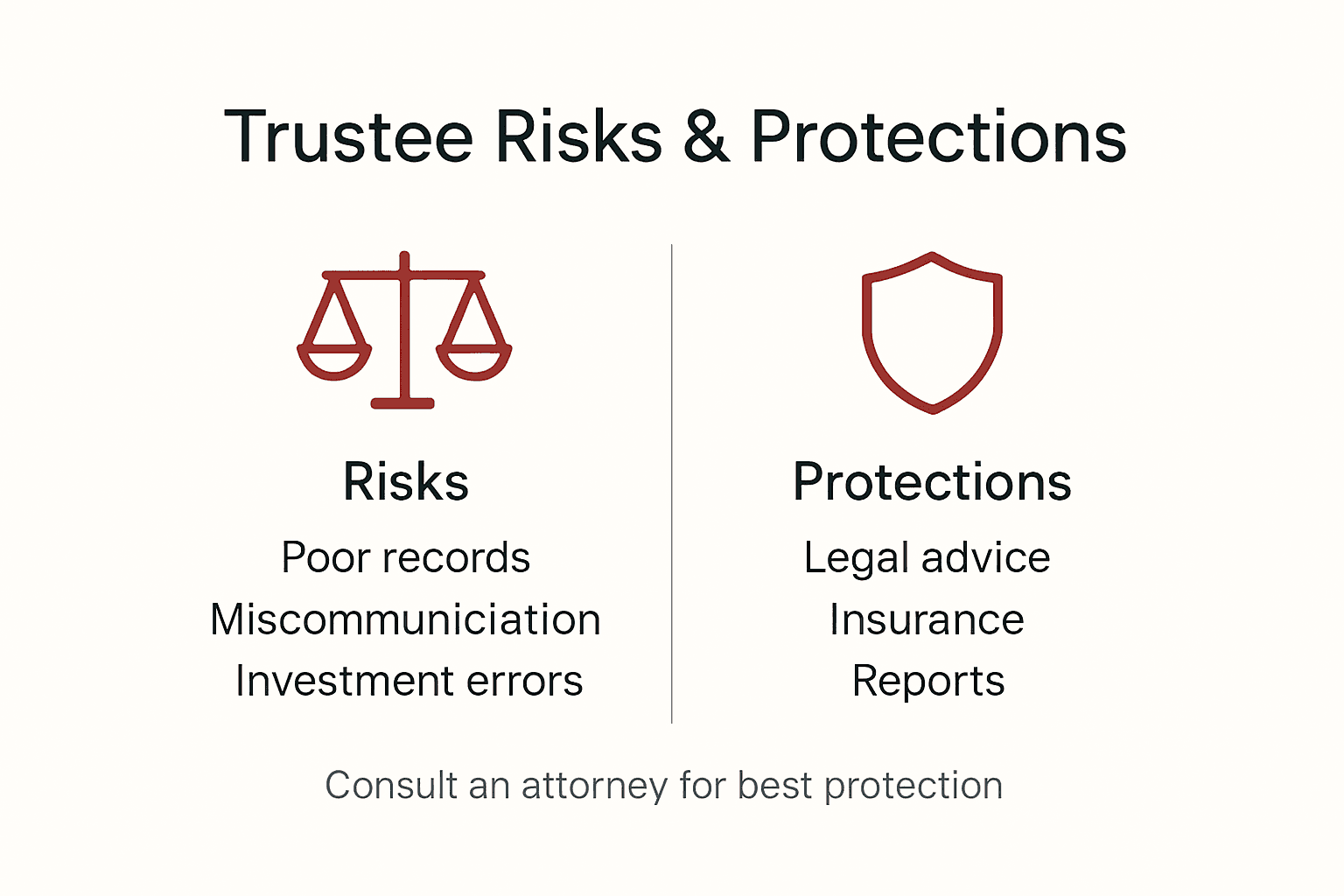
The most common risks for trustees include critical errors such as improper asset management, failure to diversify investments, self-dealing transactions, missed tax filings, and inadequate beneficiary communication. These mistakes can trigger legal actions from beneficiaries, potentially resulting in financial restitution, court sanctions, and permanent removal from trustee duties. Trustees must maintain meticulous financial records, make prudent investment decisions aligned with the trust’s objectives, and consistently demonstrate transparent and impartial management of trust assets.
Legal liability can manifest through various mechanisms, including beneficiary lawsuits, court-ordered financial penalties, and professional sanctions. Trustees may be personally responsible for financial losses resulting from negligence or intentional misconduct. Professional trustees and individual family members serving in this role can protect themselves through comprehensive liability insurance, consistent legal consultation, and rigorous adherence to fiduciary standards. Understanding the potential risks and implementing proactive management strategies becomes crucial for effectively protecting both the trust’s assets and the trustee’s personal financial standing.
Pro tip: Consider obtaining professional liability insurance and maintaining detailed documentation of all trust-related transactions to mitigate potential legal risks.
The following table highlights key risks and protective strategies for trustees:
| Common Trustee Risk | Consequence | Protective Strategy |
|---|---|---|
| Improper asset management | Personal financial liability | Consistent legal and financial consultation |
| Self-dealing transactions | Legal action by beneficiaries | Maintain strict impartiality and avoid conflicts |
| Missed tax filings | Penalties and fines | Engage a tax professional for compliance |
| Poor communication | Loss of trust, removal | Regular, transparent reporting to beneficiaries |
Secure Your Trustee Role with Expert Legal Support
Managing trustee responsibilities in California requires careful attention to fiduciary duties, asset management, and clear communication with beneficiaries. If you are facing challenges protecting your estate or want to ensure compliance with the California Probate Code, expert guidance can provide peace of mind and help you avoid costly mistakes. From trust creation to ongoing administration, understanding your legal obligations is crucial to safeguard your family’s legacy and prevent conflicts.

Take control of your estate planning journey today by consulting with the experienced team at the Law Offices of Eric Ridley. We specialize in Estate Planning, Wills & Trusts, and Probate to provide personalized solutions tailored to your needs. Don’t wait until problems arise. Visit https://ridleylawoffices.com now to schedule your consultation and secure expert help protecting your California estate.
Frequently Asked Questions
What are the primary responsibilities of a trustee in California?
Trustees in California have fiduciary responsibilities that include managing trust assets, maintaining accurate financial records, making prudent investment decisions, and distributing assets according to the trust’s guidelines. They must also communicate transparently with beneficiaries and comply with state regulations.
How can a trustee manage risks associated with their role?
Trustees can manage risks by maintaining detailed documentation of all transactions, seeking regular legal and financial advice, obtaining liability insurance, and adhering strictly to fiduciary duties to prevent potential mismanagement or conflicts of interest.
What are the different types of trusts in California, and how do they impact trustee responsibilities?
California has several types of trusts, including living trusts, testamentary trusts, and special needs trusts. Each type has unique characteristics which define the trustee’s responsibilities, such as asset management during the settlor’s lifetime or distribution after death, affecting how the trustee acts on behalf of the beneficiaries.
What legal obligations do trustees have under the California Probate Code?
Under the California Probate Code, trustees are required to maintain transparency, avoid conflicts of interest, and execute the trust’s intentions as specified in the document. They must also regularly communicate with beneficiaries, make prudent investments, and keep accurate financial records.
Recommended
- Steps for Trust Creation in California: Secure Your Family in 2025 – Law Office of Eric Ridley
- Trustee Responsibilities Explained: California Estate Guide
- The Impact of California Laws on Estate Planning – Law Office of Eric Ridley
- How to Choose the Right Trustee for Your Trust – Law Office of Eric Ridley
