

PARENTS & HOMEOWNERS: MY 7-STEP ESTATE PLANNING PROCESS WILL PROTECT YOUR HEIRS
From Creditors, Predators & Bad Choices, And Will Help You Become a (Bigger) Hero to Your Family!


What to Include in a Will: Secure Your Family’s Future
Every American who owns a home or has a family should know that nearly 60 percent of adults in the United States have not created a will. Planning for the unexpected matters because it protects the people you love most and prevents confusion during difficult times. This guide walks you through every practical step to make estate planning easier and ensure your wishes are respected no matter what the future brings.
Table of Contents
- Step 1: Gather Essential Personal and Financial Details
- Step 2: Identify and List All Key Assets and Beneficiaries
- Step 3: Appoint Guardians and Trust Guardianships for Minor Children
- Step 4: Designate Executors and Set Specific Distribution Instructions
- Step 5: Review and Update Will Provisions for Legal Compliance
Quick Summary
| Key Point | Explanation |
|---|---|
| 1. Gather Essential Personal Documents | Collect and organize personal and financial documents to facilitate estate planning. Include identification, financial statements, and real estate details. |
| 2. Identify All Assets and Beneficiaries | Create a detailed inventory of all your assets and list accurate beneficiary information to prevent family conflicts. |
| 3. Appoint Guardians and Trusts for Minors | Carefully select guardians for minor children and establish trusts to ensure their financial security and care. |
| 4. Designate Executors with Clear Instructions | Select a responsible executor and specify detailed distribution instructions to ensure your assets are managed according to your wishes. |
| 5. Regularly Review and Update Your Will | Periodically assess your will for legal compliance and to reflect your current personal circumstances and intentions. |
Step 1: Gather Essential Personal and Financial Details
Compiling comprehensive personal and financial information is the critical first step in creating an effective will that protects your family’s future. This process involves systematically collecting documentation and details that will help your estate planning attorney create a thorough and legally sound estate plan.
Start by assembling key personal documents including your birth certificate, social security card, marriage license, divorce papers (if applicable), and identification documents. For financial records, gather statements from bank accounts, investment portfolios, and retirement accounts to provide a complete picture of your assets. Include documentation for real estate properties, vehicle titles, business ownership certificates, life insurance policies, and any outstanding debts or loans.
One crucial tip: organize these documents in a secure yet accessible location and inform a trusted family member or executor about their whereabouts. Digital backups can provide an additional layer of protection against loss or damage. By meticulously collecting and organizing these records now, you’ll make the estate planning process smoother and help ensure your final wishes are carried out precisely as you intend.

Step 2: Identify and List All Key Assets and Beneficiaries
Identifying and documenting every significant asset and potential beneficiary is a critical step in creating a comprehensive estate plan. This process goes beyond simply listing bank accounts and property to ensure your entire financial legacy is protected.
Begin by creating an exhaustive inventory of your tangible and intangible assets. This includes real estate properties, vehicles, personal valuables, investment accounts, retirement funds, life insurance policies, business interests, and digital assets like cryptocurrency or online accounts. For each asset, note its current value, location of relevant documentation, and any specific instructions for distribution. When identifying beneficiaries, be precise and comprehensive. Include full legal names, social security numbers, and current contact information for each person or organization you want to inherit your assets. Consider potential contingencies like what happens if a primary beneficiary predeceases you or how you want assets distributed among minor children.
A critical warning: many people overlook digital assets and online accounts, which can create significant complications for executors. Provide clear instructions about accessing digital platforms, including login credentials and specific wishes for social media accounts, email, and online financial platforms. By meticulously documenting your assets and beneficiaries now, you prevent potential family conflicts and ensure your final wishes are carried out exactly as you intend.
Step 3: Appoint Guardians and Trust Guardianships for Minor Children
Selecting guardians and establishing trust guardianships for your minor children is one of the most critical and emotionally challenging aspects of estate planning. This step ensures your children will be cared for and financially protected if something unexpected happens to you.
When choosing a guardian, consider individuals who share your values, have a strong emotional connection with your children, and demonstrate the financial and emotional stability to raise them. Carefully document your guardian selection in your will with precise legal language that outlines your expectations and wishes. Include backup guardians in case your first choice is unable or unwilling to take on the responsibility. Additionally, establish a trust to manage the financial resources your children will inherit. This approach allows you to set specific guidelines for how and when your children can access their inheritance, protecting them from potential financial mismanagement.
A crucial warning: do not assume family members will automatically agree to guardianship or understand your intentions. Have candid conversations with potential guardians before legally documenting their role, ensuring they are willing and prepared to take on this significant responsibility. By thoughtfully selecting guardians and creating a comprehensive trust strategy, you provide your children with emotional security and financial protection during an incredibly vulnerable time.
Step 4: Designate Executors and Set Specific Distribution Instructions
Designating a trusted executor and providing clear distribution instructions are fundamental steps in creating a comprehensive and effective will. Your executor will be responsible for managing your estate and ensuring your final wishes are carried out precisely as you intend.
When selecting an executor, choose someone responsible, financially savvy, and emotionally capable of handling complex administrative tasks during a difficult time. Selecting a trustworthy executor is crucial for smooth estate settlement and can prevent potential family conflicts. Consider naming a primary executor and at least one backup to ensure continuity. Be extremely specific about how you want your assets distributed. Rather than broad statements, provide detailed instructions for each asset category. For instance, specify exact percentages for inheritance, conditions for receiving funds, and any special provisions for minor children or family members with unique needs.
A critical warning: do not assume your executor understands all your intentions. Have explicit conversations with your chosen executor beforehand, providing them with a comprehensive overview of your assets, distribution preferences, and any special circumstances. By meticulously detailing your wishes and selecting a capable executor, you create a robust framework that protects your family’s financial future and minimizes potential legal complications during an already challenging time.
Step 5: Review and Update Will Provisions for Legal Compliance
Regularly reviewing and updating your will is crucial to ensure your estate plan remains current, legally compliant, and accurately reflects your most recent wishes. Legal requirements and personal circumstances can change rapidly, making periodic review an essential component of responsible estate planning.
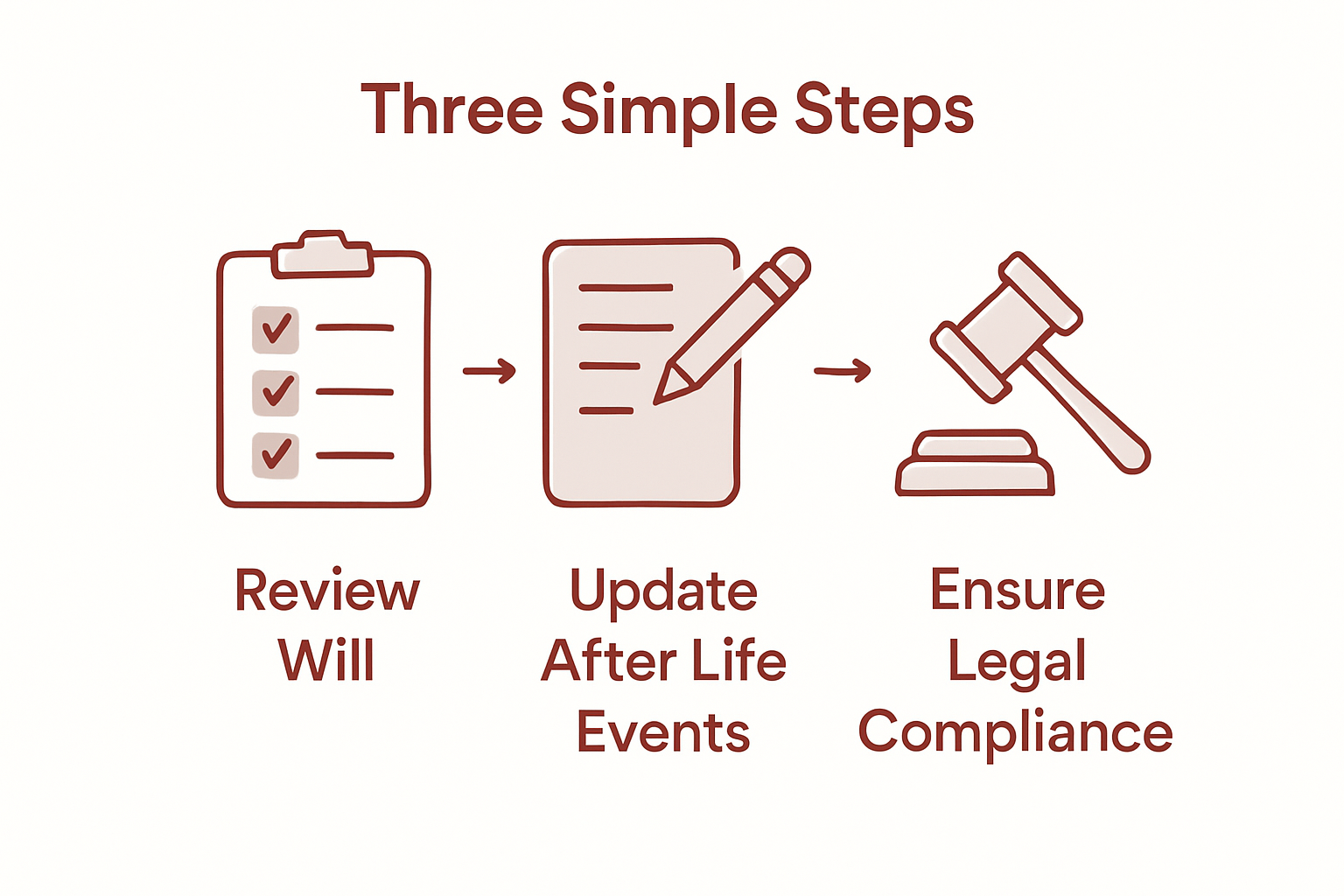
Updating your estate plan after major life changes is fundamental to maintaining its effectiveness. Key triggering events that necessitate a comprehensive review include marriage, divorce, birth of children, significant financial shifts, property acquisitions, or changes in tax laws. During these reviews, verify that your beneficiary designations are current, your executor and guardian appointments remain appropriate, and your asset distribution instructions align with your present family dynamics and financial situation.
A critical warning: do not assume your existing will remains valid simply because you drafted it years ago. Laws change, family circumstances evolve, and what made sense five or ten years ago might be completely inappropriate today. Consult with a legal professional at least every three to five years to ensure your will remains legally robust and truly representative of your current intentions. By proactively maintaining your estate plan, you protect your family from potential legal complications and ensure your legacy is preserved exactly as you envision.
Secure Your Family’s Future with Expert Will and Estate Planning Support
Creating a will that clearly defines your assets, appoints guardians, and sets distribution instructions is essential to avoiding probate delays and family conflicts. If you feel overwhelmed by the challenges of gathering detailed financial information or choosing the right executor and guardians, you are not alone. The Law Offices of Eric Ridley specialize in helping California families design wills and trusts that protect their legacies and provide peace of mind.

Take control of your estate planning today by partnering with experienced advisors dedicated to your goals. Explore our estate planning wills & trusts services to ensure every critical detail is addressed. Learn about appointing reliable guardians and managing complex distribution through our specialized power of attorney resources. Visit The Law Offices of Eric Ridley now for a personalized consultation and make the confident decision to secure your family’s future without delays or costly mistakes.
Frequently Asked Questions
What personal documents should I gather for my will?
You should collect key personal documents such as your birth certificate, social security card, marriage license, and identification documents. Start compiling these records now to ensure a smooth estate planning process.
How do I identify my key assets for my will?
Begin by creating an inventory of both tangible and intangible assets, including real estate, vehicles, bank accounts, and digital assets. Document the current value and location of each asset, making it easier for your estate planning attorney to draft your will accurately.
What factors should I consider when choosing a guardian for my children?
Select guardians who share your values and can provide a stable environment for your children. Have open discussions with potential guardians to ensure they understand the responsibilities before officially naming them in your will.
How can I ensure my will complies with legal requirements?
Regularly review your will, especially after major life changes like marriage or the birth of children. Schedule an appointment with a legal professional every three to five years to confirm your will meets current legal standards and reflects your current wishes.
What specific instructions should I include for asset distribution in my will?
Be detailed about how you want your assets divided, specifying percentages or specific items for each beneficiary. Clearly outline any special provisions for minor children or dependents to avoid confusion during the distribution process.
Why is it important to name an executor in my will?
An executor handles your estate after your passing, ensuring your wishes are executed properly. Choose someone responsible and financially savvy, and discuss your intentions with them to ensure they are prepared for this important role.
Recommended
- Do I Need a Will in California? Protecting Your Family’s Future in 2025 – Law Office of Eric Ridley
- Essential Steps to Draft a Will in California for Families (2025) – Law Office of Eric Ridley
- How to Protect Your Children’s Future with Estate Planning – Law Office of Eric Ridley
- Estate Planning Basics in California: Protect Your Family in 2025 – Law Office of Eric Ridley
- 7 Smart Personal Finance Strategies for Everyday Success | Prodcast
