

PARENTS & HOMEOWNERS: MY 7-STEP ESTATE PLANNING PROCESS WILL PROTECT YOUR HEIRS
From Creditors, Predators & Bad Choices, And Will Help You Become a (Bigger) Hero to Your Family!


How to Settle Estate Taxes in California Step by Step
Most American families are surprised to learn that estate tax rules can differ greatly from state to state. For anyone managing an estate in California, navigating these differences is crucial to avoiding costly mistakes. From collecting the right documents to calculating taxes, each step affects the outcome for executors and heirs. This guide walks you through vital steps and helps ensure your loved one’s legacy is protected and compliant every step of the way.
Table of Contents
- Step 1: Gather Essential Estate Documents
- Step 2: Identify and Value All Estate Assets
- Step 3: Calculate Federal and California Estate Tax Liability
- Step 4: File Required Estate Tax Returns and Pay Taxes
- Step 5: Verify Estate Tax Clearance Before Distribution
Quick Summary
| Key Point | Explanation |
|---|---|
| 1. Gather Essential Estate Documents | Compile financial records like bank statements and tax returns to assess the estate’s value and manage taxes accurately. |
| 2. Identify and Value All Estate Assets | Create a detailed inventory of all owned assets and obtain professional appraisals to determine their accurate market value. |
| 3. Calculate Estate Tax Liability | Understand federal tax obligations, noting the exemption threshold, and calculate the estate’s net value to avoid penalties. |
| 4. File Required Estate Tax Returns | Submit IRS Form 706 if applicable, ensuring accurate documentation and adherence to filing deadlines to avoid fines. |
| 5. Verify Estate Tax Clearance Before Distribution | Obtain written confirmation from tax authorities that all tax obligations are met before distributing assets to heirs. |
Step 1: Gather Essential Estate Documents
Navigating estate taxes requires meticulous document collection. The process starts with assembling a comprehensive set of financial records that will help California executors accurately assess and manage the estate’s value and tax obligations.
Begin by collecting critical financial documents from multiple sources. This includes gathering comprehensive documentation from various accounts and records recommended by California Courts. Key documents include bank statements, investment account records, retirement account information, life insurance policies, real estate deeds, vehicle titles, and any existing trust or will documents. Locate recent tax returns for the past three to five years, as these provide critical insight into the deceased’s financial landscape.
Track down digital and physical records stored in different locations. Check safe deposit boxes, home filing cabinets, online banking portals, and cloud storage accounts. Request copies of financial statements from banks, brokerage firms, and investment institutions. If documents are missing, contact financial advisors or account managers who can help reconstruct the estate’s financial history.
Pro tip: Create a secure, organized digital folder with scanned copies of all essential documents. This ensures backup protection and makes sharing information with estate attorneys or tax professionals significantly easier.
Here is a quick reference guide to essential estate documents and why each is needed:
| Document Type | Purpose | Relevance for Executors |
|---|---|---|
| Bank statements | Verify cash assets and balances | Establish financial account values |
| Real estate deeds | Prove property ownership | Determine real estate holdings |
| Life insurance policy | Identify beneficiaries and payouts | Account for non-probate assets |
| Tax returns | Analyze financial history | Uncover income, assets, deductions |
| Investment records | List securities and share ownership | Value stocks, bonds, and mutual funds |
| Trust or will | Guide asset distribution | Confirm legal directions and wishes |
Step 2: Identify and Value All Estate Assets
Identifying and valuing estate assets is a critical step in the California estate tax settlement process. This crucial phase involves meticulously cataloging and determining the financial worth of everything the deceased owned at the time of death.

Marshaling all of the decedent’s property requires a comprehensive approach. Start by creating a detailed inventory of all assets including real estate, bank accounts, investment portfolios, retirement accounts, life insurance policies, vehicles, personal property, and business interests. Obtain current market valuations for each asset by getting professional appraisals for real estate, obtaining recent statements for financial accounts, and researching current market values for personal property and vehicles.
For complex assets like businesses or unique personal property, consider hiring professional appraisers who can provide accurate and legally defensible valuations. Remember that the valuation date is typically the date of the decedent’s death or an alternate valuation date six months later. Carefully document all valuation methods and supporting evidence, as these will be crucial for tax reporting and potential legal reviews.
Pro tip: Create a comprehensive spreadsheet tracking each asset’s description, estimated value, valuation method, and supporting documentation to streamline the estate settlement process and provide clear evidence for tax authorities.
Step 3: Calculate Federal and California Estate Tax Liability
Calculating estate tax liability is a critical step in settling an estate that requires precision and careful financial analysis. Understanding your tax obligations will help prevent potential penalties and ensure compliance with federal and state regulations.
Filing requirements for estates and trusts involve several important considerations. While California does not impose a state estate tax, federal estate taxes remain a significant financial consideration for larger estates. The federal estate tax exemption is currently set at $12.92 million per individual in 2023, which means only estates valued above this threshold will owe federal estate taxes. Calculate the total estate value by adding up all assets including real estate, investments, retirement accounts, life insurance proceeds, and personal property. Subtract any outstanding debts, funeral expenses, and administrative costs to determine the net estate value.
For estates potentially subject to federal estate taxes, you will need to file IRS Form 706 within nine months of the decedent’s death. The tax rate for estates exceeding the exemption can be as high as 40%, so precise calculation is crucial. Consider consulting with a tax professional who specializes in estate planning to ensure accurate calculations and explore potential strategies for minimizing tax liability.
Pro tip: Maintain detailed documentation of all asset valuations and calculations, as the IRS may request comprehensive proof of your estate tax computations.
The table below summarizes federal vs. California estate tax considerations:
| Factor | Federal Estate Tax | California Estate Tax |
|---|---|---|
| Applies if estate over | $12.92 million (2023) | No separate estate tax |
| Main tax form | IRS Form 706 | None required |
| Top tax rate | Up to 40% above exemption | Not applicable |
| Filing deadline | 9 months after death | Not applicable |
| Professional advice | Recommended for large estates | Not usually required |
Step 4: File Required Estate Tax Returns and Pay Taxes
Filing estate tax returns is a critical legal responsibility that requires meticulous attention to detail and strict adherence to federal and state filing requirements. This step involves preparing and submitting the necessary tax documents to ensure proper settlement of the estate’s financial obligations.
Filing instructions for estate tax returns involve multiple critical components. For federal taxes, you will need to complete IRS Form 706 if the estate exceeds the current exemption threshold of $12.92 million. Although California does not impose a state estate tax, you must still file federal returns and potentially pay taxes on the estate’s value. Gather all required documentation including detailed asset valuations, debt information, and personal representative credentials. Carefully review the filing deadlines because missing these can result in significant penalties and interest charges.
The executor or personal representative is personally responsible for ensuring accurate and timely tax filing. This means preparing a comprehensive tax return that includes all estate assets, calculating any tax liability, and submitting payment to the appropriate tax authorities. Consider working with a tax professional who specializes in estate taxation to navigate the complex requirements and potentially identify strategies for minimizing the estate’s tax burden.
Pro tip: Create a dedicated file folder containing copies of all tax returns, supporting documentation, and proof of payment to maintain a clear record for potential future audits or inquiries.
Step 5: Verify Estate Tax Clearance Before Distribution
Verifying estate tax clearance is a crucial final step in the estate settlement process that protects both the executor and the beneficiaries from potential future legal and financial complications. This step ensures that all tax obligations have been fully satisfied before distributing assets to heirs.
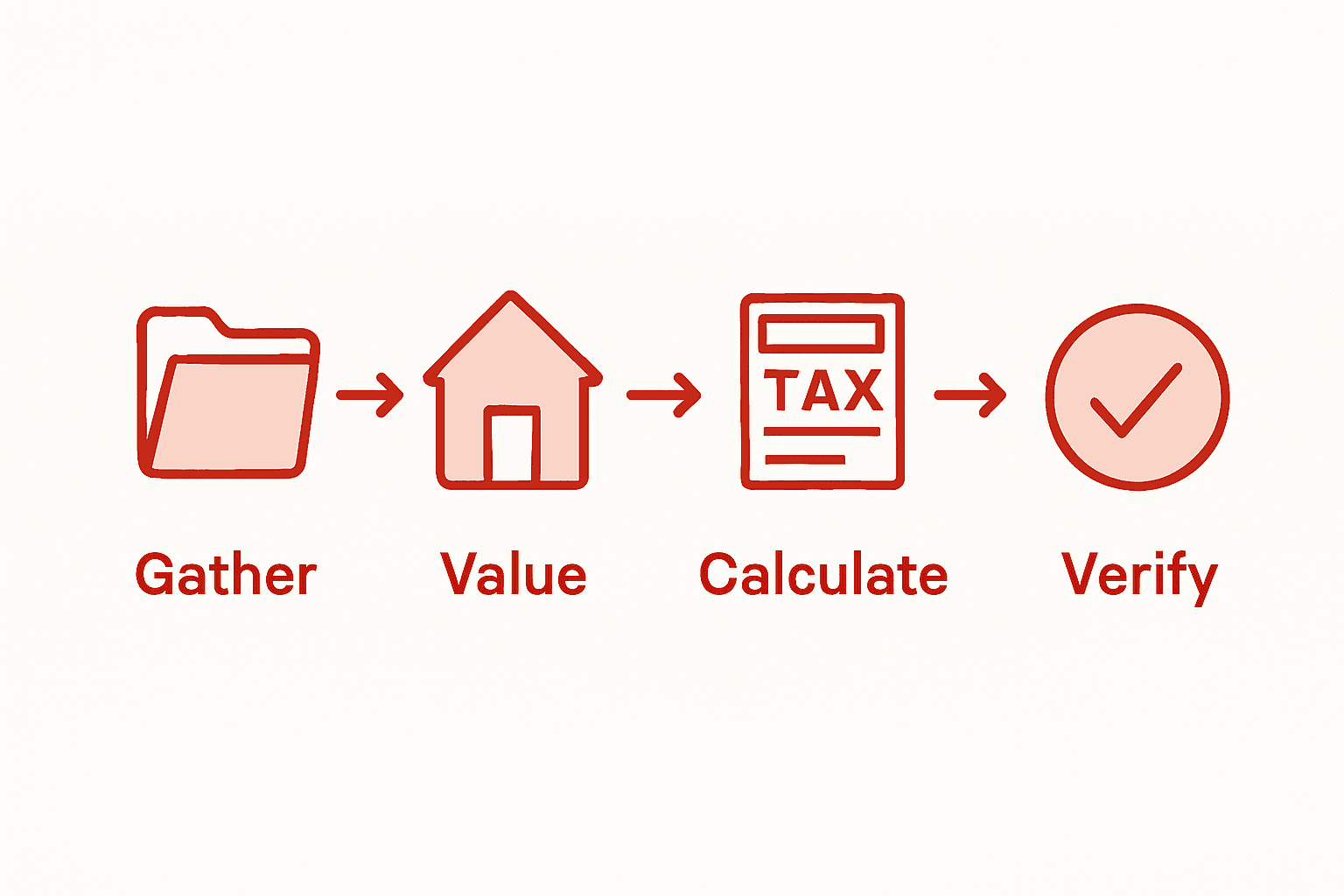
Obtaining tax clearance from official sources requires careful documentation and verification. Request a tax clearance certificate from both the Internal Revenue Service and the California Franchise Tax Board. This document confirms that all outstanding tax liabilities have been paid and that the estate is free from any pending tax claims. Review all filed tax returns meticulously, ensuring that Form 706 for federal estate taxes and any required income tax returns have been completed accurately and submitted with full payment.
The executor bears personal responsibility for confirming tax clearance before making any asset distributions. This means obtaining written confirmation from tax authorities that no additional taxes are owed and that the estate has been fully settled from a tax perspective. Consulting with a tax professional or estate attorney can help navigate this complex process and ensure that all necessary clearances have been obtained before proceeding with asset distribution.
Pro tip: Create a comprehensive checklist of all required tax clearance documents and keep copies of all correspondence and clearance certificates in a secure, permanent file for future reference.
Expert Help for Settling Estate Taxes in California with Confidence
Settling estate taxes can feel overwhelming due to the complexity of gathering documents, valuing assets, calculating federal taxes, and filing precise returns. The risk of errors or missed deadlines can create costly delays and legal challenges that hurt families already facing loss. That is why working with trusted professionals who understand California law and tax obligations is essential for smooth probate administration and protecting your family’s legacy.
If you want to avoid costly mistakes and ensure every step— from estate planning and trust creation to probate and tax clearance— is handled correctly, explore expert guidance in Estate Planning, Wills & Trusts, and Probate at the Law Office of Eric Ridley.

Take control today to prevent delays, reduce stress, and secure your family’s future with trusted advice and responsive support. Learn more about how we help California families by visiting https://ridleylawoffices.com and schedule a consultation to start settling estate taxes the right way.
Frequently Asked Questions
What documents do I need to settle estate taxes in California?
You will need to gather essential estate documents such as bank statements, investment records, real estate deeds, life insurance policies, and recent tax returns. Start by creating a comprehensive file that organizes all these documents for easy access during the estate settlement process.
How do I identify and value assets for estate tax calculations?
Begin by creating a detailed inventory of all estate assets including real estate, bank accounts, and personal property. Obtain current market valuations for each asset, using professional appraisals when necessary, to accurately assess their worth at the time of death.
What is the federal estate tax exemption amount for 2023?
The federal estate tax exemption is set at $12.92 million per individual for 2023. If the total estate value exceeds this amount, you will need to file IRS Form 706 to determine your tax obligations.
How do I file required estate tax returns and pay taxes?
To file estate taxes, complete IRS Form 706 if the estate exceeds the exemption threshold. Gather all necessary documentation and ensure you submit your return and payment within nine months of the decedent’s death to avoid penalties.
How can I ensure tax clearance before distributing estate assets?
To confirm tax clearance, request a tax clearance certificate from the Internal Revenue Service, which verifies that all taxes have been paid. Make sure to obtain this document before distributing any assets to avoid future financial liabilities for yourself and the beneficiaries.
Should I consult a professional when settling estate taxes?
Yes, consulting with a tax professional or estate attorney is highly recommended, especially for larger estates. They can assist you in accurately calculating tax liabilities and navigating complex filing requirements, potentially saving you time and money.
Recommended
- California Probate Process Explained: 2025 Guide for Families and Homeowners – Law Office of Eric Ridley
- The Impact of California Laws on Estate Planning – Law Office of Eric Ridley
- A Step-by-Step Guide to Probate in California – Law Office of Eric Ridley
- Probate Timeline in California: What Families Need to Know in 2025 – Law Office of Eric Ridley
