

PARENTS & HOMEOWNERS: MY 7-STEP ESTATE PLANNING PROCESS WILL PROTECT YOUR HEIRS
From Creditors, Predators & Bad Choices, And Will Help You Become a (Bigger) Hero to Your Family!


Digital Assets in Estate Planning—Protecting Your Legacy
{
“@type”: “Article”,
“image”: {
“url”: “https://csuxjmfbwmkxiegfpljm.supabase.co/storage/v1/object/public/blog-images/organization-1174/1765930229994_image_1765930229774.png”,
“@type”: “ImageObject”,
“description”: “Attorney organizing digital estate paperwork”
},
“author”: {
“url”: “https://ridleylawoffices.com”,
“name”: “Ridleylawoffices”,
“@type”: “Organization”
},
“@context”: “https://schema.org”,
“headline”: “Digital Assets in Estate Planning—Protecting Your Legacy”,
“publisher”: {
“url”: “https://ridleylawoffices.com”,
“name”: “Ridleylawoffices”,
“@type”: “Organization”
},
“inLanguage”: “en”,
“articleBody”: “Digital assets in estate planning: definitions, key asset types, California legal requirements, probate risks, and family protection strategies explained.”,
“description”: “Digital assets in estate planning: definitions, key asset types, California legal requirements, probate risks, and family protection strategies explained.”,
“datePublished”: “2025-12-17T00:11:14.955Z”
}
Nearly half of American adults now store important parts of their lives online, yet most underestimate the risks involved when it comes to digital assets. From financial accounts to cherished photo collections, these digital resources hold real value—and overlooking them in estate planning can lead to complicated legal battles or permanent loss. Understanding how digital assets impact personal legacy is becoming essential for every American who wants to protect their family and property in California’s evolving digital era.
Table of Contents
- Defining Digital Assets For California Estates
- Types Of Digital Assets And Their Value
- Managing Digital Assets In Estate Planning
- California Laws Governing Digital Assets
- Risks, Probate Complications, And Asset Security
Key Takeaways
| Point | Details |
|---|---|
| Understanding Digital Assets | Digital assets encompass both financial and personal properties, necessitating careful consideration in estate planning. |
| Legal Documentation Importance | California laws require explicit authorization for managing digital assets to avoid complications during estate settlement. |
| Create Comprehensive Inventories | Develop encrypted inventories of digital accounts and access credentials to protect digital value and ensure transferability. |
| Regularly Update Estate Plans | Continuously review and update estate planning documents to align with evolving California regulations regarding digital assets. |
Defining Digital Assets for California Estates
In today’s digital world, digital assets represent far more than just physical property. These intangible resources encompass everything from online financial accounts to social media profiles, cryptocurrency holdings, and digital media collections. Understanding how these digital assets intersect with estate planning is crucial for California residents seeking comprehensive legacy protection.
Digital assets now include a wide range of digital properties that hold both monetary and sentimental value. This can encompass digital estate planning strategies like online banking accounts, investment platforms, cryptocurrency wallets, digital photo libraries, email accounts, domain names, intellectual property stored electronically, and digital content creation platforms. Each of these assets represents potential financial value or personal significance that must be carefully considered during estate planning.
In California, digital assets require specific legal documentation to ensure proper transfer and management. Executors and heirs need explicit permission and access credentials to navigate these digital resources effectively. This means creating comprehensive inventories of digital accounts, storing access information securely, and providing legal authorization for digital asset management within estate documents. Without proper planning, valuable digital resources could become inaccessible or lost during estate settlement.
Pro Tip – Digital Asset Preparation: Create a secure, encrypted digital inventory listing all online accounts, login credentials, and specific instructions for accessing and managing these resources in the event of incapacitation or death.
Types of Digital Assets and Their Value
Digital assets represent a diverse and complex category of property that extends far beyond traditional financial holdings. Digital asset classifications encompass multiple categories with significant financial and personal value. These assets can be broadly categorized into several key types that require careful consideration during estate planning.

Financial digital assets include online banking accounts, investment platforms, cryptocurrency wallets, and electronic payment systems. These represent direct monetary value that must be carefully documented and transferred. Cryptocurrency holdings like Bitcoin have become particularly complex, often requiring specific access credentials and encryption keys to transfer ownership. Personal digital assets include email accounts, social media profiles, digital photo libraries, cloud storage repositories, and intellectual property stored electronically. While these might not have immediate financial value, they often hold significant sentimental and potential economic worth.
Business-related digital assets add another layer of complexity to estate planning. These can include domain names, digital content creation accounts, online business platforms, digital marketing assets, website properties, and electronic intellectual property. Each of these digital resources may represent substantial financial value or potential future revenue streams that must be properly accounted for in comprehensive estate documentation.
Pro Tip – Digital Asset Valuation: Conduct an annual digital asset audit to track the current value, access requirements, and potential transferability of your digital properties, ensuring your estate plan remains current and comprehensive.
Here is a summary of common types of digital assets and their estate planning considerations:
| Digital Asset Type | Potential Value | Key Estate Consideration |
|---|---|---|
| Financial Accounts | Monetary and investment | Requires access credentials and transfer planning |
| Personal Media & Profiles | Sentimental, social capital | Important for legacy and privacy |
| Business Digital Assets | Revenue, intellectual value | Must plan for ongoing business access |
| Cryptocurrencies | Fluctuating market value | Needs secure key management |
Managing Digital Assets in Estate Planning
Managing digital assets requires a strategic and comprehensive approach that goes beyond traditional estate planning methods. Effective estate planning for digital assets demands careful documentation, legal authorization, and a thorough understanding of digital property rights. Estate planners must now consider a complex landscape of digital resources that can include financial accounts, personal data, intellectual property, and sensitive online information.
The process begins with creating a comprehensive digital asset inventory that documents every online account, access credential, and potential value. This inventory should include login information, password management details, and specific instructions for accessing and managing each digital resource. Cryptocurrency wallets, online banking platforms, investment accounts, and digital storage repositories require particular attention, as these often involve complex access protocols and potential financial value that can be easily lost without proper documentation.
Legal documentation is crucial in ensuring smooth digital asset transfer and management. Estate planning documents must explicitly grant digital asset access and management rights to designated executors or trustees. This involves updating traditional estate planning instruments to include specific language addressing digital property, creating digital asset power of attorney provisions, and establishing clear guidelines for accessing and potentially liquidating digital resources. Executors must be provided with explicit legal authorization to manage, transfer, or terminate digital accounts in accordance with the asset owner’s wishes.
Pro Tip – Digital Asset Protection: Create an encrypted, secure digital asset roadmap that includes comprehensive access instructions, value assessments, and explicit transfer permissions, ensuring your digital legacy remains protected and manageable for your designated representatives.
California Laws Governing Digital Assets
California has emerged as a pioneering state in developing comprehensive legal frameworks for digital asset management and estate planning. California’s digital asset regulations represent a sophisticated approach to addressing the complex landscape of digital property rights, recognizing the unique challenges posed by intangible digital resources in modern estate planning.
The state has implemented specific provisions that expand traditional estate planning concepts to include digital assets. These laws provide clear guidelines for executors and trustees regarding access, management, and transfer of digital properties, including cryptocurrencies, social media accounts, digital financial records, and online intellectual property. Notably, California law now requires explicit authorization in estate documents to access and manage digital assets, preventing potential legal complications that could arise from incomplete or outdated estate planning documents.
One significant legal development involves the treatment of unclaimed digital assets. Starting January 1, 2026, California will subject digital financial assets to unclaimed property laws, mandating that businesses report unclaimed digital assets after a three-year period. This regulation represents a critical step in protecting digital property rights and ensuring that valuable digital resources are not permanently lost or abandoned. Estate planners and individuals must now consider these evolving legal frameworks when developing comprehensive estate plans that include digital assets.
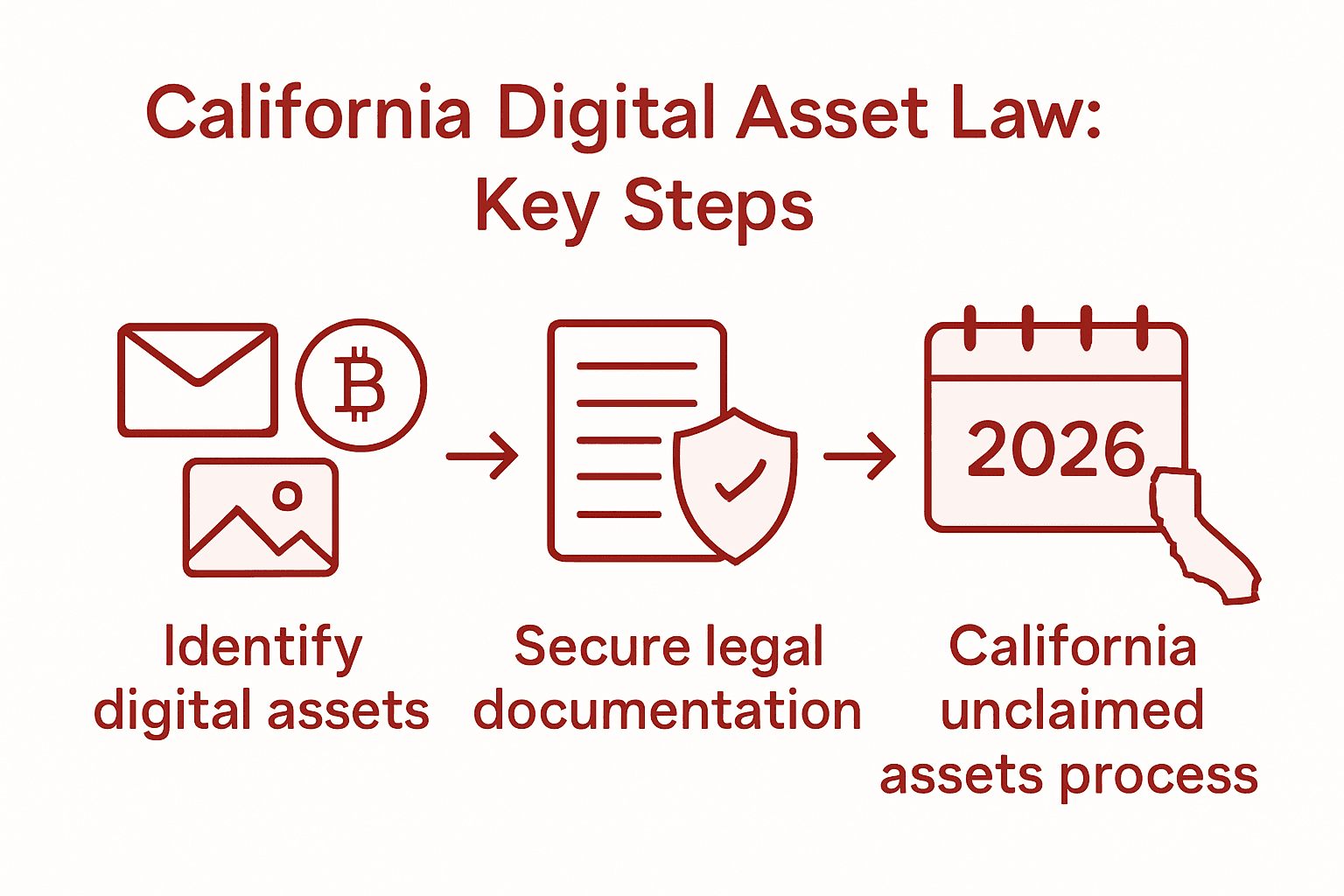
Pro Tip – Legal Compliance: Regularly review and update your estate planning documents to ensure they explicitly address digital asset management, incorporating the latest California legal requirements for comprehensive digital property protection.
Risks, Probate Complications, and Asset Security
Digital assets introduce unprecedented complexities in estate planning, creating significant risks that can compromise an entire estate’s integrity. Effective asset protection strategies must now account for the unique vulnerabilities associated with digital property, including potential unauthorized access, value fluctuation, and complex transfer mechanisms that traditional estate planning approaches cannot adequately address.
Probate complications arise when digital assets are not explicitly documented and authorized for transfer. Cryptocurrencies, digital investment accounts, and online intellectual property can become trapped in legal limbo, potentially preventing heirs from accessing valuable resources. Executors may face substantial challenges verifying ownership, accessing encrypted accounts, and navigating complex digital property rights. Without precise legal documentation, these digital assets could be lost entirely, representing potentially substantial financial losses for beneficiaries.
Asset security requires a multifaceted approach that combines legal documentation, technological safeguards, and comprehensive asset tracking. This involves creating detailed inventories of digital assets, establishing clear access protocols, implementing robust encryption methods, and providing explicit legal authorization for digital asset management. Estate planners must develop strategies that protect digital assets from potential cyber threats, unauthorized access, and legal complications that could emerge during estate settlement processes.
Pro Tip – Digital Asset Protection: Develop a comprehensive digital asset inventory with secure access credentials, encrypted backup information, and explicit legal instructions to ensure your digital resources remain protected and transferable during estate administration.
Below is a comparison of estate planning challenges and solutions for digital assets in California:
| Challenge | Why It Matters | Estate Planning Solution |
|---|---|---|
| Asset Access | Prevents loss of digital value | Maintain updated inventories and credentials |
| Legal Authorization | Avoids probate complications | Include digital asset rights in documents |
| Security & Protection | Shields from cyber threats | Use encryption and clear access protocols |
| Regulatory Compliance | Meets legal requirements | Regularly review laws and update planning |
Secure Your Digital Legacy with Expert Estate Planning
Navigating the complex world of digital assets requires clear legal guidance and meticulous planning. The challenges of managing online accounts, cryptocurrencies, and intellectual property can create serious obstacles for your heirs without proper documentation. Our Wills & Trusts – Law Office of Eric Ridley services focus on integrating digital asset protections into your estate plan, ensuring your legacy is preserved and accessible according to your wishes.

Don’t let your valuable digital assets fall into legal limbo or become inaccessible during probate. Contact the Law Offices of Eric Ridley at https://ridleylawoffices.com today to update or create your estate documents with explicit digital asset authority. Protect your family from avoidable disputes and delays by taking action now with trusted estate planning professionals who understand California laws and digital complexities. Discover how a detailed power of attorney can secure access to your online legacy by visiting our Power of Attorney page.
Frequently Asked Questions
What are digital assets in estate planning?
Digital assets are intangible resources that hold both monetary and sentimental value, including online banking accounts, social media profiles, cryptocurrencies, digital media, and intellectual property stored electronically.
Why is it important to include digital assets in my estate plan?
Including digital assets in your estate plan ensures that these valuable resources are managed and transferred according to your wishes, preventing them from becoming inaccessible or lost during the estate settlement process.
How can I securely document my digital assets?
You can securely document your digital assets by creating an encrypted inventory that lists all online accounts, login credentials, and specific access instructions. This document should be updated regularly to reflect changes in your digital property.
What legal documents do I need for managing digital assets in my estate?
You should include specific legal documentation that grants access and management rights for digital assets in your estate planning documents. This may include updating wills, creating digital asset powers of attorney, and specifying guidelines for the management and transfer of digital resources.
Recommended
- The Impact of Digital Assets on Estate Planning – Law Office of Eric Ridley
- Digital Assets in Estate Planning – Law Office of Eric Ridley
- Safeguarding Your Legacy: The Essential Guide to Estate Planning and Asset Protection – Law Office of Eric Ridley
- Protecting Your Digital Legacy: Securing Your Digital Assets in Estate Planning – Law Office of Eric Ridley
- Understanding the Importance of Privacy in Family Chat Apps – Wisdom
