

PARENTS & HOMEOWNERS: MY 7-STEP ESTATE PLANNING PROCESS WILL PROTECT YOUR HEIRS
From Creditors, Predators & Bad Choices, And Will Help You Become a (Bigger) Hero to Your Family!


Complete Guide to Probate for Blended Families
Blended families are reshaping the american inheritance landscape, yet over 40 percent of probate disputes now involve stepfamilies or second marriages. These families often face tangled questions of asset distribution, spousal rights, and honoring each child’s future. Understanding how probate uniquely affects blended families helps you safeguard loved ones and reduce the risk of expensive, emotional conflict as family structures grow more complex.
Table of Contents
- Probate Explained For Blended Families
- Common Inheritance Challenges In Step-Families
- California Probate Laws And Spousal Rights
- Protecting Children’s Inheritance And Wishes
- Avoiding Family Conflict In Probate
- Strategies To Minimize Probate Costs And Delays
Key Takeaways
| Point | Details |
|---|---|
| Navigating Probate | Blended families must employ strategic planning and clear communication to address complex inheritance and legal issues during probate. |
| Utilizing Trusts | Revocable trusts are essential tools that provide control over asset distribution, reducing conflict among family members. |
| Professional Guidance | Engaging with experienced estate planning attorneys can help families create fair estate plans that account for unique family dynamics. |
| Proactive Communication | Open discussions about financial expectations and inheritance scenarios are crucial to minimize future conflicts. |
Probate Explained for Blended Families
Blended families face complex challenges during probate that traditional families rarely encounter. Navigating inheritance, asset distribution, and legal complexities requires strategic planning and clear communication. When multiple marriages, step-children, and varied family dynamics intersect with estate settlement, the potential for conflict multiplies exponentially.
The probate process for blended families demands careful consideration of multiple stakeholders’ interests. Updating beneficiary designations becomes critically important to prevent unintended inheritance scenarios. Retirement accounts, life insurance policies, and other financial instruments must be meticulously reviewed to ensure assets are distributed according to the deceased’s true intentions.
Legal strategies like revocable trusts offer significant advantages for blended families. These specialized estate planning tools provide greater control over asset distribution, helping protect both current spouses and children from previous marriages. By establishing clear guidelines and transparent financial provisions, families can minimize potential disputes and ensure each family member’s interests are appropriately represented. Trust-based estate plans allow for more nuanced inheritance structures that traditional wills cannot easily accommodate, creating a more equitable framework for complex family situations.
Successful probate navigation in blended families requires proactive communication and professional legal guidance. Open discussions about financial expectations, potential inheritance scenarios, and estate planning preferences can significantly reduce the likelihood of future conflicts. Working with experienced estate planning attorneys who understand the unique challenges of blended family dynamics becomes an essential step in creating a comprehensive and fair estate settlement strategy.
Common Inheritance Challenges in Step-Families
Step-families encounter unique and complex inheritance challenges that can quickly escalate into emotional and legal conflicts. Inheritance disputes often emerge from competing interests between biological children, stepchildren, and current and former spouses, creating intricate legal and emotional landscapes that require strategic planning and sensitivity.
One of the most prevalent challenges involves unequal asset distribution. Spouses in second marriages frequently want to prioritize their biological children’s inheritance, which can create significant tension with stepchildren. Research suggests that carefully structured trusts can provide a balanced approach, supporting the surviving spouse while ultimately ensuring that assets are distributed according to the original parent’s intentions. These legal instruments can help prevent potential conflicts by establishing clear guidelines for asset allocation.
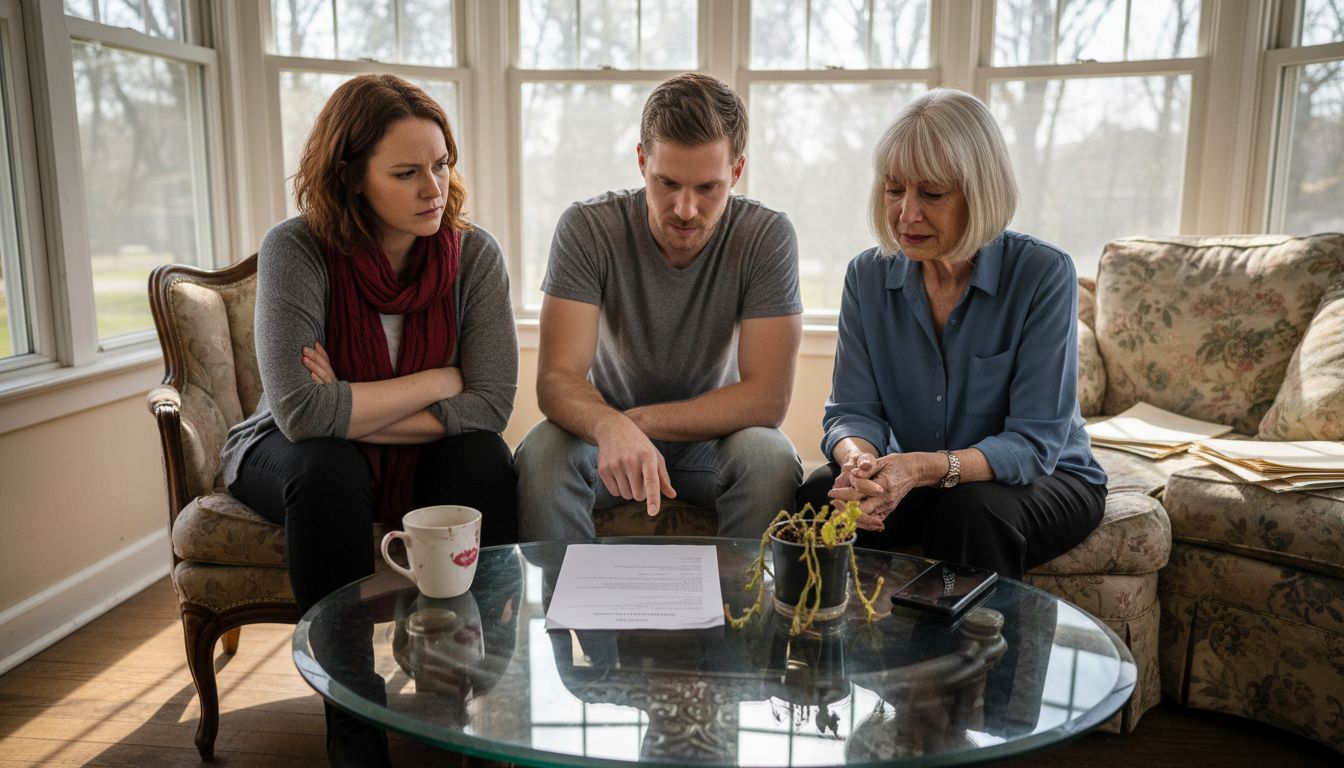
Stepmothers often find themselves at the center of inheritance disputes, with tensions arising from perceived favoritism towards biological children. These conflicts can emerge immediately after a parent’s death, spanning issues from burial arrangements to control of the deceased’s assets. Early communication and transparent estate planning become critical in mitigating these potential conflicts. Professional legal guidance can help families develop comprehensive estate plans that address the complex emotional and financial dynamics unique to blended family structures.
Navigating inheritance challenges requires a proactive and compassionate approach. Families must engage in open discussions about financial expectations, potential inheritance scenarios, and estate planning preferences. By establishing clear communication channels and working with experienced estate planning attorneys, blended families can create equitable estate plans that minimize the potential for future conflicts and protect the interests of all family members.
California Probate Laws and Spousal Rights
California’s probate laws create a complex landscape for spousal inheritance rights, particularly in blended family scenarios. Spousal rights in California are designed to protect surviving spouses while balancing the interests of biological and stepchildren, making comprehensive estate planning crucial for families with intricate relationship dynamics.
In community property states like California, surviving spouses are entitled to significant inheritance protections. The law automatically grants the surviving spouse half of all community property acquired during the marriage, which can create unique challenges for blended families. Separate property and assets acquired before marriage or through inheritance remain more complicated, requiring careful legal documentation to ensure fair distribution. California probate processes mandate specific procedures for asset distribution, with courts carefully examining the deceased’s final wishes and family structure.
Blended families face additional complexities when navigating spousal rights. Prenuptial agreements, previous marriage settlements, and existing children from prior relationships can significantly impact inheritance distributions. California law attempts to balance protecting the surviving spouse’s financial interests while also ensuring that children from previous marriages receive their intended inheritance. This delicate balance requires strategic estate planning that goes beyond simple will creation, often involving trusts, detailed beneficiary designations, and careful asset structuring.
Navigating California’s probate laws demands professional guidance. Each family’s unique composition requires a tailored approach that considers potential conflicts, tax implications, and long-term financial stability. Working with experienced estate planning attorneys who understand the nuanced landscape of spousal rights can help blended families create comprehensive plans that protect everyone’s interests, minimize potential legal disputes, and ensure a smooth transition of assets across complex family structures.
Protecting Children’s Inheritance and Wishes
Blended families face intricate challenges when attempting to protect children’s inheritance, particularly when balancing the needs of biological and stepchildren. Protecting children’s future requires strategic planning that goes beyond traditional estate documentation, ensuring each child’s financial security and honoring the parent’s original intentions.
Revocable trusts emerge as a powerful tool for families seeking comprehensive inheritance protection. These legal instruments provide remarkable flexibility, allowing parents to support their children’s inheritance while maintaining control over asset distribution. Research suggests that transparent trusts can help spouses remain in the family home while ultimately designating assets to their biological children, creating a balanced approach that addresses multiple family members’ needs.
Inheritance strategies must account for complex family dynamics. In second marriages, parents often want to provide for their current spouse while ensuring their biological children receive their intended inheritance. This delicate balance requires carefully structured estate plans that explicitly outline asset distribution, preventing potential conflicts between family members. Detailed beneficiary designations, clear communication, and professional legal guidance become essential in navigating these intricate emotional and financial landscapes.
Ultimately, protecting children’s inheritance in blended families demands a proactive and compassionate approach. Parents must engage in open discussions about financial expectations, create comprehensive estate plans that consider all family members’ interests, and work closely with experienced attorneys who understand the nuanced challenges of modern family structures. By prioritizing transparency, legal precision, and emotional sensitivity, families can develop estate plans that honor their children’s futures while maintaining family harmony.
Avoiding Family Conflict in Probate
Blended families face unique challenges during probate that can quickly escalate into emotionally charged disputes. Probate disputes often emerge from complex family dynamics, unresolved tensions, and unclear estate planning, creating potential battlegrounds where family relationships can be irreparably damaged.
Inheritance conflicts frequently arise from perceived inequities in asset distribution. Difficult conversations about estate planning become critical in preventing future disputes. Research indicates that stepmothers can be central figures in estate conflicts, with tensions often surfacing immediately after a parent’s death. These disputes can range from burial arrangements to control of the deceased’s assets, highlighting the importance of proactive communication and transparent planning.
Preventing family conflict requires a multifaceted approach. Families must develop comprehensive estate plans that explicitly address potential sources of tension, including clear provisions for biological and stepchildren. This involves creating detailed documentation that leaves no room for interpretation, using legal instruments like trusts and specific beneficiary designations to provide clarity. Professional mediation and open family discussions can help address potential emotional triggers before they escalate into full-blown legal battles.
Ultimately, avoiding probate conflict is about more than legal documents. It requires empathy, transparency, and a commitment to maintaining family relationships. Families should prioritize open communication, seek professional guidance, and approach estate planning as a collaborative process that considers the emotional and financial needs of all family members. By focusing on mutual understanding and creating clear, compassionate estate plans, blended families can navigate the probate process while preserving their most important asset: their family bonds.
Strategies to Minimize Probate Costs and Delays
Blended families face substantial financial challenges during probate, with legal processes that can drain estate resources and create unnecessary emotional strain. Avoiding probate complexities requires strategic planning and proactive legal instruments that can significantly reduce both time and monetary expenses associated with asset distribution.
Revocable trusts emerge as a powerful strategy for minimizing probate complications. These legal mechanisms allow families to bypass traditional probate processes, enabling heirs to take ownership and execute decisions much faster than traditional will-based transfers. Research indicates that updating beneficiary designations on retirement accounts and insurance policies can dramatically reduce potential legal complications, creating streamlined pathways for asset transfer that circumvent lengthy court procedures.
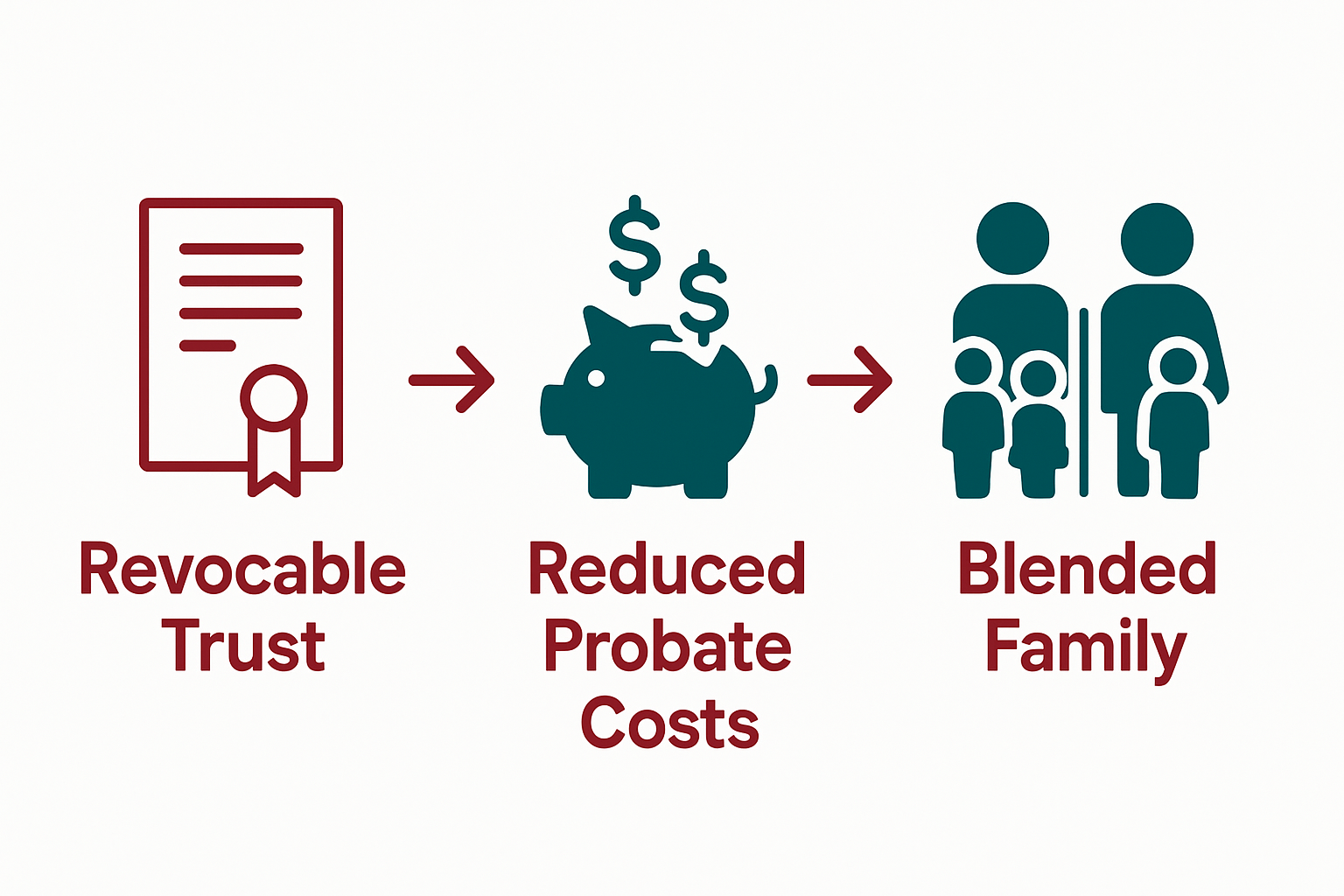
Successful probate cost reduction involves multiple strategic approaches. Families should consider creating comprehensive estate plans that utilize transfer-on-death designations, joint ownership structures, and carefully crafted trusts that provide clear asset distribution guidelines. By establishing transparent financial mechanisms that explicitly outline inheritance expectations, blended families can prevent potential disputes that often lead to expensive and time-consuming legal battles. Professional estate planning attorneys can help design customized strategies that address the unique complexities of each family’s financial and relational dynamics.
Ultimately, minimizing probate costs requires a proactive and holistic approach. Families must prioritize clear communication, regular estate plan reviews, and professional guidance to navigate the intricate legal landscape. By investing time and resources in comprehensive estate planning now, blended families can save significant money, reduce emotional stress, and ensure a smooth, efficient transfer of assets that honors the deceased’s final wishes while protecting the financial interests of all family members.
Secure Your Blended Family’s Future with Expert Estate Planning
Blended families face unique estate challenges like complex asset distribution and potential inheritance disputes. The right legal strategy such as revocable trusts and updated beneficiary designations can protect your loved ones and minimize costly probate conflicts. At the Law Offices of Eric Ridley, we specialize in providing tailored estate planning and probate services designed specifically for blended families.

Don’t wait until emotions run high or legal issues arise. Explore our comprehensive Estate Planning services to create clear, fair plans that honor your family’s unique needs. Visit us today at https://ridleylawoffices.com to get started on preserving your family harmony and securing your legacy with trusted legal guidance.
Frequently Asked Questions
What is probate and how does it affect blended families?
Probate is the legal process of settling an estate after someone passes away, which can be particularly complex for blended families due to multiple stakeholders and varying family dynamics.
What are common inheritance challenges faced by step-families?
Step-families often face challenges such as unequal asset distribution, conflicts between biological children and stepchildren, and perceived favoritism during the inheritance process.
How can blended families protect children’s inheritance?
Blended families can protect children’s inheritance through strategic estate planning, including creating revocable trusts and comprehensive estate documents that clearly outline asset distribution to ensure everyone’s interests are considered.
What legal strategies can blended families use to avoid probate disputes?
Legal strategies such as establishing trusts, clear beneficiary designations, and proactive communication among family members can help minimize potential disputes and ensure a smoother probate process.
Recommended
- Estate Planning for Blended Families – Law Office of Eric Ridley
- The Benefits of Estate Planning for Blended Families – Law Office of Eric Ridley
- The Importance of Estate Planning for Blended Families – Law Office of Eric Ridley
- Estate Planning for Blended Families: Protecting Your Loved Ones and Ensuring Fair Distribution – Law Office of Eric Ridley
