

PARENTS & HOMEOWNERS: MY 7-STEP ESTATE PLANNING PROCESS WILL PROTECT YOUR HEIRS
From Creditors, Predators & Bad Choices, And Will Help You Become a (Bigger) Hero to Your Family!


Why Have a Living Will in California – Protecting Your Family, Assets, and Wishes
Over half of American adults believe living wills are only for the elderly, yet anyone over 18 can benefit from this vital document. Decisions about your healthcare may be made without your input if you cannot speak for yourself, which can add stress for families and care providers. By understanding what a living will truly covers and dispelling common myths, you can protect your autonomy and ensure your medical wishes are honored when it matters most.
Table of Contents
- Defining A Living Will And Common Misconceptions
- Types Of Advance Directives In California
- How A Living Will Works During Incapacity
- Legal Requirements For Creating A Living Will
- Risks Of Not Having A Living Will Documented
- Comparing Living Wills And Other Estate Tools
Key Takeaways
| Point | Details |
|---|---|
| Living Will Definition | A living will is a legal document that outlines medical treatment preferences when an individual cannot express them. It ensures healthcare wishes are respected. |
| Myth Busting | Many believe living wills are only for the elderly or terminally ill, but they protect anyone over 18, regardless of health status. |
| Core Components | Key elements of a living will include instructions about life-sustaining treatments, pain management, organ donation, and appointing a healthcare proxy. |
| Importance of Documentation | Without a living will, individuals risk having their medical decisions made without clear guidance, leading to potential conflicts and financial burdens for families. |
Defining a Living Will and Common Misconceptions
A living will represents a powerful legal document that allows individuals to communicate their medical treatment preferences in advance, ensuring their healthcare wishes are respected even when they cannot speak for themselves. Unlike traditional wills that manage financial assets, living wills focus exclusively on medical care decisions. In California, this document is part of a broader advance health care directive that empowers individuals to outline specific medical treatment preferences.
Many people misunderstand living wills, believing they are only for elderly or seriously ill patients. The reality is quite different. These critical documents protect anyone over 18 who wants to maintain control over their medical treatment, regardless of their current health status. Common misconceptions include thinking that living wills are only about end-of-life care, when in fact they cover a wide range of potential medical scenarios from temporary incapacitation to long-term health challenges.
The core components of a living will typically include specific instructions about life-sustaining treatments, pain management preferences, organ donation wishes, and the appointment of a healthcare proxy. This designated representative can make medical decisions on your behalf if you become unable to communicate your preferences. By creating a comprehensive living will, you provide clear guidance to medical professionals and your family, reducing potential conflicts and ensuring your personal healthcare values are honored.
Ultimately, a living will is about maintaining personal autonomy and providing peace of mind for both you and your loved ones. It represents a proactive approach to healthcare planning that allows you to articulate your treatment preferences in advance, potentially preventing emotional and legal disputes during challenging medical situations.
Types of Advance Directives in California
In California, advance directives are comprehensive legal documents designed to protect individuals’ healthcare preferences and ensure their medical wishes are respected. Two primary types of advance directives dominate the landscape: the living will and the durable power of attorney for healthcare. These critical documents empower individuals to communicate their medical treatment preferences in advance, providing clear guidance to healthcare providers and family members during potentially challenging medical situations.
The living will represents the first key advance directive, allowing individuals to specify their preferences for medical treatments in scenarios where they cannot communicate directly. This document typically outlines specific instructions regarding life-sustaining treatments, pain management, and end-of-life care preferences. Individuals can articulate their wishes about mechanical ventilation, artificial nutrition, resuscitation, and other critical medical interventions, ensuring their personal values and medical preferences are honored even when they cannot speak for themselves.
The second crucial advance directive is the durable power of attorney for healthcare, which designates a trusted individual to make medical decisions on your behalf if you become incapacitated. This appointed healthcare proxy has the legal authority to interpret your medical preferences and make critical decisions aligned with your known wishes. By establishing comprehensive healthcare directives, Californians can provide their chosen representative with clear guidelines about their medical treatment preferences, reducing potential family conflicts and ensuring medical decisions reflect their personal values.
Beyond these primary directives, California offers additional advanced planning tools like physician orders for life-sustaining treatment (POLST) and do-not-resuscitate (DNR) orders. These specialized documents provide even more granular control over specific medical interventions. By proactively creating these documents, individuals can maintain personal autonomy, provide peace of mind for their loved ones, and ensure their healthcare preferences are respected, regardless of unexpected medical circumstances.
How a Living Will Works During Incapacity
A living will becomes critically important when an individual becomes incapacitated and cannot communicate their medical preferences directly. Advance health care directives allow individuals to specify medical treatment preferences and designate a trusted representative to make decisions on their behalf during periods of medical uncertainty. This legal document serves as a comprehensive guide for healthcare providers, ensuring that your personal medical values and treatment wishes are respected even when you cannot advocate for yourself.
When incapacity occurs, the living will provides explicit instructions about critical medical interventions. These detailed guidelines typically address complex scenarios such as life-sustaining treatments, resuscitation preferences, and end-of-life care. Specific medical decisions outlined in a living will can include preferences about dialysis, mechanical ventilation, tube feeding, organ donation, and resuscitation. By articulating these preferences in advance, individuals maintain control over their medical treatment, reducing the emotional burden on family members who might otherwise struggle with difficult healthcare decisions.

The designated healthcare proxy plays a crucial role in interpreting and implementing the living will during periods of incapacity. This appointed individual has legal authority to make medical decisions aligned with the documented preferences, acting as a crucial bridge between the patient’s wishes and their medical team. Understanding the legal framework of healthcare directives becomes essential in ensuring that these instructions are properly understood and followed. The proxy must carefully navigate medical recommendations, personal wishes, and ethical considerations to make decisions that truly reflect the patient’s known values and intentions.
Ultimately, a living will transforms an abstract concept of personal medical autonomy into a concrete, actionable plan. It provides a sense of security not just for the individual, but for their entire family, knowing that medical decisions will be made with clarity, respect, and a deep understanding of personal preferences. By proactively creating this document, individuals can ensure their medical treatment aligns with their personal beliefs, even during the most challenging and vulnerable moments of their lives.
Legal Requirements for Creating a Living Will
Creating a legally valid living will in California requires adherence to specific statutory guidelines designed to protect individual autonomy and ensure clear medical decision-making. Advance health care directives must comprehensively document an individual’s health care preferences, including specific instructions about diagnostic testing, surgical procedures, end-of-life care, and potential medical interventions. California law mandates that these documents be written, signed, and executed with precise legal formalities to guarantee their enforceability during critical medical situations.
To establish a legally binding living will, individuals must meet several key requirements. The document must be created by a person who is at least 18 years old and of sound mental capacity, ensuring they fully understand the implications of their medical directives. Witnesses play a crucial role in the validation process, with California law typically requiring two adult witnesses who are not financially connected to the individual’s estate or directly involved in their healthcare. These witnesses must be mentally competent and cannot be the designated healthcare proxy or a direct healthcare provider responsible for the individual’s medical treatment.
The content of a living will must be exceptionally clear and specific, addressing potential medical scenarios with unambiguous language. Legal frameworks for estate planning emphasize the importance of detailing precise medical preferences, including resuscitation wishes, pain management protocols, organ donation instructions, and preferences for life-sustaining treatments. Californians should consider consulting with a legal professional to ensure their living will comprehensively covers potential medical scenarios and complies with state-specific legal requirements, thereby preventing potential disputes or misinterpretations during critical medical moments.
Beyond the initial creation, California law recognizes the dynamic nature of personal health preferences. Living wills can be updated, modified, or revoked at any time, providing individuals with ongoing control over their medical decisions. This flexibility ensures that the document remains an accurate reflection of personal values and medical wishes, adapting to changing health conditions, life circumstances, and personal beliefs. By understanding and carefully implementing these legal requirements, Californians can create a powerful tool that protects their medical autonomy and provides clear guidance for healthcare providers and loved ones during potentially challenging medical situations.
Risks of Not Having a Living Will Documented
Without a carefully documented living will, individuals expose themselves and their families to significant legal, medical, and emotional risks. By considering healthcare options early, families can avoid critical decision-making under extreme stress, preventing potential conflicts and ensuring personal healthcare preferences are respected. The absence of a living will creates a legal vacuum where medical professionals and family members might make life-altering decisions that fundamentally contradict an individual’s true wishes.
The most immediate risk involves medical treatment decisions being made by default legal protocols rather than personal preferences. When no living will exists, healthcare providers typically default to aggressive life-sustaining treatments, potentially prolonging suffering or maintaining a quality of life that the individual would not have wanted. Family members may find themselves in emotionally devastating positions, forced to make complex medical choices without clear guidance, which can lead to devastating interpersonal conflicts, guilt, and long-lasting psychological trauma. Understanding comprehensive estate planning becomes crucial in mitigating these potential emotional and legal challenges.
Financial risks accompany the medical uncertainties of an undocumented living will. Without clear medical directives, prolonged medical treatments can rapidly deplete family resources, potentially destroying carefully accumulated wealth and leaving surviving family members in significant financial distress. Medical interventions that continue against an individual’s unrecorded wishes can create astronomical healthcare expenses, insurance complications, and potential legal disputes between healthcare providers, insurance companies, and family members. These financial burdens can persist long after the medical crisis has passed, creating generational economic challenges.
Perhaps most critically, the absence of a living will strips individuals of their fundamental right to self-determination. Medical decisions become a complex negotiation between healthcare providers, family members, and legal systems, with the individual’s authentic voice completely silenced. By proactively creating a living will, Californians can maintain control over their medical journey, ensuring that their personal values, spiritual beliefs, and quality of life standards remain paramount, even in their most vulnerable moments. The document becomes a powerful testament to personal autonomy, providing clarity, comfort, and concrete guidance during life’s most unpredictable challenges.
Comparing Living Wills and Other Estate Tools
Living wills and other estate planning tools serve distinct yet complementary purposes in comprehensive personal legal planning. A living will specifically describes medical treatments and procedures you want or do not want when you become seriously ill or unable to communicate, focusing exclusively on healthcare decisions during incapacitation. Unlike broader estate planning documents, living wills provide immediate, targeted medical guidance when personal decision-making capacity is compromised.
Power of attorney documents represent another crucial estate planning tool with different functional characteristics. Medical power of attorney designates a specific person to make healthcare decisions on your behalf when you cannot communicate your preferences. While a living will provides specific treatment instructions, a medical power of attorney empowers a trusted individual to interpret and implement those instructions, acting as a critical bridge between your documented wishes and actual medical care. Understanding the nuanced differences between estate planning tools becomes essential for comprehensive personal planning.
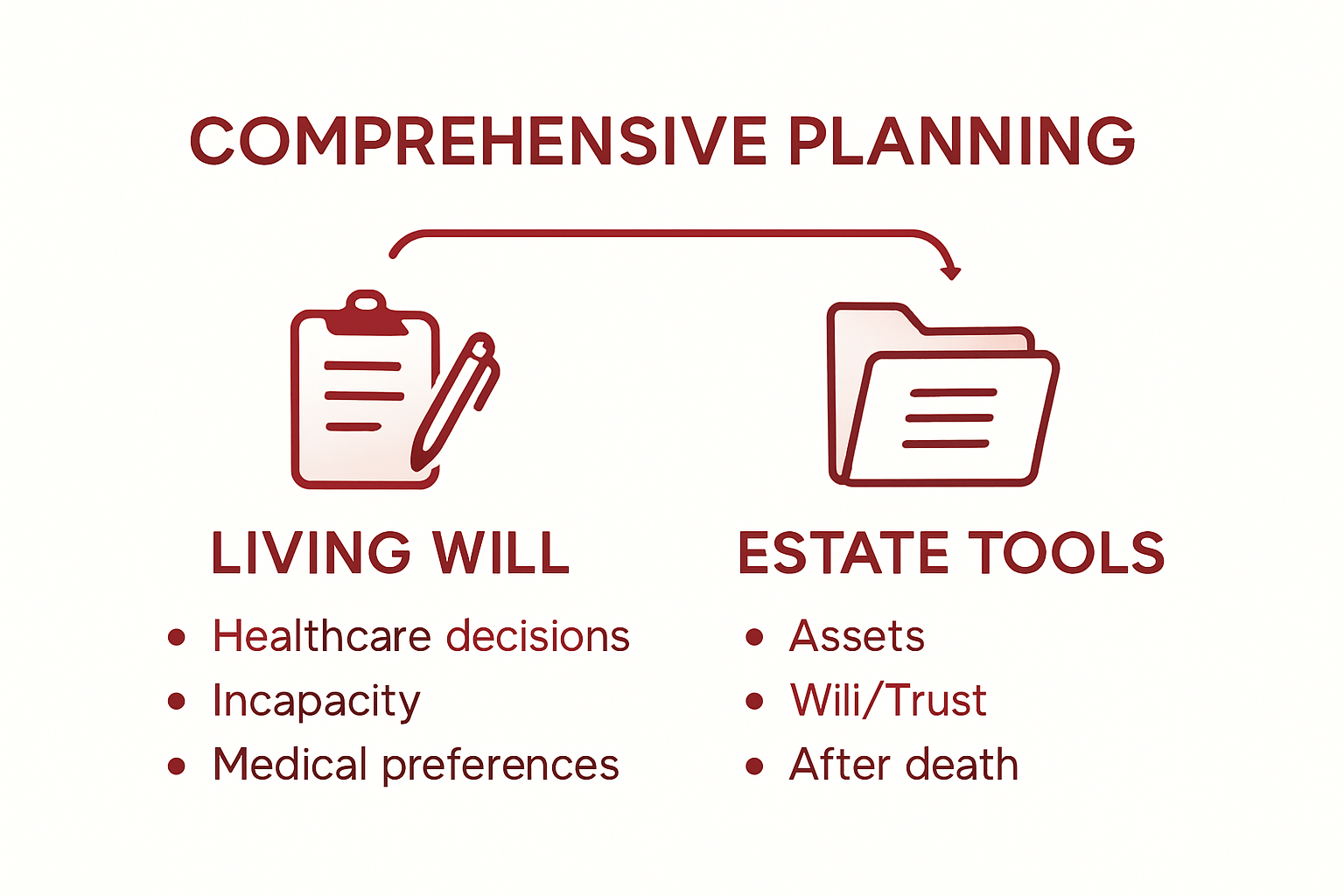
Traditional estate planning tools like wills and trusts differ fundamentally from living wills. Wills primarily manage asset distribution after death, determining inheritance and guardianship of minor children. Trusts offer more complex asset management and potential tax benefits, allowing more granular control over asset transfer. Living wills, in contrast, focus exclusively on medical treatment preferences during potential incapacitation, ensuring personal healthcare values are respected when individuals cannot advocate for themselves. Each tool serves a unique purpose, and a comprehensive estate plan often incorporates multiple documents to provide holistic protection.
The most effective estate planning strategy involves integrating multiple tools strategically. A comprehensive approach might include a living will for medical preferences, a medical power of attorney for decision-making representation, a traditional will for asset distribution, and potentially a trust for more complex asset management. By understanding the specific functions of each document, individuals can create a robust legal framework that protects their personal, medical, and financial interests across various potential scenarios.
Secure Your Medical Wishes and Protect Your Family Today
Facing the uncertainty of medical incapacity without a living will can cause emotional stress and costly legal challenges. The article highlights how a living will allows you to clearly express your healthcare preferences, appoint a trusted decision-maker, and avoid family conflicts during vulnerable moments. Your goal is to maintain control over medical decisions and ensure your values are honored without leaving loved ones guessing.
If you want to safeguard your healthcare choices and provide peace of mind for your family, the experienced team at the Law Offices of Eric Ridley is ready to help. Explore our power of attorney services, which work hand in hand with living wills to designate the right healthcare proxy.

Don’t leave your medical future to chance. Visit https://ridleylawoffices.com to learn how we can guide you through creating a comprehensive advance directive package. Protect your autonomy and ease your family’s burden with expert estate planning support from a firm dedicated to securing your legacy.
Frequently Asked Questions
What is a living will?
A living will is a legal document that allows individuals to communicate their medical treatment preferences in advance, ensuring their healthcare wishes are respected even when they cannot speak for themselves.
Why is it important to have a living will?
Having a living will is important because it protects your personal autonomy by clearly outlining your medical treatment preferences. This document helps prevent emotional and legal disputes among family members during challenging medical situations.
What are the key components of a living will?
Key components of a living will typically include specific instructions regarding life-sustaining treatments, pain management preferences, organ donation wishes, and the appointment of a healthcare proxy who can make decisions on your behalf if you become incapacitated.
How does a living will differ from a durable power of attorney for healthcare?
A living will specifies an individual’s preferences for medical treatments, while a durable power of attorney for healthcare designates a trusted person to make medical decisions on your behalf if you are unable to communicate your preferences directly.
Recommended
- Living Trust vs Will in California: 2025 Guide for Families – Law Office of Eric Ridley
- The Role of an Attorney in Drafting a Living Will – Law Office of Eric Ridley
- California Estate Planning Basics 2025: Protecting Family Wealth – Law Office of Eric Ridley
- Do I Need a Will in California? Protecting Your Family’s Future in 2025 – Law Office of Eric Ridley
- Is It Possible To Inherit Medical Debt? –
