Howard Hughes’s Will: The Forged Mormon Will and the Fight Over His Estate
Howard Hughes died in April 1976 with no valid will. A Las Vegas jury found the so-called “Mormon will” was not written by Hughes in June 1978, UPI reported, and a Harris County, Texas probate court named his cousins as his heirs. California and Texas fought for eight years over which of them could tax the estate, and the U.S. Supreme Court considered the dispute in 1978 and again in 1982. In 1984 the estate agreed to pay California up to $150 million in cash and land and Texas $50 million, according to UPI.
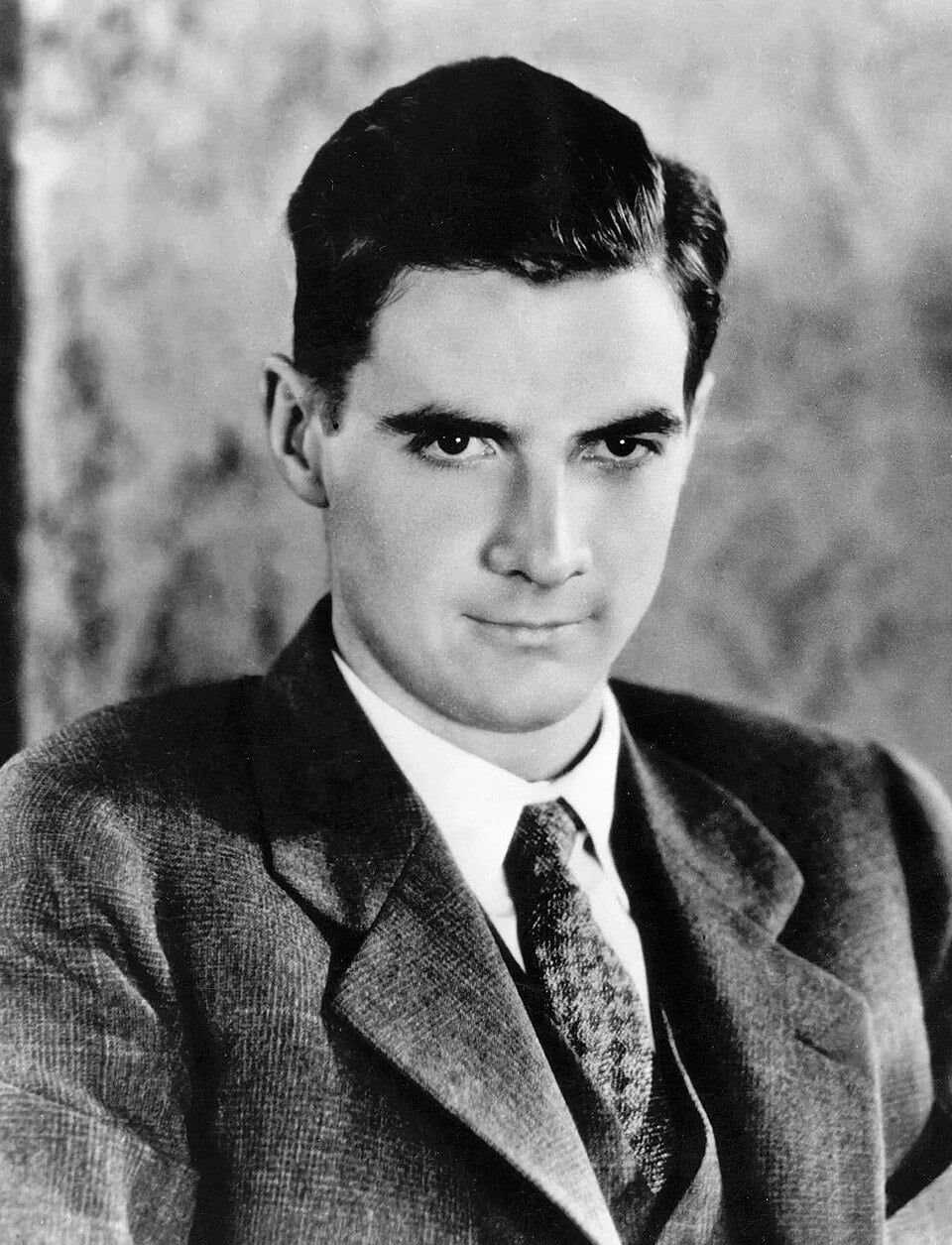
Hughes left no immediate family and no will that a court accepted, so the law of intestacy decided who inherited. The facts below come from the U.S. Supreme Court’s opinions, the New York Times, UPI, NPR and the other outlets listed in the sources.
Did Howard Hughes have a will?
No court accepted one. In 1981 UPI reported that a Harris County, Texas probate court had declared Hughes a Texan who left no will, wives, children, brothers, sisters or living parents.
Several documents were offered. The Supreme Court wrote in 1982 that a jury had rejected the “Mormon will,” and that the Nevada Supreme Court and a Texas probate court had rejected a claimed “lost will” that would have left the estate to the Howard Hughes Medical Institute.
Was the “Mormon will” real?
A jury said no. On June 8, 1978, a Clark County, Nevada jury found that a three-page document on lined legal paper, dated March 19, 1968, was “not written, dated and signed by the hand” of Hughes, the New York Times reported, citing UPI.
Melvin Dummar, a Utah gas station operator, had produced the document and said it left him $156 million, NPR reported. NPR said in 2018 that Dummar contended Hughes left him one-sixteenth of his fortune. In 2007 NPR reported that a judge upheld the earlier ruling that the will was a fraud, 29 years after the first one. Jonathan Demme made the 1980 film “Melvin and Howard” about the story.
Who inherited Howard Hughes’s fortune?
His cousins. Harris County Probate Judge Pat Gregory found 16 maternal first cousins and first cousins once removed in August 1981, UPI reported, and a jury in September 1981 settled the paternal side, which UPI counted as five heirs.
The maternal heirs were to share half the fortune and the paternal heirs the other half, UPI reported. In May 1983 a Houston lawyer told UPI his firm represented 19 people determined in court to be blood relatives of Hughes, and Moore’s lawyer said no money had been distributed yet because the estate was still tied up in courts in California, Texas and Nevada. I did not find a court record listing the final shares, so I’m not stating the final head count or any heir’s payout.
Actress Terry Moore said she married Hughes on a ship in 1949 and that they never divorced. UPI reported in May 1983 that she reached a settlement with his heirs that she described as “not more than eight figures.” Moore’s marriage claim was rejected by a Texas probate judge in 1981, UPI reported.
What was Howard Hughes’s net worth when he died?
UPI reported in 1984 that Hughes left a personal estate estimated at between $300 million and $500 million, and that the Internal Revenue Service placed it at $371 million for tax purposes. California and Texas had fought to set the value at $450 million.
The range is wide because the number depended on who did the appraisal, UPI said. In 1981 UPI had reported estimates running from $163 million to $1.2 billion. The money went to his cousins after taxes. The estate agreed to give California up to $150 million and Texas $50 million, and I couldn’t find a published total for legal fees.
| Estimate | Figure | Source |
|---|---|---|
| Low estimate, 1981 | $163 million | UPI |
| IRS value for tax purposes | $371 million | UPI, 1984 |
| California and Texas position | $450 million | UPI, 1984 |
| Reported range | $300 million to $500 million | UPI, 1984 |
| High estimate, 1981 | $1.2 billion | UPI |
Why did California and Texas fight over Howard Hughes’s estate?
Each state wanted to tax it. The Supreme Court explained in Cory v. White, 457 U.S. 85 (1982), that each state taxes the intangible property of a person domiciled there at death, and that a person has only one domicile at a time.
Taxing officials in both states said Hughes was domiciled in their state. The estate’s administrator said he lived in Nevada, which had no death tax, and UPI reported that Hughes always claimed Nevada as his legal residence. In California v. Texas, 457 U.S. 164 (1982), the Court noted that Hughes spent much of his time in California, was born in Texas, long used Texas as his mailing address, and had been found by a Texas probate jury to be a Texas domiciliary.
California’s filing alleged that the combined marginal rate of state and federal taxes on the largest part of the estate would be 101 percent. The Court noted that those allegations had not been proved, but treated them as enough to present a controversy.
What did the Supreme Court decide about the Hughes estate?
Three things, over four years. The Court refused to hear the case in 1978, then said in 1982 that the federal interpleader route was closed, and then agreed to hear California’s complaint against Texas.
- California v. Texas, 437 U.S. 601 (1978). The Court denied California leave to file a complaint under its original jurisdiction. Four Justices said in concurring opinions that the estate might get the domicile question decided in federal district court under the Federal Interpleader Act.
- Cory v. White, 457 U.S. 85 (1982). The Court held the Federal Interpleader Act did not give a federal court jurisdiction to resolve inconsistent death tax claims by two states’ officials, because the Eleventh Amendment barred the suit.
- California v. Texas, 457 U.S. 164 (1982). The Court granted California leave to file, finding a controversy between two states within its original jurisdiction, as in Texas v. Florida, 306 U.S. 398 (1939).
The Court appointed a special master, former federal judge Wade McCree, UPI reported. Before he ruled, the parties settled. On August 29, 1984, administrator William Lummis, a first cousin of Hughes, signed agreements to pay California up to $150 million in cash and land and Texas $50 million, UPI reported. California’s share was $44 million in cash plus a trust deed for 73 acres near Marina del Rey. Lummis called it “a compromise settlement, a costly one for us.”
UPI reported that California had spent about $7 million on the fight and Texas about $4 million.
Timeline of the Howard Hughes estate
| Date | Event |
|---|---|
| April 1976 | Hughes dies on a private plane flying from Acapulco to Houston (UPI) |
| June 8, 1978 | Nevada jury finds the “Mormon will” was not written by Hughes |
| June 22, 1978 | Supreme Court denies California leave to file against Texas |
| August to September 1981 | Houston probate court names maternal heirs, then a jury settles the paternal side |
| June 14, 1982 | Supreme Court decides Cory v. White and grants California leave to file |
| May 1983 | Last pending claim in the Nevada proceeding settled; UPI reports no money yet distributed |
| August 29, 1984 | Estate signs tax settlements with California and Texas |
What this means for your own plan
- With no will, state law picked the heirs. For Hughes that meant cousins on both sides of his family. In California the same question is answered by the intestacy statute, summarized on the who inherits page.
- A will that surfaces after death gets examined hard. A Nevada jury examined the Mormon will and rejected it. A signed, witnessed will and a copy in your lawyer’s file avoid the problem, and the handwritten wills page covers what California requires if you ever write one yourself.
- Where you live at death can decide which state taxes you. California has no estate or inheritance tax today, as the California estate tax guide explains, but UPI reported that California’s inheritance tax rate was 24 percent when Hughes died, and that the tax was repealed six years later. Federal and state rules change, so check the current year’s numbers.
- Property in more than one state can mean more than one court. The ancillary probate page explains how that works for California property owned by an out-of-state resident.
For the other path, see what happens if you die without a will in California and the estate and inheritance tax by state page. To plan for your own situation, see estate planning at Ridley Law.
Related celebrity estates
Want a straight read on where you stand?
Talk to Eric. A free call, no pitch. He’ll tell you where you’re exposed, what it would cost to fix, and what you can skip.
Talk to Eric